Past Event RIMES Scales Climate-Smart Agriculture with 53 New Agromet FARRM Schools across Bangladesh
Date:August 16, 2026
RIMES Scales Climate-Smart Agriculture with 53 New Agromet FARRM Schools across Bangladesh
The Regional Integrated Multi-Hazard Early Warning System (RIMES), in collaboration with the Department of Agricultural Extension (DAE), is supporting the establishment of 53 new Agromet FARRM Schools across Rajshahi, Naogaon, Khulna, Satkhira, Cumilla, Feni, Jamalpur, Bandarban, Rangamati and Khagrachari, covering diverse agro-ecological settings including drought-prone, coastal saline, floodplain, char and hill areas.
The initiative is being implemented through the EnRICH project, funded by the UK Government; PROTISTHA and SURAKKHA, both funded by the European Union through EU Civil Protection & Humanitarian Aid Operations (DG ECHO); and HeatShield, funded by the Rockefeller Foundation.
The expansion builds on the successful completion of 52 Agromet FARRM Schools. An assessment found that every USD 1 invested generated more than USD 18 in benefits for farmers, providing strong evidence of the effectiveness and value of the approach.
The programme began with an Orientation Workshop on 16 August 2026 in Dhaka, bringing together 31 DAE officials from the participating districts. Dr. Md. Abdul Muyeed, Senior Agrometeorologist, RIMES, introduced the Agromet FARRM School approach, while experts from the Bangladesh Meteorological Department (BMD) and Flood Forecasting and Warning Centre (FFWC) shared information on weather, climate risks, forecasting and flood forecast products.
This was followed by a series of three-day residential Training of Trainers (TOT) workshops, with two batches held at Gazipur, and one at Rangamati. Across the three batches, 87 SAAOs completed the training.
The ToT programme brought together expertise from RIMES, DAE, BMD, FFWC, the Directorate General of Health Services (DGHS), Tuber Crops Research Centre, Gazipur, and Sher-e-Bangla Agricultural University. Sessions covered crop sensitivity to weather and climate, extreme event preparedness, Climate-Smart Agriculture, weather forecasting and its application to cropping decisions, pest and disease development, heatwaves and heat-related health impacts, flood forecasting, and the use of BAMIS and agrometeorological advisories.
Participatory exercises formed a key part of the training. SAAOs developed 12-month crop calendars and 24-session fortnightly plans, aligning weather and climate information, early warnings and agricultural advisories with specific crop stages and seasonal risks.
The Director General of DAE, along with Directors from key DAE wings, including Planning and Training, joined the programme. The Additional Director for the Chittagong and Rangamati Regions also joined the Rangamati training, reflecting strong institutional support for climate-informed agricultural extension.
Through the completed TOT programme, RIMES and DAE have strengthened the capacity of SAAOs to support the new Agromet FARRM Schools and help farmers turn weather and climate information into timely, practical decisions.
September 4, 2026
Share
Past Event RIMES Strengthens Last-Mile Early Warning and Disaster Preparedness in Melamchi, Nepal
Date:August 18 – 21, 2026
RIMESStrengthens Last-Mile Early Warning and Disaster Preparednessin Melamchi, Nepal
From 18 to 21 August 2026, RIMES conducted two complementary capacity-building activities in Melamchi Municipality, Sindhupalchok, Nepal, in collaboration with Melamchi Municipality under the Strengthening Last-Mile Communication (SLMC) Project. implemented through the University Corporation for Atmospheric Research (UCAR). The activities strengthened local capacity to access and use early warning information, prepare for disasters, and respond effectively to emergencies.
Strengthening Municipal Use of Early Warning Information through INSTANT
On 18 August, RIMES organized an Orientation and Hands-on Training on the Integrated Forecast Dissemination Portal (INSTANT) at Hotel Melamchi Heritage Inn, Melamchi Municipality.
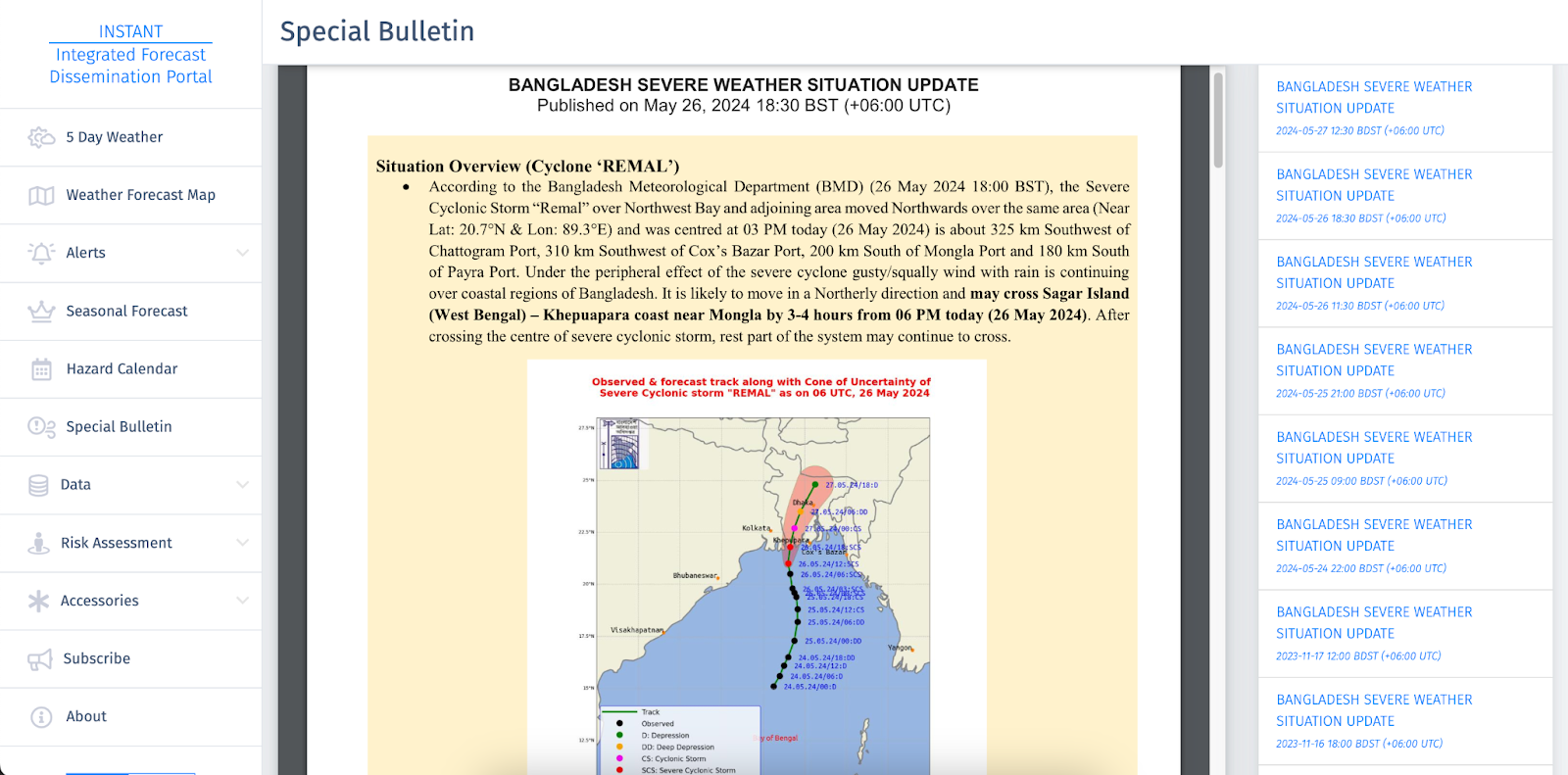
Developed and customized under the SLMC Project, the INSTANT Portal is a web-based decision-support platform that integrates weather forecasts, multi-hazard alerts, locally developed risk information, and early-warning mechanisms for municipal disaster risk management.
Approximately 25 to 30 municipal officials and stakeholders participated, gaining practical skills in accessing forecast products, interpreting multi-hazard alerts (rainfall, wind, heatwave, cold wave, lightning, and landslide), reviewing ward-level hazard calendars and risk assessment information, and applying early warning information to preparedness and emergency response scenarios through demonstrations and hands-on exercises. As an important institutionalization measure, the INSTANT Portal has been integrated into the Melamchi Municipality website, enabling direct access through the Municipality’s own digital platform.
Building Practical Disaster Preparedness and Life-Saving Skills in Schools
19 to 21 August, RIMES supported Melamchi Municipality in conducting a three-day School-Based Disaster Risk Reduction and Preparedness Programme.
Schools play an important role in disaster preparedness. Teachers and school representatives are not only responsible for students’ safety during emergencies but can also help disseminate disaster preparedness knowledge and practical skills to households and the wider community.
The program therefore aimed to move beyond general disaster awareness by strengthening the practical preparedness and emergency response capacities of teachers and school representatives from selected schools in Melamchi Municipality.
The training was delivered by certified trainers from the Nepal Red Cross Society (NRCS) and combined theoretical sessions with demonstrations, practical exercises, group work, role play, and emergency simulations.
The program introduced participants to disaster risk management, the disaster management cycle, community- and school-based disaster risk reduction, school emergency preparedness, evacuation arrangements, emergency communication, and basic search-and-rescue principles.
Participants subsequently received extensive practical training on fire safety and the use of fire extinguishers, first aid, patient assessment, bleeding and wound management, bandaging, choking and shock response, cardiopulmonary resuscitation (CPR), improvised stretchers, and the appropriate use of first aid materials.
The program further addressed fractures, unconsciousness, mass-casualty management and triage, household and community preparedness, and school safety planning. A final practical simulation provided participants with an opportunity to apply multiple skills in an emergency scenario involving evacuation, first aid, casualty prioritization, communication, and response coordination.
The training encouraged participating schools to identify preparedness measures, clarify roles and responsibilities, assess available resources, and strengthen practical school preparedness and response arrangements. Importantly, the program was designed to create a multiplier effect, enabling trained teachers to share disaster preparedness knowledge and practical skills with students, fellow teachers, families, and communities.
Following completion of the program, participants also registered with Nepal’s National Disaster Risk Reduction and Management Authority (NDRRMA) National Volunteer System. This creates an important link between the capacities developed through the training and Nepal’s formal disaster preparedness and volunteer mechanism.
Linking Early Warning Information with Preparedness and Action
Together, the two activities demonstrate the integrated approach promoted through the SLMC Project.
While the INSTANT Portal training strengthened the capacity of local authorities and stakeholders to access, interpret, and use forecast, hazard, and risk information, the School-Based DRR program strengthened the ability of local actors to prepare for emergencies and translate information into practical, life-saving action.
The activities also reinforced connections among the Municipality, schools, communities, technical institutions, and national disaster management mechanisms. Through municipal leadership, integration of the INSTANT Portal into the Municipality’s digital platform, practical capacity building, and linking trained participants to the national volunteer system, the initiative placed particular emphasis on institutional ownership and sustainability.
By combining improved access to early warning information with practical disaster preparedness and response capacities, the activities contribute to the broader SLMC objective of ensuring that warnings reach the last mile, are understood by those who receive them, and ultimately support timely action to protect lives, livelihoods, and communities.
The experience in Melamchi demonstrates how local government leadership, digital decision-support tools, school-based preparedness, and community capacity building can work together to strengthen people-centered multi-hazard early warning systems and build more disaster-resilient communities.
September 2, 2026
Share
Past Event South Asia Hydromet Forum Operationalizes Marine Meteorology Sub-Working Group to Enhance Regional Coastal Marine Forecasting
Date:August 20, 2026
South Asia Hydromet Forum Operationalizes Marine Meteorology Sub-Working Group to Enhance Regional Coastal Marine Forecasting
The Regional Integrated Multi-Hazard Early Warning System (RIMES), through the South Asia Hydromet Forum (SAHF), formally operationalized its Marine Meteorology Sub-Working Group (MM-SWG) during a virtual inception meeting held on 20 August 2026.
With support from the CREWS South Asia Programme, in partnership with the World Meteorological Organization (WMO), the newly formed Sub-Working Group brings together country representatives from Bangladesh, India, Maldives, Myanmar, and Pakistan, along with regional technical partners, to strengthen marine meteorology and coastal forecasting services across South Asia.
Addressing Regional Vulnerabilities
South Asia’s coastlines are highly exposed to hydrometeorological hazards, including tropical cyclones, storm surges, high waves, and coastal inundation. These hazards pose significant risks to coastal communities, fisheries, maritime transport, ports, offshore installations, and local livelihoods.
During the roundtable discussion, member countries highlighted diverse operational capacities alongside shared challenges in marine observations, data assimilation, and localized forecasting.
Bangladesh emphasized the need for standardized marine products, expanded observational data, and modeling tools to address non-cyclonic tidal inundation. India shared ongoing developments in port and storm surge warnings and proposed expanding sensors across 50 coastal tide gauges to enhance wind and wave data assimilation. The Maldives highlighted the vulnerabilities of low-lying atollsand prioritized downscaled in-house wave modeling, customized Decision Support Systems, and satellite data utilization. Myanmar and Pakistan emphasized the need to address data gaps through coastal observatories, ship-based validation, high-resolution wind and surge models, joint technical training, and standardized regional marine terminology.
Strategic Priorities for the Marine Meteorology Sub-Working Group
To address these challenges, the MM-SWG proposes a 2026–2027 Work Plan, structured across five core work streams: Establishment and Coordination, Baseline Assessment and Gap Analysis, Capacity Development, Marine Services Harmonization and Knowledge Exchange, and Monitoring and Evaluation.
The group aims to focus on validating the regional baseline and mapping capacity needs in 2026, followed by operational strengthening, technical cooperation, and and enhanced regional forecasting collaboration in 2027.
Technical Support & Regional Capabilities
The Indian National Centre for Ocean Information Services (INCOIS), outlined theirmulti-hazard and ocean state forecast portfolios—supported by a network of buoys, drifters, gliders, and numerical models. INCOIS highlighted its readiness to support SAHF members through technical expertise, vessel advisories, cyclone wave bulletins, and Potential Fishing Zone (PFZ) advisory training through its Category-2 Center.
WMO participants strongly supported the establishment of the SAHF MM-SWG as a key platform for strengthening South Asia’s coastal safety and technical capabilities. Experts recommended aligning the group’s work plan with International Maritime Organization (IMO) maritime safety audits and leveraging the upcoming WMO storm surge forecasting guide.
To overcome critical observational and data gaps, WMO proposed utilizing the Systematic Observations Financing Facility (SOFF) for ocean observations and adopting WIS 2.0 protocols for real-time regional data sharing, while anchoring training initiatives to existing WMO regional training centers and coastal inundation frameworks.
Moving Forward
RIMES recognized the valuable inputs provided by participating countries, which will directly inform the operationalization of the Sub-Working Group’s work plan.
Immediate follow-up actions include formulating concept papers on tide gauge sensor expansion and satellite data utilization, advancing multi-channel data-sharing protocols through WIS 2.0, and engaging the NWP working group to develop synergized Standard Operating Procedures (SOPs) for transboundary marine hazard coordination.
Through the MM-SWG, SAHF envisions to drive multi-model wave and storm surge forecasting, deliver targeted training for national forecasters, and strengthen institutional cooperation with regional centers of excellence. By harmonizing coastal hazard forecasting and standardizing operating procedures, the platform aims to deliver more timely, reliable, and actionable marine weather services to protect vulnerable coastal communities and economies across South Asia.
————————
TheClimate Risk and Early Warning Systems (CREWS) South Asia Projectsupports the South Asia Hydromet Forum (SAHF) in strengthening regional cooperation and national capacities for effective, people-centered early warning systems. Implemented in partnership with the World Meteorological Organization (WMO) and World Bank, the project advances regional priorities through improved hydrometeorological data, forecasting, knowledge-sharing, and capacity development to support timely and actionable early warning services across South Asia. For more information, go to:https://www.sahf.info/crews
August 25, 2026
Share
Past Event RIMES Launches ESCAP Phase III to Operationalize Impact-Based Forecasting for Agriculture and Disaster Risk Reduction
Date:August 14 – 15, 2026
RIMES Launches ESCAP Phase III to Operationalize Impact-Based Forecasting for Agriculture and Disaster Risk Reduction
RIMES convened the ESCAPPhaseIII ProjectInceptionMeeting on 13-14 August 2026 in Pathum Thani, Thailand, bringing together ESCAP and national meteorological and hydrological services, agriculture and disaster risk reduction partners from Fiji, Papua New Guinea, Samoa, Sri Lanka, and Thailand.
The meeting marked the commencement of Phase III of “Operationalizing Impact-Based Forecasting through the Localization of Decision Support Systems for the Agriculture and Disaster Risk Reduction Sectors,” implemented by RIMES under the ESCAP Multi-Donor Trust Fund for Tsunami, Disaster and Climate Preparedness.
Building on Phase II, which strengthened impact-based forecasting (IBF) capacities across nine countries and supported the customization of decision support systems for the agriculture sector, Phase III shifts the focus to localization, deployment, and pilot testing at the national and subnational levels. The aim is to translate forecasting capacity into actionable services that enable sectors and communities to better anticipate impacts and take timely, risk-informed action.
The meeting introduced the project’s rationale, objectives, expected outcomes and implementation approach, while highlighting the institutional arrangements required to move from capacity building to operational delivery. A key lesson carried forward from Phase II is the importance of sustained coordination and data sharing between forecast producers and sectoral users for decision support systems to be effectively localized or sustained.
Country-led discussions translated this direction into practical implementation priorities. Supported by RIMES facilitators, delegations developed inception work plans covering priority sectors and hazards, proposed pilot locations, key risks and gaps, national focal points, Technical Working Group arrangements, pathways for data sharing, MOUs and Standard Operating Procedures, and immediate actions with responsibilities and indicative timelines. Presentation of the work plans to the plenary also provided an opportunity for South-South exchange across the Pacific and South Asia.
The meeting was conducted in a hybrid format to facilitate the participation of representatives from Papua New Guinea’s National Weather Service and National Disaster Center, as well as Thailand’s Department of Disaster Prevention and Mitigation.
The meeting resulted in country-specific inception work plans, confirmed or nominated national focal points, and agreed Technical Working Group arrangements. Countries also identified the data-sharing arrangements, providing a clear basis for immediate follow-up actions, responsibilities, and timelines.
Participating countries will now further refine their work plans in consultation with national and subnational stakeholders, while RIMES will consolidate these into country roadmaps for the remainder of the project period. These roadmaps will guide the localization and pilot testing of decision support systems, strengthen multisectoral coordination and last-mile delivery, and contribute to the Early Warnings for All initiative and greater resilience to weather- and climate-related hazards across RIMES Member and Collaborating States.
August 20, 2026
Share
Past Event RIMES Contributes to ASEANCOF Science Roadmap to Strengthen Regional Climate Services
Date:July 23 – 24, 2026
RIMES Contributes to ASEANCOF Science Roadmap to Strengthen Regional Climate Services
The Regional Integrated Multi-Hazard Early Warning System (RIMES) actively participated in the ASEAN Climate Outlook Forum (ASEANCOF) Technical Working Group (TWG) Meeting, held on 23–24 July 2026 at the Centre for Climate Research Singapore (CCRS). The meeting brought together representatives from National Meteorological and Hydrological Services (NMHSs), regional climate centres, and partner organizations to review ASEANCOF’s progress over the past five years and chart its future direction through the development of a regional science roadmap.
Since its establishment in 2013, ASEANCOF has served as a regional platform for NMHSs to jointly develop seasonal climate outlooks, exchange scientific knowledge, and strengthen regional collaboration in climate services. The first in-person TWG meeting provided an important opportunity for members to reflect on achievements, identify operational and technical challenges, and discuss priorities for the next phase of ASEANCOF.
As an implementing partner supporting ASEANCOF activities under the UK Met Office’s WISER Asia Pacific programme, RIMES contributed to the technical discussions by sharing operational experiences from previous ASEANCOF cycles and regional climate service initiatives. Throughout the two-day meeting, participants reviewed the evolution of ASEANCOF from its inception, discussed lessons learned from recent Forums, and identified opportunities to enhance the effectiveness, usability, and sustainability of regional climate outlook production. Discussions highlighted several priority areas, including improving the consistency of climate outlook products, strengthening communication of uncertainty and confidence, expanding user engagement, enhancing verification practices, and increasing collaboration among ASEAN NMHSs.
RIMES also contributed to discussions on the development of a draft ASEANCOF Science Roadmap, which outlines short-, medium-, and long-term actions to strengthen regional climate services. The roadmap emphasizes improving operational coordination among NMHSs, enhancing technical capacity through peer learning and training, expanding the use of emerging forecasting tools, and establishing sustainable mechanisms for knowledge exchange and institutional collaboration.
As part of the discussions, RIMES introduced updates on FOCUS-X, the latest version of its climate forecasting support tool. The enhanced system offers expanded capabilities for seasonal climate analysis, visualization, and forecast generation, providing additional tools that can support ASEAN NMHSs in preparing regional climate outlooks and strengthening climate service delivery.
RIMES also shared its experience in South Asia in supporting and facilitating the conduct of the South Asian Seasonal Climate Outlook Forum (SASCOF), in collaboration with RCC-Pune under the broader South Asia Hydromet Forum (SAHF) mechanism, as well as in developing and consolidating various weather and climate information tools and decision-support systems (DSSs) for a wide range of stakeholders in the region. These were offered as models of good practice, in the hope that relevant approaches and lessons may be adapted or replicated to suit the ASEAN regional context.
The meeting also reaffirmed the importance of maintaining ASEANCOF as a collaborative regional mechanism while gradually strengthening country ownership and long-term sustainability. Participants agreed that future efforts should focus not only on advancing scientific methodologies but also on ensuring that climate information is translated into actionable services that support decision-making across climate-sensitive sectors.
RIMES remains committed to supporting ASEANCOF and its member NMHSs through technical assistance, capacity development, knowledge sharing, and the development of innovative tools that strengthen climate services across Southeast Asia. The organization looks forward to continuing its collaboration with the ASEAN Specialized Meteorological Centre (ASMC), NMHSs, the World Meteorological Organization (WMO), the UK Met Office, and other regional partners in advancing climate resilience and improving the accessibility and application of climate information throughout the region.
August 20, 2026
Share
Past Event RIMES Supports Strengthening Climate Information and Early Warning Services in Lao PDR
Date:June 29, 2026
RIMES Supports Strengthening Climate Information and Early Warning Services in Lao PDR
The Regional Integrated Multi-Hazard Early Warning System (RIMES) provided technical support to the Asian Development Bank (ADB) in convening the Stakeholder Consultation Workshop on Strengthening Climate Information and Early Warning Services (CIEWS) in Lao PDR, held on 29 June 2026 in Vientiane.
Organized under ADB Technical Assistance (TA) 10103: Increasing Investments in Early Warning Systems to Strengthen Climate and Disaster Resilience, the consultation brought together representatives from key government institutions, sectoral agencies, local stakeholders, and ADB project teams to jointly identify priority climate information and early warning needs and potential investment opportunities in Lao PDR. TA 10103 supports Lao PDR and other priority developing member countries in identifying gaps, designing strategic interventions, and developing investment pathways to strengthen climate information and early warning systems. In Lao PDR, the TA is supporting the development of CIEWS interventions linked to ADB’s Resilient and Sustainable Urban Improvement Project (RSUIP) and the Greater Mekong Subregion Smart and Sustainable Tourism Infrastructure for Inclusive Growth (GMS SSTIIG) Project. The workshop opened with remarks by Elizabeth Jung, Lead of the GMS SSTIIG Project, representing ADB.
A dedicated session led by government institutions, including the Department of Meteorology and Hydrology (DMH), provided an overview of Lao PDR’s current climate information and early warning landscape. The session highlighted national early warning priorities, implementation of the Early Warnings for All (EW4All) Roadmap, ongoing initiatives including CREWS, existing institutional roles and coordination mechanisms, and current utilization and gaps in climate and warning information for the tourism and urban sectors.
A key component of the workshop was a participatory hazard, exposure, impact, trigger, and decision-mapping exercise. Participants worked together to identify priority hazards including floods, droughts, landslides, and extreme heat alongside exposed urban and tourism assets, key institutional and operational decisions, and the forecast information and triggers required to support timely action.
Discussions identified practical opportunities for strengthening impact-based forecasting, sector-specific advisories, warning communication, preparedness actions, and decision-support systems. Potential applications included flood alerts for tourism sites, landslide advisories for access roads and trails, heat alerts for urban and tourism areas, dam-related flood warning protocols, and climate-informed urban service planning.
The consultation will inform the development of a practical and nationally aligned CIEWS concept and investment framework. It will also support exploration of future climate financing opportunities.
August 18, 2026
Share
Past Event RIMES supports Nepal’s National Demonstration of IBF for Heat Extremes
Date:July 22, 2026
RIMES supports Nepal’s National Demonstration of IBF for Heat Extremes
Lalitpur, Nepal | 22 July 2026 – The Regional Integrated Multi-Hazard Early Warning System (RIMES), through the South Asia Hydromet Forum (SAHF) Impact-Based Forecasting (IBF) Project, supported Nepal’s Department of Hydrology and Meteorology (DHM) in convening the National Stakeholder Workshop on the National Demonstration of IBF for Temperature Extremes (Heat). The workshop marked a significant milestone in the project’s national demonstration activities, advancing impact-based forecasting and early warning systems for heat in Nepal.
The workshop brought together representatives from government agencies, provincial and local authorities, academia, humanitarian organizations, civil society, media, the private sector, and development partners to strengthen cross-sector collaboration and operationalize impact-based forecasting for heat. The activity forms part of the SAHF IBF Project’s broader effort to cascade national demonstration activities across South Asia, enabling National Meteorological and Hydrological Services (NMHSs) and their partners to translate weather and climate information into actionable, people-centered early warnings.
The workshop conducted group discussions to encourage discussions among participants.
Participants strengthened their understanding of the end-to-end IBF value chain and explored how forecasts can be translated into actionable decision-support information for vulnerable sectors. Technical sessions covered available forecasting products and tools, approaches to sectoral co-production, and effective dissemination of impact-based forecasts. Participants also exchanged practical experiences from ongoing local initiatives and examined the role of exposure, vulnerability, and Gender Equality, Disability, and Social Inclusion (GEDSI) considerations in ensuring early warning information reaches those most at risk from extreme heat.
The event facilitated discussions on sector-specific information needs across agriculture, health, water resources, energy, transportation, local government, humanitarian organizations. It concluded with agreed priority actions, implementation timelines, and next steps for Nepal’s national IBF demonstration — providing a coordinated roadmap for continued collaboration between DHM, sectoral agencies, and technical partners.
RIMES remains committed to supporting SAHF member countries in advancing people-centered IBF systems that strengthen anticipatory action and disaster preparedness. Through the SAHF IBF Project, RIMES continues to work with NMHSs and sectoral stakeholders across South Asia to build institutional capacity and enhance the delivery of actionable climate services that protect lives, livelihoods, and development gains.
𝐀𝐛𝐨𝐮𝐭 𝐭𝐡𝐞 𝐒𝐀𝐇𝐅 𝐈𝐁𝐅 𝐏𝐫𝐨𝐣𝐞𝐜𝐭: Supported by the UK government’s Foreign, Commonwealth & Development Office (FCDO) through the Weather and Climate Information Services (WISER) Asia-Pacific Programme, a part of the Climate Action for a Resilient Asia (CARA) initiative, the SAHF IBF Project aims to drive transformational change in South Asia’s capacity to deliver anticipatory, impact-based forecasting. By strengthening institutional systems and methodologies, the project helps translate weather information into actionable insights that build true climate resilience.
RIMES participated in the 𝐖𝐨𝐫𝐥𝐝 𝐀𝐫𝐭𝐢𝐟𝐢𝐜𝐢𝐚𝐥 𝐈𝐧𝐭𝐞𝐥𝐥𝐢𝐠𝐞𝐧𝐜𝐞 𝐂𝐨𝐧𝐟𝐞𝐫𝐞𝐧𝐜𝐞 (𝐖𝐀𝐈𝐂) 𝟐𝟎𝟐𝟔 𝐌𝐞𝐭𝐞𝐨𝐫𝐨𝐥𝐨𝐠𝐢𝐜𝐚𝐥 𝐅𝐨𝐫𝐮𝐦, held in 𝐒𝐡𝐚𝐧𝐠𝐡𝐚𝐢, 𝐂𝐡𝐢𝐧𝐚, 𝐟𝐫𝐨𝐦 𝟏𝟔 𝐭𝐨 𝟏𝟖 𝐉𝐮𝐥𝐲 𝟐𝟎𝟐𝟔, contributing to international discussions on advancing artificial intelligence to strengthen 𝐄𝐚𝐫𝐥𝐲 𝐖𝐚𝐫𝐧𝐢𝐧𝐠𝐬 𝐟𝐨𝐫 𝐀𝐥𝐥 (𝐄𝐖𝟒𝐀𝐥𝐥). Hosted by the China Meteorological Administration (CMA), the Forum brought together meteorological agencies, international organizations, researchers, and policymakers to promote collaboration on AI applications for meteorology, climate services, and disaster risk reduction.
As part of the Forum, 𝐑𝐈𝐌𝐄𝐒 𝐫𝐞𝐩𝐫𝐞𝐬𝐞𝐧𝐭𝐚𝐭𝐢𝐯𝐞 𝐩𝐚𝐫𝐭𝐢𝐜𝐢𝐩𝐚𝐭𝐞𝐝 𝐢𝐧 𝐭𝐡𝐞 𝐑𝐨𝐮𝐧𝐝𝐭𝐚𝐛𝐥𝐞 𝐃𝐢𝐬𝐜𝐮𝐬𝐬𝐢𝐨𝐧 𝐩𝐚𝐧𝐞𝐥 on “𝐀𝐈 𝐄𝐦𝐩𝐨𝐰𝐞𝐫𝐢𝐧𝐠 𝐄𝐚𝐫𝐥𝐲 𝐖𝐚𝐫𝐧𝐢𝐧𝐠𝐬 𝐟𝐨𝐫 𝐀𝐥𝐥” where participants shared practical approaches to ensuring AI-enabled early warning systems remain effective, operational, and sustainable beyond the lifetime of externally funded projects.
Drawing on RIMES experience supporting Member States across Asia and Africa, RIMES shared institutional approach that the long-term success of AI-enabled early warning systems depends not only on technological innovation but also on designing sustainability from the outset. While AI itself is transforming forecasting and decision support, the greater challenge lies in establishing the institutional foundations that enable AI-powered early warning systems to continue serving communities for many years.
RIMES emphasized that sustainability must be designed from 𝐃𝐚𝐲 𝟏 by integrating strong national institutions, sustainable financing, national capacity development, trusted AI operational support, and regional cooperation into every project. This approach strengthens national ownership, ensures operational continuity, and enables countries to maintain and continuously improve AI-enabled early warning services beyond project completion. As RIMES highlighted during the Forum, sustainability is not something funded at the end of a project, it is something designed from the very beginning.
The Forum further strengthened the strategic partnership between 𝐑𝐈𝐌𝐄𝐒 𝐚𝐧𝐝 𝐭𝐡𝐞 𝐂𝐡𝐢𝐧𝐚 𝐌𝐞𝐭𝐞𝐨𝐫𝐨𝐥𝐨𝐠𝐢𝐜𝐚𝐥 𝐀𝐝𝐦𝐢𝐧𝐢𝐬𝐭𝐫𝐚𝐭𝐢𝐨𝐧 (𝐂𝐌𝐀). Building on our shared commitment to innovation and international cooperation.
July 21, 2026
Share
Past Event RIMES Strengthening Lighting Early Warning and Public Awareness in Bangladesh
Date:June 28, 2026
RIMES Strengthening Lighting Early Warning and Public Awareness in Bangladesh
The Regional Integrated Multi-Hazard Early Warning System (RIMES) joined Bangladesh in commemorating International Lightning Safety Day 2026 on 28 June at the Krishibid Institution Bangladesh in Dhaka, marking the country’s inaugural national-level observance of the day. The event was held under the powerful Bangla slogan “শুনলে বজ্রধ্বনি, ঘরে যাই তখনই” (“When Thunder Roars, Get Indoors”).
In collaboration with the Bangladesh Meteorological Department (BMD), UNICEF, Save the Children, and BRAC, RIMES organized the event, bringing together representatives from government agencies, development and humanitarian organizations, technical institutions, the media, educational institutions, and lightning-affected communities.
The observance emphasized that accurate lightning forecasts must be complemented by timely communication, practical safety knowledge, and appropriate public action to reduce lightning-related deaths and losses. Discussions highlighted the importance of strengthening early warning dissemination, improving public awareness, and ensuring that vulnerable communities receive clear and actionable safety information.
Community participants from Sunamganj shared how lightning has directly affected their lives and livelihoods. They also reflected on how increased awareness and access to weather information are helping communities use forecasts to plan farming and fishing activities, keep students indoors during thunderstorms, and circulate BMD forecasts among community members. However, participants noted that livelihood pressures, limited access to warnings, and gaps in practical safety knowledge continue to expose vulnerable groups to lightning risks.
The workshop also highlighted BMD’s experimental Lightning Alert System, developed with technical support from RIMES and operational from April 2025. The system provides location-specific lightning warnings and safety guidance one to six hours in advance through the BMD website, Facebook, WhatsApp, and other digital platforms.
A key part of the discussion focused on common misconceptions and practical safety measures. Mr. Rabbani emphasized that people should “seek indoor shelter, avoid standing under trees, and disperse rather than gather in groups when caught in open fields.” Participants also discussed the importance of avoiding plugged-in electrical equipment during thunderstorms and providing immediate CPR to a person struck by lightning.
The event reinforced the need to integrate the lightning alert system into regular institutional operations, strengthen last-mile dissemination, improve coordination among stakeholders, expand public awareness, and promote safe shelter during thunderstorms. It also reaffirmed the shared commitment of government agencies, technical organizations, development partners, and communities to ensure that timely and actionable lightning safety information reaches people at risk.
Md. Saidur Rahman Khan, Secretary of the Ministry of Disaster Management and Relief, expressed the Ministry’s support for the initiative and stated that “The government understands the significance of this and The Ministry will work to make International Lightning Safety Day as a national day.”
His remarks underscored the importance of translating awareness into practical local action to reduce lightning-related deaths and build safer communities.
July 14, 2026
Share
Past Event RIMES Strengthens Climate Resilience and Local Preparedness in Nepal
Date:July 2, 2026
RIMES Strengthens Climate Resilience and Local Preparedness in Nepal
Janakpur, Nepal | 2 July 2026 – The Regional Integrated Multi-Hazard Early Warning System (RIMES) and the Resilience, Adaptation and Inclusion in Nepal (RAIN) Programme (led by People in Need), in coordination with the Department of Hydrology and Meteorology (DHM), organized an Impact-Based Forecasting (IBF) Orientation Workshop in Madhesh Province on 2 July 2026 to strengthen local preparedness for heatwaves and floods.
Madhesh Province remains highly vulnerable to floods and heatwaves due to its flat terrain, dense population, and increasing climate variability. While flooding has long been recognized as a major hazard, prolonged periods of extreme heat are emerging as an equally significant threat to public health, agriculture, livelihoods, livestock, and water security. Against this backdrop, the workshop aimed to strengthen understanding of IBF and promote its application at the municipal level by translating weather forecasts into actionable information that supports preparedness and early action.
Throughout the workshop, participants explored Nepal’s evolving forecasting and early warning systems, including advances in weather observations, numerical forecasting, and dissemination platforms. Technical sessions introduced the principles of IBF, emphasizing the shift from traditional hazard-based forecasts toward impact-oriented information that considers hazard, exposure, and vulnerability to better support risk-informed decision-making. Participants also learned about DHM’s ongoing efforts to pilot IBF and develop impact-based bulletins for temperature-related hazards.
A key feature of the programme was a series of participatory group exercises that enabled participants to apply IBF concepts to real-world scenarios. Working across sectors including health, agriculture, livestock, livelihoods, water, sanitation and hygiene (WASH), and education, participants identified the likely impacts of heatwaves, vulnerable population groups, practical anticipatory actions, and institutional responsibilities. Early actions proposed included issuing heat health advisories, adjusting working hours for outdoor labourers, preparing health facilities, protecting agriculture and livestock, and strengthening community awareness through local government structures.
Participants also mapped the existing communication pathway for forecasts and early warnings—from DHM and OHM Janakpur through provincial and municipal authorities to ward offices, Community Disaster Management Committees (CDMCs), and local communities. While recognizing that this structure is already in place, discussions highlighted persistent challenges, including delays in information flow, unclear institutional responsibilities, limited use of IBF bulletins in municipal planning, and barriers in reaching vulnerable populations through digital communication channels alone. Recommendations focused on institutionalizing standard operating procedures, simplifying impact-based messages, expanding the use of multiple communication channels, and strengthening coordination among agencies responsible for early warning dissemination.
One notable discussion centered on the perception of heatwaves as a disaster risk. While some participants questioned the prioritization of heat hazards, community representatives emphasized that heat-related impacts on health, livelihoods, and productivity are often underreported despite their growing severity. The discussion underscored the importance of strengthening evidence-based advocacy and improving documentation of heat impacts to support more informed decision-making.
The workshop successfully strengthened collaboration among hydrometeorological services, local governments, and community-level stakeholders by connecting technical forecasting knowledge with operational planning at the local level. By improving participants’ understanding of impact-based bulletins, risk matrices, communication pathways, and early action planning, the programme reinforced local ownership of IBF while identifying practical, locally relevant solutions to improve preparedness and inclusive early warning dissemination for heatwaves and floods.
The orientation supports Nepal’s preparations for its National Demonstration on Impact-Based Forecasting for temperature-related hazards, contributing to broader regional efforts under the SAHF IBF Project to operationalize people-centered, impact-based early warning systems that enable communities to act before disasters occur.
𝐀𝐛𝐨𝐮𝐭 𝐭𝐡𝐞 𝐒𝐀𝐇𝐅 𝐈𝐁𝐅 𝐏𝐫𝐨𝐣𝐞𝐜𝐭: Supported by the UK government’s Foreign, Commonwealth & Development Office (FCDO) through the Weather and Climate Information Services (WISER) Asia-Pacific Programme, a part of the Climate Action for a Resilient Asia (CARA) initiative, the SAHF IBF Project aims to drive transformational change in South Asia’s capacity to deliver anticipatory, impact-based forecasting. By strengthening institutional systems and methodologies, the project helps translate weather information into actionable insights that build true climate resilience.
Past Event Sri Lanka Moves to Protect Livestock Against Threat of Strong El Niño
Date:June 30, 2026
Sri Lanka Moves to Protect Livestock Against Threat of Strong El Niño
30 June 2026, Colombo — RIMES, together with the Department of Meteorology (DOM) and Sri Lanka National Climate Application Center (SLNCCA), supported a workshop on livestock heat stress preparedness hosted by the Livestock Development Division of the Ministry of Agriculture, Livestock, Land and Irrigation to safeguard the livestock sector against the anticipated impacts of a potentially strong El Niño event.
The workshop, titled “Livestock Heat Stress Preparedness for a Potentially Strong El Niño Event,” brought together over 100 participants from national and provincial institutions, research organizations, development partners, and private sector stakeholders. It was facilitated under the South Asia Hydromet Forum (SAHF) Impact-Based Forecasting for Temperature Project.
The El Niño Threat to the Livestock Sector
El Niño conditions are expected to heavily influence weather and temperature patterns across Sri Lanka in the coming months. For the livestock industry, this translates to a heightened risk of heat stress, which threatens:
Animal health and reproduction
Milk and meat productivity
Feed management and water requirements
Overall farmer livelihoods
Key Recommendations and Next Steps
Participants engage in group discussions to identify potential triggers, thresholds, impact indicators, and early actions, as well as evaluate key heat stress impacts across various livestock systems in Sri Lanka.
To mitigate these risks, the workshop identified an urgent need to establish a dedicated national livestock heat stress advisory system for Sri Lanka. Participants highlighted threel key recommendations to build immediate resilience:
Integrated Monitoring: Combining standard weather forecasts with Temperature-Humidity Index (THI) monitoring and real-time livestock impact observations,
Targeted Thresholds: Establishing species-specific heat thresholds to trigger early warning systems and timely interventions, and
Inter-Agency Collaboration: Strengthening cooperation between livestock, veterinary, meteorological, and research institutions to ensure seamless data sharing and practical, early actions on the ground.
The workshop provided a foundation for translating meteorological data into practical advisory tools for farmers to protect their animals and secure their livelihoods ahead of rising temperatures.
𝐀𝐛𝐨𝐮𝐭 𝐭𝐡𝐞 𝐒𝐀𝐇𝐅 𝐈𝐁𝐅 𝐏𝐫𝐨𝐣𝐞𝐜𝐭: Supported by the UK government’s Foreign, Commonwealth & Development Office (FCDO) through the Weather and Climate Information Services (WISER) Asia-Pacific Programme, a part of the Climate Action for a Resilient Asia (CARA) initiative, the SAHF IBF Project aims to drive transformational change in South Asia’s capacity to deliver anticipatory, impact-based forecasting. By strengthening institutional systems and methodologies, the project helps translate weather information into actionable insights that build true climate resilience.
Past Event RIMES and DDPM Convene Kick-Off Technical Working Group Meeting to Advance Impact-Based Forecasting in Thailand
Date:July 1, 2026
RIMES and DDPM Convene Kick-Off Technical Working Group Meeting to Advance Impact-Based Forecasting in Thailand
RIMES organized the Kick-Off Technical Working Group (TWG) Meeting on 1 July 2026 at DDPM office in Bangkok, Thailand, in collaboration with the Department of Disaster Prevention and Mitigation (DDPM) and the United Nations Economic and Social Commission for Asia and the Pacific (ESCAP), marking the official establishment of the TWG for Thailand. This meeting was conduted as part of the project titled “Operationalizing Impact-Based Forecasting through the Localization of Decision Support Systems for the Agriculture and DRR Sectors” (ESCAP Phase III, in short), supported by the ESCAP Trust Fund for Tsunami, Disaster and Climate Preparedness.
Beyond RIMES, DDPM and ESCAP, various representatives from Thailand’s key technical agencies participated in this meeting, including the Office of the National Water Resources (ONWR), the Royal Irrigation Department (RID), the Thai Meteorological Department (TMD), the Pollution Control Department (PCD), the Department of Water Resources (DWR), the Hydro-Informatics Institute (HII), the Geo-Informatics and Space Technology Development Agency (GISTDA), and the Department of Mineral Resources (DMR), reflecting the cross-sectoral collaboration necessary to advance the understanding in and capacity of Impact-Based Forecasting (IBF) for Multi-Hazard Early Warning Systems in Thailand.
The meeting, chaired by DDPM’s Director of the National Disaster Warning Center (NDWC), was opened with an overview of the ESCAP Phase III project and its regional objectives, followed by an introduction to RIMES and its longstanding partnership with DDPM in strengthening Thailand’s disaster preparedness and early warning systems. Participants were also introduced to the principles of Impact-Based Forecasting, which translate hazard forecasts into actionable impact information. This approach enables decision-makers such as DDPM to understand who and what are likely to be affected, thereby supporting timely and targeted preparedness actions.
Discussions also focused on Thailand’s 24-month implementation roadmap for 2026–2027, which prioritizes capacity building for IBF in three hazards: earthquake and tsunami, landslide, and flood. A key agenda item was the formal establishment of the Technical Working Group, a technical governance body led by DDPM with support from RIMES that will coordinate participating agencies, oversee curriculum design and development, and steer capacity-building activities within a clear coordination structure connecting ESCAP, RIMES, the TWG, DDPM, and local stakeholders.
Furthermore, the meeting outlined the project’s two-tier capacity-building program, comprising a General IBF Training for policymakers and operational personnel and a specialized Training of Trainers (ToT) program on IBF to develop a national pool of certified trainers capable of cascading IBF knowledge to the local level. These efforts will also support the formation of a national IBF War Room, aimed at strengthening Thailand’s capacity to deliver impact-based early warnings and informed decision support during disasters and emergencies.
The Kick-Off TWG Meeting marks an important milestone in advancing Thailand’s transition toward Impact-Based Forecasting. Through strengthened institutional capacity and enhanced inter-agency collaboration among Thailand’s stakeholders, the ESCAP Phase III project implemented by RIMES will lay a strong foundation for more coordinated, impact-focused disaster risk management, contributing to the improvement and protection of lives and livelihoods from the growing risks posed by natural hazards and climate-related events.
July 8, 2026
Share
Past Event RIMES Convenes Regional Workshop on Strengthening Last-Mile Communication and Flood Forecasting
Date:June 8 – 11, 2026
RIMES Convenes Regional Workshop on Strengthening Last-Mile Communication and Flood Forecasting
The Regional Integrated Multi-Hazard Early Warning System (RIMES), in collaboration with the University Corporation for Atmospheric Research (UCAR), successfully conducted the SLMC Regional Review and Planning Workshop and the Flood Forecasting on a Shoestring Budget (FFSB) Technical Workshop from 8–11 June 2026 in Pathum Thani, Thailand.
The four-day regional event brought together representatives from national meteorological and hydrological services, disaster management authorities, local government institutions technical institutions, and development partners from across South and Southeast Asia. The workshop provided a platform to review implementation progress, exchange country experiences, strengthen technical capacities, and identify practical ways to sustain people-centered early warning services.
The SLMC Regional Review and Planning Workshop focused on progress across Bangladesh, Nepal, Pakistan, and Sri Lanka. The country teams shared achievements, lessons learned, operational challenges, and priorities for future investments aimed at improving impact-based forecasting, decision support systems, anticipatory action, and community preparedness. The discussions supported forward planning for the next phase of SLMC and encouraged stronger alignment between country needs, operational tools, and institutional sustainability.
The FFSB Technical Workshop, led by UCAR and FFSB experts, introduced practical and cost-effective flood forecasting approaches using open-source tools, freely available datasets, and operational forecasting workflows. Technical discussions covered precipitation estimation and forecasting, forecast uncertainty, ensemble hydrologic forecasting, hydrologic model parameter estimation, reservoir inflow forecasting, and applications of forecasting tools such as RDHM, HEC-RAS, and TRITON. Participants also explored how low-cost forecasting methods can be adapted to resource-constrained operational settings.
The workshop also provided a platform for participants to identify common regional challenges, exchange good practices, and explore opportunities for future collaboration in strengthening early warning systems and disaster risk reduction initiatives.
By linking SLMC’s last-mile communication work with FFSB’s practical flood forecasting approach, the workshop highlighted the importance of connecting forecasting science with actionable early warnings.
RIMES extends its sincere appreciation to UCAR and FFSB experts, participating country agencies, technical experts, development partners, and all workshop participants for their valuable contributions to the success of the event. The workshop reaffirmed the importance of regional cooperation and knowledge sharing in strengthening resilience and ensuring that early warning information effectively reaches vulnerable communities.
June 19, 2026
Share
Past Event RIMES Supports National Monsoon Forums in Cambodia and Lao PDR to Strengthen Climate-Informed Preparedness for the 2026 Monsoon Season
Date:June 2 – 4, 2026
RIMES Supports National Monsoon Forums in Cambodia and Lao PDR to Strengthen Climate-Informed Preparedness for the 2026 Monsoon Season
RIMES supported the conduct of the 11th Cambodia National Monsoon Forum on 2 June 2026 in Phnom Penh and the 22nd Lao PDR National Monsoon Forum on 4 June 2026 in Vientiane through the Climate Risk and Early Warning Systems (CREWS) Initiative. The forums were organized in collaboration with the World Meteorological Organization (WMO), the Department of Meteorology (DOM) of Cambodia’s Ministry of Water Resources and Meteorology (MOWRAM), and the Department of Meteorology and Hydrology (DMH) of Lao PDR’s Ministry of Agriculture and Environment (MAE).
The National Monsoon Forums serve as important platforms for bringing together climate information providers and users to discuss seasonal climate outlooks, emerging risks, and preparedness actions. This year’s forums gathered representatives from government agencies, development partners, media institutions, academia, and technical organizations to review recent climate conditions and discuss the outlook for the June–September (JJAS) 2026 season.
A key focus of both forums was the potential development of El Niño conditions during 2026 and the implications this may have for climate-sensitive sectors. Participants explored possible impacts on agriculture, water resources, disaster risk management, public health, and other sectors that rely on timely weather and climate information for planning and decision-making.
In addition to technical presentations, participants took part in sectoral group discussions that examined potential risks associated with the upcoming season and their likely impacts on different sectors. Working in groups, participants identified priority concerns, discussed preparedness and anticipatory actions, and shared recommendations on the climate information products and services needed to support sectoral planning and decision-making.
The group discussions concluded with presentations of sectoral outputs, providing an opportunity to compare perspectives across sectors and identify common priorities. While the risks and concerns varied, participants highlighted the importance of early preparedness, access to timely climate information, and continued coordination between climate information providers and users. The recommendations generated during the forums will support ongoing efforts to strengthen climate services and preparedness planning in Cambodia and Lao PDR.
June 15, 2026
Share
Past Event Strengthening Climate Resilience from Regional Outlooks to Community Action
Date:June 2, 2026
Strengthening Climate Resilience from Regional Outlooks to Community Action
Sindhupalchok, Nepal, 02 June 2026 — RIMES, in partnership with Nepal’s Department of Hydrology and Meteorology (DHM) and Melamchi Municipality, conducted a capacity-building workshop on 2 June 2026 in Sindhupalchok, Nepal, bringing together municipal and district officials, ward representatives, community volunteers, and local NGOs from Melamchi, Helambu, and Indrawati municipalities, as well as the Sindhupalchok district office — all working across disaster risk reduction and climate-sensitive sectors. The workshop was implemented through the Strengthening Last-Mile Communication (SLMC) Project, supported by the University Corporation for Atmospheric Research (UCAR) with funding from the Bureau of Population, Refugees, and Migration (PRM) / Office of International Disaster Response (IDR) of the U.S. Department of State, to strengthen last-mile access to and meaningful use of early warning information.
The workshop drew directly on the latest seasonal outlook and the tools, methodologies, and lessons from SASCOF-34 and the Climate Services User Forum (CSUF), held in April 2026 under the South Asia Hydromet Forum (SAHF) Climate Services Project. Technical sessions were facilitated by DHM personnel, including a representative who participated in SASCOF-34 — ensuring that regional climate knowledge flowed directly into local preparedness discussions.
Key outcomes included strengthened practical understanding of DHM weather forecasts, seasonal outlooks, and hydrometeorological sensor data; enhanced local capacity to translate forecast information into preparedness actions and sectoral advisories; and strengthened coordination among key stakeholders.
The workshop was warmly welcomed by municipal representatives, with a DRR focal person expressing interest in replicating a similar session at the district level — a sign of the growing demand for actionable climate services across Nepal.
This workshop exemplifies how RIMES projects work in synergy — connecting regional climate outlook generation, climate services capacity development, and last-mile communication into one integrated approach. Climate information is not only produced; it is understood, trusted, and acted upon by local governments, communities, and sectoral stakeholders — advancing climate resilience from the regional to the community level.
June 8, 2026
Share
Past Event Bangladesh Strengthens Heatwave Preparedness through Impact-Based Forecasting and Sectoral Advisory Development
Date:May 10 – 18, 2026
Bangladesh Strengthens Heatwave Preparedness through Impact-Based Forecasting and Sectoral Advisory Development
Bangladesh, May 2026 — The Regional Integrated Multi-Hazard Early Warning System (RIMES) conducted and supported a series of activities on Heatwave Impact-Based Forecasting and Sectoral Advisory Development in May 2026 to strengthen preparedness, coordination, and anticipatory action against increasing heatwave risks in Bangladesh.
These activities form a key part of the country’s national demonstration of IBF on heat-related hazards as part of the WISER-supported SAHF IBF Project which aims to translate temperature forecasts into sector-specific, action-oriented advisories to strengthen preparedness and early action during the heat season.
The activities included district-level consultations in Lalmonirhat and Rajshahi, followed by a two-day Technical Training and Stakeholder Workshop on Heatwave Impact-Based Forecasting and Sectoral Advisory Development in Dhaka, Bangladesh. Together, these activities brought together technical agencies, sectoral departments, local stakeholders, and partner organizations to improve the use of forecast information for early action and sector-specific preparedness.
Strengthening district-level preparedness in Lalmonirhat and Rajshahi
The local consultations on the Impact-Based Forecasting of Heatwave were held on 10 May 2026 in Lalmonirhat and on 13 May 2026 in Rajshahi. The consultations brought together representatives from the Bangladesh Meteorological Department (BMD), Department of Agricultural Extension (DAE), Department of Livestock Services (DLS), Directorate General of Health Services (DGHS), disaster management authorities, and development partners.
The consultations focused on translating weather forecasts into actionable preparedness measures through IBF. Technical sessions covered heatwave climatology, forecasting systems, localized trigger and threshold development, agriculture and livestock impacts, anticipatory action planning, and digital advisory dissemination systems.
In Lalmonirhat, discussions highlighted the role of IBF in converting forecast information into practical advisories for vulnerable communities. Sessions also covered Bangladesh’s heatwave climatology, forecasting systems, operational heatwave monitoring approaches, livestock heat stress, veterinary preparedness, emergency response measures, crop planning, irrigation management, agro-meteorological advisory dissemination through BAMIS, and localized trigger and threshold development using historical temperature percentile analysis.
In Rajshahi, discussions centered on preparedness in one of Bangladesh’s heat-prone regions. Sessions covered localized heatwave risk assessment, district-specific thresholds, livestock preparedness, agriculture advisories, and public health risks. Health sector representatives, including civil surgeons and doctors from DGHS, highlighted risks such as dehydration, heat exhaustion, and heat stroke, particularly among outdoor workers, elderly people, children, and low-income communities. They emphasized public awareness, hydration, reduced outdoor exposure during peak heat hours, access to safe drinking water, and monitoring of vulnerable family members. They also recommended a common alert dissemination platform for DGHS and related health institutions.
Building technical capacity on heatwave monitoring and forecasting
The two-day Technical Training and Stakeholder Workshop on Heatwave IBF and Sectoral Advisory Development was conducted on 17–18 May 2026, organized by BMD, with technical assistance from the RIMES. The training focused on strengthening BMD’s capacity in heatwave monitoring, characterization, station and gridded temperature data analysis, and percentile-based threshold calculations. On the other hand, the discussions emphasized the need to update and localize heatwave thresholds because impacts vary across regions.
The first day focused on strengthening the technical capacity of BMD officials experienced in climate services, forecast production, and impact-based forecasting. Sessions covered heatwave monitoring and characterization, station and gridded temperature data analysis, and percentile-based threshold calculations. Discussions emphasized that heatwave thresholds need to be updated and region-specific, as heatwave impacts differ across locations.
The training also included a practical demonstration of the INSTANT-SA portal, showing how forecast outputs can be visualized and used for sectoral decision-making. Sessions highlighted the use of scientifically robust thresholds and indices such as Heat Index, Universal Thermal Climate Index, and Excess Heat Factor to improve the accuracy and operational relevance of BMD’s forecasts.
The second day brought together 42 participants, including BMD experts and stakeholders from DGHS, DAE, DLS, DDM, and other partner organizations. Discussions focused on Bangladesh’s increasing heatwave risks, the need for research-informed thresholds, and the development of actionable advisories for health, agriculture, livestock, disaster management, and other sectors.
Interactive Group Session in Day 2 to assess Vulnerability, Exposure and Hazard for Heatwave
Through sectoral discussions and interactive group exercises, participants examined exposure, vulnerability, and information needs. They identified vulnerable groups, including elderly people, children under five, people with chronic illnesses, pregnant women, outdoor workers, coastal residents, small-scale livestock and poultry farmers, school children, and people facing poverty, poor sanitation, or other health and socio-economic challenges. They also assessed exposure factors such as high physical exertion, population density, crop and livestock exposure, urban heat islands, poorly insulated housing, shaded public transport stops, and temporary housing.
Sectoral speakers from fisheries, health, agriculture, and livestock shared experiences and recommendations. Key priorities included strengthening small-scale aquaculture coping capacity, expediting training manuals for medical personnel, improving upazila-wise forecasts and dissemination, establishing early warning system portals for farmers, conducting national-level workshops, and creating a joint platform for automatic alerts.
Across the activities, participants identified major challenges, including the variation of heatwave impacts across regions and sectors, the complexity of thresholds and advisories, coordination gaps, limited integration of exposure and vulnerability data, and the lack of joint platforms for automatic alerts and streamlined early action.
The way forward includes strengthening BMD’s technical capacity, updating region-specific heatwave thresholds, developing sector-specific advisories that integrate hazard, exposure, and vulnerability data, improving early warning dissemination, expanding stakeholder engagement across key sectors, and creating a joint alert platform to support coordinated and timely response.
The activities underscored the importance of linking technical forecasting with sectoral knowledge, localized preparedness, and coordinated dissemination to help ensure that forecast information supports early action and protects vulnerable populations from extreme heat impacts.
Sectoral recommendations and emerging priorities
Sectoral speakers from fisheries, health, agriculture, and livestock shared experiences, challenges, and recommendations. The discussions highlighted several common priorities, including strengthening coping capacity and stakeholder engagement in small-scale aquaculture, expediting training manuals for medical personnel, improving upazila-wise forecasts and effective dissemination, establishing early warning system portals for farmers, and conducting national-level workshops. Stakeholders also emphasized the importance of a joint platform for automatic alerts to enable more effective early action.
Across the activities, key challenges included the variation of heatwave impacts across regions and sectors, the complexity of thresholds and advisories, the vulnerability of elderly people, children, outdoor workers, small-scale farmers, and people with health or socio-economic challenges, coordination gaps between sectors, limited integration of exposure and vulnerability data, the need for region-specific percentile-based thresholds, and the lack of joint platforms for automatic alerts and streamlined early action mechanisms.
The identified way forward includes strengthening technical capacity for BMD staff on heatwave monitoring, forecasting, and impact-based forecasting; updating and calibrating heatwave thresholds regionally; developing actionable sector-specific advisories that integrate hazard, exposure, and vulnerability data; improving dissemination of early warnings and sectoral guidance, including upazila-wise forecasts; increasing stakeholder engagement in fisheries, health, agriculture, and livestock; establishing national-level workshops and early warning system portals; and creating a joint platform for automatic alerts.
Keynote speakers sharing their challenges and recommendations during the closing session
Toward coordinated heatwave early warning and early action
The activities demonstrated the importance of linking technical forecasting with sectoral knowledge, local preparedness, and coordinated dissemination. The district consultations strengthened local understanding of heatwave risks and advisory interpretation, while the national training and stakeholder workshop provided a platform to connect forecasts with exposure, vulnerability, and sector-specific response measures.
Overall, the proceedings highlighted the need for continuous stakeholder engagement, localized forecasting systems, improved institutional coordination, stronger advisory dissemination mechanisms, and community-focused preparedness measures to ensure that forecast information effectively supports early action and helps protect vulnerable populations from extreme heat impacts.
June 1, 2026
Share
Past Event RIMES Supports Flash Flood Early Action Protocol Validation and Emergency Simulation Drill in Chitral Lower, Pakistan
Date:May 6 – 7, 2026
RIMES Supports Flash Flood Early Action Protocol Validation and Emergency Simulation Drill in Chitral Lower, Pakistan
Lower Chitral, Pakistan, 6–7 May 2026 — RIMES organized a two-day Flash Flood Early Action Protocol (EAP) Validation and Emergency Simulation Drill in District Chitral Lower, Pakistan, in collaboration with the District Administration of Chitral and Focus Humanitarian Network, as part of the Strengthening Last-Mile Communication (SLMC) Project, funded by the University Corporation for Atmospheric Research (UCAR).
The activity brought together government departments, humanitarian actors, community representatives, emergency responders, and volunteers from vulnerable communities, including the Kalash Indigenous group, to strengthen preparedness and coordination ahead of flash flood risks.
During the EAP Validation Workshop, participants reviewed and refined district-level protocols, emphasizing the importance of:
involving all age groups in preparedness activities;
combining oral histories from elders with scientific risk information;
addressing connectivity challenges through local solutions such as megaphones;
conducting mock drills before the monsoon and winter seasons;
identifying safe spaces with prepositioned resources;
strengthening community ownership, hazard watch groups, and civil defense integration;
updating risk knowledge on glacial lake outburst floods (GLOFs) and flash floods; and
expanding awareness through social media, mosques, madrasas, and local networks.
On the second day, a scenario-based emergency simulation drill was led by the Assistant Commissioner of Chitral. A mock flash flood forecast issued by the Pakistan Meteorological Department (PMD) was cascaded through departments down to the community level, testing evacuation procedures, communication flows, and inter-agency coordination.
More than 70 participants joined the drill, including community volunteers, government officials, community emergency response teams, and Rescue 1122. The drill demonstrated how a flash flood emergency could unfold and how local institutions and communities can coordinate timely preparedness and response actions.
The two-day activity strengthened confidence in local response capacity, validated district-level Early Action Protocols, and identified key areas for improvement, particularly in communication, resource mobilization, and sustained community engagement.
Participants and government departments emphasized the need for continuous community mock drills and capacity building for relevant institutions and communities. Given local resource constraints, they also expressed hope that donors and development partners will continue supporting anticipatory action planning so that vulnerable communities in Chitral can act early and effectively when flash flood risks emerge.
The activity marks an important step in translating anticipatory action planning into operational practice by combining technical expertise, institutional coordination, and community knowledge.
May 21, 2026
Share
Past Event RIMES Strengthens Timor-Leste’s Early Warning Capability Through Intensive Capacity-Building Program
Date:April 27 – May 15, 2026
RIMES Strengthens Timor-Leste’s Early Warning Capability Through Intensive Capacity-Building Program
RIMES conducted a rigorous three-week technical capacity-building program for Timor-Leste at its headquarters in Pathum Thani, Thailand, from 27 April to 15 May 2026, under the Green Climate Fund-United Nations Environment Programme (GCF-UNEP) project “Enhancing Early Warning Systems to build greater resilience to hydro-meteorological hazards in Timor-Leste (FP171)”. Aligned with the training architecture established by RIMES Director General, Mr. A.R. Subbiah, the program’s overarching objective was to transition Timor-Leste’s Direção Nacional de Meteorologia e Geofísica (DNMG) from general weather forecasting to operational multi-sector Impact-Based Forecasting (IBF).
Weeks 1 & 2: S2S Forecasting and WRF Configuration
During the first two weeks, RIMES equipped DNMG meteorologists with the computational skills required to configure and run high-resolution Weather Research and Forecasting (WRF) simulations for 15-day (sub-seasonal) to 3-month (seasonal) horizons. Participants engaged in extensive command-line operations, utilizing Linux, Python, and Climate Data Operators (CDO) to process Global Climate Model (GCM) data, specifically downloading and subsetting GFS and ECMWF datasets.
Technical instruction covered the complete WRF architecture, including the execution of WRF Preprocessing System (WPS) components: geogrid, ungrib, and metgrid. The sessions concluded in converting GRIB files to NetCDF formats, applying bias correction using historical station data, and utilizing GrADS and GIS tools for spatial visualization to prepare localized seasonal outlooks for the 11th Monsoon Forum.
Week 3: Operationalizing Multi-Sector IBF and Decision Support Systems
In the final week, RIMES expanded the program to 12 delegates representing critical institutions, including DNMG, the Civil Protection Authority (APC), National Maritime Authority (AMN), Ministry of Health, APORTIL, Ministry of Agriculture, and the Maritime Police. This phase focused on integrating the generated WRF outputs into sector-specific Decision Support Systems (DSS) to translate hydro-meteorological thresholds into actionable operational triggers across key sectors:
Agriculture: Utilizing CDIS for rainfall variation tracking and SESAME for long-lead agrometeorological advisories.
Disaster Risk Reduction (DRR): Employing DRR DSS for high-resolution disaster risk mapping and spatial vulnerability analysis.
Ocean and Fisheries: Leveraging OSFAS for interpreting wave height, wind, and sea state forecasts.
Health: Utilizing the Climate Risk Information System for Health (CRISH) for predictive disease modeling based on S2S trends.
Simulation and SOP Validation
To stress-test multi-timescale integration, delegates executed a cascading hazard simulation, responding to a prolonged El Niño-induced drought interrupted by a sudden high-impact cyclone event. This exercise mapped slow-onset impacts to real-time disaster response workflows across sectors. The multi-agency delegation subsequently validated and formalized a unified Standard Operating Procedure (SOP), establishing clear institutional mandates for DSS management, early warning dissemination workflows, and data-sharing protocols, a significant milestone in strengthening Timor-Leste’s preparedness for hydro-meteorological hazards.
The successful completion of this program represents a concrete leap forward in Timor-Leste’s early warning capability. With a validated multi-agency SOP, operational DSS tools across key sectors, and a delegation ready to deliver impact-based forecasts at the 11th Monsoon Forum, Timor-Leste is now better positioned than ever to protect lives and livelihoods in the face of hydro-meteorological hazards.
May 20, 2026
Share
Past Event SAHF Convenes Stakeholders to Bridge Climate Science and Sectoral Action
Date:April 25 – May 30, 2026
SAHF Convenes Stakeholders to Bridge Climate Science and Sectoral Action
Participants during the Climate Services User Forum (CSUF) held on 29-30 April 2026 in Malé, Maldives
MALÉ, Maldives — Climate experts, government officials, and sectoral representatives from nine South Asian countries gathered in Malé, Maldives from 25–30 April 2026 to strengthen regional climate services and improve how climate information supports real-world decisions in agriculture, health, tourism, disaster management, transport, and other climate-sensitive sectors.
The week-long series of activities, convened under the South Asia Hydromet Forum (SAHF) Climate Services initiative, brought together National Meteorological and Hydrological Services (NMHSs), technical partners, and user sectors to enhance seasonal forecasting capacity, develop the SASCOF-34 regional monsoon outlook, and advance the co-design and co-production of climate services across South Asia.
Supported by the UK Met Office through the Weather and Climate Information Services Asia Pacific (WISER AP) programme under the UK Foreign, Commonwealth and Development Office’s Climate Action for a Resilient Asia (CARA) initiative, the engagements included the hands-on training workshop sessions for forecasters and user sectors, the SAHF Climate Services Working Group Meeting, the 34th session of the South Asian Climate Outlook Forum (SASCOF-34), and the Climate Services User Forum (CSUF).
A central message emerged throughout the week: climate information must move beyond technical forecasts and become actionable guidance that communities, governments, and sectors can use for planning, preparedness, and early action.
Opening the CSUF, Maldives Minister of Climate Change, Environment and Energy Ali Shareef emphasized the growing importance of climate services in everyday decision-making.
“For layman people, they might not even have a clue if they are using these climate services, but indirectly, yes, that’s what he was asking for,” Minister Shareef said, recalling a recent conversation with a resident who sought weather guidance for construction activities.
Honourable Ali Shareef, Maldives Minister of Climate Change, Environment and Energy delivering his opening remarks during the CSUF.
He also called for stronger participation from user sectors in shaping climate information products. “It would be good if they (the user sectors) could be part of this conversation, so that they could provide information how they want to see these products to be improved and what needs to go in it,” he added.
Strengthening forecasting capacity
Workshop participants receive hands-on training exercises on different tools and platforms useful for seasonal and sub-seasonal forecasting.
The week began with a Technical Training Workshop, where meteorologists and climate forecasters received hands-on training on seasonal forecasting tools, climate model analysis, and impact-based forecasting applications. Participants worked with modern and innovative platforms such as XCast, the ECMWF Climate Data Store, and the UN ESCAP’s QGIS-based impact analysis tools to support the preparation of seasonal outlooks and sectoral climate information.
The training also discussed Python-based forecasting workflows, ensemble prediction systems, and impact-based forecasting approaches. These tools aim to help NMHSs produce more accessible, reliable, and decision-oriented climate information at national and sub-national levels.
Advancing regional climate services priorities
SAHF Climate Services Working Group Members discussed the Group’s next steps and identified priorities for climate services in South Asia.
The SAHF Climate Services Working Group Meeting provided a platform for country representatives and partners to review progress, discuss regional assessments, examine training needs, and identify priorities for the Working Group towards establishing a South Asian Regional Framework for Climate Services (RFCS).
Participants discussed the need to improve interoperability among climate platforms, enhance sub-seasonal to seasonal forecasting capacities, strengthen observation and data-sharing systems, and institutionalize long-term capacity development. They also reviewed decision support systems and climate service tools that can help users better understand risks and take informed action.
The Working Group emphasized that climate services must evolve through sustained engagement with end users. Participants called for stronger sectoral representation, continuous feedback mechanisms, and more structured co-production processes to ensure climate information remains relevant, understandable, and actionable.
Regional outlook issued for 2026 monsoon season
Dr. Sreejith O.P., Scientist F from RCC-Pune and IMD, presents the consensus seasonal outlook for South Asia for the 2026 Southwest Monsoon Season.
At SASCOF-34, regional climate experts developed the consensus seasonal outlook for June–September (JJAS) 2026 southwest monsoon season. The outlook projected above-normal temperatures across most of South Asia, with rainfall conditions varying across the region due to the anticipated development of El Niño conditions and evolving Indian Ocean climate drivers.
The outlook indicated below-normal rainfall as most likely across central and southern parts of South Asia, including parts of India, Pakistan, and Bangladesh. Normal to above-normal rainfall was projected in parts of northwestern and northeastern South Asia, as well as island regions such as the Maldives.
The forum also highlighted advances in seasonal forecasting methodologies, including improved ENSO monitoring tools, multi-model ensemble forecasting systems, and verification methods that support more objective and transparent climate outlooks.
Access the full Seasonal Outlook for JJAS 2026 Season here.
Bringing users into the climate services process
The CSUF brought together representatives from disaster management, agriculture, tourism, transport, health, humanitarian action, and other user sectors to discuss how climate information can better support planning and operations.
Participants shared how sectors already use climate information and identified common challenges, including the need for longer lead times, more localized forecasts, clearer advisories, sector-specific thresholds, and improved communication of probabilistic information.
RIMES representative Anshul Agarwal highlighted the growing role of climate services in helping governments and communities manage increasing climate extremes.
“CSUF has become an integral part of SASCOF, with representatives from various user sectors participating on a regular basis and serving as support to bridge the gap between science and society,” he said. “We are also experiencing a lot of extremes in every season, so it’s very important to provide some outlook which can help and support governments for planning.”
Through interactive co-production exercises, participants developed sector-specific advisories for agriculture, health, tourism, and disaster management based on the SASCOF consensus outlook. The exercises showed the importance of translating probabilistic forecasts into practical guidance, including preparedness actions, early action triggers, and coordination mechanisms that user agencies can apply before climate risks escalate.
A panel discussion with user sector representatives further examined how climate information is understood, trusted, and applied across different sectors. Moderated by Raihanul Haque Khan, RIMES Bangladesh Country Program Lead, the discussion focused on a key question for climate services: whether available climate information is timely, reliable, and usable enough to support sectoral decisions.
User sectors’ panel discussion moderated by Raihanul Haque Khan (leftmost), RIMES Bangladesh Country Program Lead, with country representatives (from left) Y.A.C.R. Kumara from Sri Lanka’s Irrigation Department, Nirmala Regmi from Nepal’s NDRRMA, Malaka Abdul Hameed from Maldives’ Ministry of Tourism and Aviation, and Soe Moe Win from Myanmar’s Department of Agriculture.
For agriculture, participants emphasized the need to package climate information in ways that directly respond to farmers’ decisions on crop selection, planting schedules, irrigation, fertilizer application, pest and disease control, and harvesting. “Every time, we have to think from the farmer’s point of view,” said Soe Moe Win, Staff Officer of Myanmar’s Department of Agriculture.
In the tourism sector, Malaka Abdul Hameed, Director of Security and Crisis Management, in Maldives, stressed that timely and reliable climate information is essential for protecting guests, staff, and business operations. “For the tourism industry, timely and reliable information is very important because we focus on guest safety, staff safety, crisis preparedness, and business continuity,” she said.
She also highlighted the need for two- to four-week lead times, multilingual alerts, and clearer action guidance to help tourism operators prepare for weather- and climate-related risks, particularly during peak travel periods.
From the disaster risk reduction sector, Nepal National Disaster Risk Reduction and Management Authority (NDRRMA) Meteorologist Nirmala Regmi said climate information supports preparedness planning and early action. “Climate information is the basic key for the disaster risk reduction sector,” she said, noting that timely and accurate sector-specific climate outlooks help agencies develop monsoon preparedness and response plans, estimate potential impacts, and coordinate early action protocols, particularly as Nepal advances the Early Warnings for All (EW4All) initiative and anticipatory action frameworks.
Y.A.C.R. Kumara, Chief Engineer from Sri Lanka’s Irrigation Department, underscored the need to simplify climate information and align it with operational decisions. “We don’t need much data and technical terminology; what we need is data which support our decisions,” he said.
He also emphasized the importance of downscaled, location-specific climate information presented in formats that users can easily understand and apply, such as maps, advisories, thresholds, and other decision-support products.
Panelists agreed that platforms such as the CSUF are essential for strengthening dialogue between climate information providers and user sectors. They also called for more regular engagement beyond regional forums, particularly at national and local levels, where climate information must be translated into concrete decisions, preparedness measures, and community-level action.
Sustaining engagement beyond the forum
David Corbelli, Senior International Development Manager from the UK Met Office, emphasized the need to sustain and expand collaboration between climate information providers and user sectors across South Asia so that climate information can be utilized to support decision-making and enhance their resilience.
MMS Director General Abdulla Wahid also stressed that the value of climate information depends on whether it reaches communities and supports action. “Dissemination is most important. How can we reach the user communities? We have to find ways of reaching them,” he said.
Participants agreed that future efforts should strengthen continuous engagement beyond annual forums by using national climate outlook forums, communities of practice, sectoral focal points, online platforms, and regular feedback mechanisms.
The week-long engagements demonstrated South Asia’s growing commitment to strengthening climate services through technical innovation, regional cooperation, and meaningful stakeholder engagement. Organizers said the outcomes will support more user-centered, impact-based, and actionable climate services to help communities and sectors prepare for climate risks and build resilience across the region.
The activities were coordinated with support from RIMES, the India Meteorological Department, Regional Climate Centre Pune, the UK Met Office, the Maldives Meteorological Service, the United Nations Economic and Social Commission for Asia and the Pacific (UN ESCAP), and regional and international partners.
May 20, 2026
Share
Past Event RIMES and UNEP Convene to Strengthen Climate Early Warning Cooperation Across the Asia-Pacific
Date:May 15, 2026
Partner:UNEP
RIMES and UNEP Convene to Strengthen Climate Early Warning Cooperation Across the Asia-Pacific
The Regional Integrated Multi-Hazard Early Warning System (RIMES) hosted a high-level coordination meeting with a delegation from the United Nations Environment Programme (UNEP) on 15 May 2026 at the RIMES Office in Bangkok, Thailand. The meeting brought together senior representatives and technical teams from both organisations to review the progress of joint climate resilience programmes and chart the course for future collaboration.
Mr. A.R. Subbiah, Director General of RIMES, and Mr. Jochem Zoetelief, Head of the Climate Early Warning Section, Climate Change Division, United Nations Environment Programme, attended the meeting alongside their respective teams. The UNEP delegation included Ms. Bora Kim, Mr. Jungjae Lee, and Mr. Futo Murata, while the RIMES team comprised subject matter experts, and operation and programme management specialists.
The two-hour session covered a range of active programmes. Detailed updates were presented on the GCF-funded project in Timor-Leste, addressing implementation progress, current technical activities, and coordination mechanisms. Progress on SOFF-supported activities in both Timor-Leste and the Maldives was also reviewed, covering procurement status, technical coordination, and planned next steps. The GCF Maldives Project received dedicated attention, with discussions focused on national stakeholder engagement and upcoming implementation priorities.
A standout presentation on RIMES’ Climate Language Model Development demonstrated how the organisation is applying artificial intelligence to enhance climate services and decision support systems — and how this innovation can be integrated into UNEP’s climate early warning agenda going forward. The meeting was held to reinforce operational coordination and ensure that both organisations move in the same direction in delivering timely, science-based climate information to the most vulnerable communities across the Asia-Pacific region. The outcomes reaffirmed the enduring institutional partnership between RIMES and UNEP and their shared resolve to scale up people-centred early warning systems throughout the region.
May 19, 2026
Share
Past Event The 26th Session of the ASEAN Climate Outlook Forum (ASEANCOF-26)
Date:May 22, 2026
The 26th Session of the ASEAN Climate Outlook Forum (ASEANCOF-26) is happening on 22 May 2026!
Hosted by the Department of Science and Technology – Philippine Atmospheric, Geophysical and Astronomical Services Administration, ASEANCOF-26 will provide the regional climate outlook for the June–August 2026 season and bring together meteorological and climate experts from across Southeast Asia.
ASEANCOF-26 aims to strengthen the capacity and confidence of National Meteorological and Hydrological Services (NMHSs) in delivering actionable climate forecasts that support climate-informed decision-making across sectors, guided by the theme, “Navigating Our Future, Together: Translating Climate Forecasts into Action.”
ASEANCOF-26 is supported by the UK government’s Foreign, Commonwealth & Development Office (FCDO) through the Weather and Climate Information Services (WISER) Asia-Pacific Programme, part of the Climate Action for a Resilient Asia (CARA) initiative.
May 18, 2026
Share
Past Event RIMES Strengthens Global Collaboration on Early Warning Systems at High-Level Forum in Beijing
Date:April 22, 2026
RIMES Strengthens Global Collaboration on Early Warning Systems at High-Level Forum in Beijing
Beijing, China, 22 April 2026 – The Regional Integrated Multi-Hazard Early Warning System (RIMES) participated in the 3rd High-Level Meeting of the Forum on Global Action for Shared Development, hosted by the China Meteorological Administration.
The forum brought together global partners to advance cooperation on disaster risk reduction and to accelerate progress under the Early Warnings for All initiative. RIMES’ participation reflects its continued commitment to strengthening inter-regional collaboration and supporting countries in addressing the early warning gap.
A key highlight of the meeting was the technical exchange on “MAZU,” China’s integrated global early warning solution. The system presents a comprehensive approach across the full early warning value chain, linking monitoring, forecasting, dissemination, and response within a unified framework.
RIMES engaged in discussions on MAZU’s modular architecture and its application of artificial intelligence in forecasting, including its adaptability across diverse national contexts. These exchanges provide useful insights for further enhancing RIMES’ decision support systems and advancing scalable, user-oriented solutions for its Member States.
The forum also served as a platform for dialogue among meteorological agencies and development partners on strengthening coordination and operationalizing end-to-end early warning systems. Discussions highlighted the importance of ensuring that technological advancements translate into actionable information that reaches at-risk communities.
RIMES continues to work with global and regional partners to support the delivery of impact-based, multi-hazard early warning services, contributing to improved preparedness, risk-informed decision-making, and resilience across its Member States.
May 5, 2026
Share
Past Event RIMES Engages in Strategic Discussions at 5th BIMSTEC Weather and Climate Meeting
Date:April 22 – 23, 2026
Mr. A.R. Subbiah, Director General of RIMES, along with RIMES management, participated in the 5th Governing Board (GB) and Scientific Advisory Committee (SAC) Meeting of the BIMSTEC Centre for Weather and Climate (BCWC), held on 22–23 April 2026 in Thimphu, Bhutan.
Hosted by Bhutan, the meeting served as an important regional platform under the BIMSTEC framework to review progress, address emerging challenges, and define strategic priorities for strengthening weather and climate services across member countries. Building on the outcomes of the previous Governing Board meeting, discussions focused on enhancing institutional coordination, advancing scientific collaboration, and strengthening the integration of climate information into policy and decision-making processes.
Key agenda items included the presentation of progress since the 4th Governing Board meeting, deliberations on the revised governance structure of BCWC, and strategic initiatives such as the establishment of meteorological observation networks across BIMSTEC Member States by March 2027. The meeting also discussed the expansion of the BIMSTEC PhD Fellowship Programme to strengthen regional scientific capacity, along with proposals for the development of agrometeorological advisory services to support climate-sensitive sectors, particularly agriculture.
The Scientific Advisory Committee session complemented these discussions by providing a technical platform for member countries to present updates, exchange experiences, and contribute to the formulation of recommendations and action points. It also addressed upcoming training priorities and collaborative initiatives for 2026, reinforcing the importance of capacity development and knowledge sharing across the region.
RIMES’ participation highlights its continued role in supporting regional cooperation through technical expertise, operational services, and capacity building. Through such engagements, RIMES contributes to strengthening the end-to-end value chain, from observations and data to forecasts, climate services, and decision support systems, ultimately supporting more effective disaster risk management and climate resilience across the BIMSTEC region.
May 5, 2026
Share
Past Event SLMC & FFSB Workshop in Thailand from 8 – 11 June 2026
Date:June 8 – May 11, 2026
Strengthening Last-Mile Communication and Flood Forecasting on a Shoestring Budget: Regional Workshop in Thailand
The Regional Integrated Multi-Hazard Early Warning System (RIMES), with funding support from UCAR will convene a Regional Review and Planning Workshop on Strengthening Last-Mile Communication (SLMC) alongside a Technical Workshop on Flood Forecasting on a Shoestring Budget (FFSB) from 8–11 June 2026 at Novotel Bangkok Future Park Rangsit.
This four-day regional event will bring together experts from National Meteorological and Hydrological Services (NMHSs), disaster management authorities, and partner institutions from South Asia and Southeast Asia. The workshop aims to consolidate progress achieved under the SLMC initiative and strengthen technical and operational capacities for delivering people-centered, impact-based early warning services.
The SLMC Regional Review and Planning Workshop will focus on assessing implementation progress across pilot countries, identifying key lessons learned, and developing actionable roadmaps for the continuation and scaling of last-mile communication systems. Discussions will emphasize strengthening end-to-end, people-centered multi-hazard early warning systems (MHEWS), enhancing institutional coordination, and improving risk communication strategies to ensure timely and effective dissemination of warnings to at-risk communities.
Complementing this, the FFSB Technical Workshop will provide a focused platform for advancing cost-effective and operational flood forecasting approaches. The sessions will cover key technical areas including ensemble hydrologic forecasting, forecast uncertainty, and the use of open-source tools such as the Research Distributed Hydrologic Model (RDHM). Participants will also engage in practical demonstrations and discussions on configuring forecasting systems, data preparation, and integrating forecasts into decision-making processes.
A key highlight of the workshop will be the participation of leading international experts in flood forecasting and early warning systems, who will contribute technical insights and global best practices. Their engagement is expected to strengthen regional capacity by bridging advanced forecasting methodologies with operational realities in resource-constrained environments.
The workshop is designed as an integrated platform to link advances in forecasting science with last-mile communication systems, ensuring that improved technical capabilities translate into actionable early warnings and timely community response. By the end of the workshop, participating countries are expected to develop country-specific action plans outlining pathways for strengthening impact-based forecasting and enhancing early warning dissemination. The workshop is also meant to promote the establishment of the FFSB open-source hydrological forecasting community to further low-cost operational ensemble flood forecasting.
This regional initiative reflects RIMES’ continued commitment to supporting its Member States in building resilient, inclusive, and effective early warning systems that save lives and reduce disaster risks.
For more information, please contact us through our email: rimes@rimes.int.
May 5, 2026
Share
Past Event Translating Operational Ocean Forecasting into Action: A Multi-Agency Approach
Date:March 24 – 26, 2026
RIMES and DNMG Timor-Leste successfully conducted a Technical Training on Forecast Products Interpretation in Dili, Timor-Leste from 24–26 March 2026 under the GCF Timor-Leste Project.
Building from last week’s training on the customization of ocean products, this phase focuses on the operationalization of forecasts and strengthening institutional capacity to translate technical outputs into actionable information. The training emphasizes the practical application of key systems, including the Climate Database Informatics System (CDIS) and the Ocean State Forecast and Advisory System (OSFAS), to support real-time decision-making and advisory services.
Participants are guided through hands-on sessions that enhance their ability to interpret forecast data and communicate timely advisories to relevant stakeholders. The program also highlights the importance of coordinated institutional response, ensuring that forecast information is effectively used across sectors.
To further strengthen preparedness, the training includes interagency Standard Operating Procedure (SOP) development and scenario-based tabletop discussions. These sessions simulate coordinated responses to critical events such as potential fishing zone advisories, coral bleaching, oil spills, and incoming high tides. Through these exercises, participants work together to define clear roles, responsibilities, and communication pathways.
By aligning technical capacity with institutional coordination, the training supports a more integrated and impact-based approach to ocean forecasting in Timor-Leste. It contributes to enhancing early warning systems, improving response readiness, and strengthening coastal resilience.
This continued collaboration under the GCF Timor-Leste Project reflects a shared commitment to advancing climate services and ensuring that forecast information leads to timely, informed, and effective action at the national level.
March 27, 2026
Share
Past Event Technical Training on Forecast Products Interpretation in Timor-Leste
Date:March 16 – 26, 2026
To strengthen Timor-Leste’s operational forecasting capacity, RIMES, in collaboration with the National Directorate of Meteorology and Geophysics (DNMG), is conducting two consecutive technical training programmes in Dili from 16–26 March 2026 under the GCF Timor-Leste Project.
The ongoing Technical Training on Customization of Ocean Forecast Products (16–23 March 2026) is strengthening participants’ technical capacity in ocean data processing and forecasting applications. The training introduces advanced concepts guiding participants from foundational oceanographic data to predictive simulations for environmental applications.
Participants are gaining hands-on experience in handling GRIB and netCDF data formats, applying statistical bias correction, and using Linux-based tools for data processing. The program also covers practical applications including tidal modeling, oil spill trajectory simulation, coral bleaching forecasting, and mapping of potential fishing zones using satellite data. Sessions on Digital Elevation Models (DEMs) and ocean observation systems further support integrated analysis for decision-making.
This will be followed by the Technical Training on Forecast Products Interpretation (24–26 March 2026), which will focus on strengthening the ability to interpret and operationalize forecast information. Using the Climate Database Informatics System (CDIS) and the Ocean State Forecast and Advisory System (OSFAS), participants will enhance their skills in data interpretation, system operation, and advisory dissemination.
The training will emphasize translating technical forecast outputs into actionable information, including the development of standard operating procedures and institutional coordination mechanisms. Practical sessions will also introduce tools such as Windy.com and scenario-based forecasting exercises for hazard preparedness.
Participants from multiple national institutions are actively engaged in the training, including APORTIL – Ports Authority of Timor-Leste, AMN – National Maritime Authority, UPM – Maritime Police Unit, DNTM – National Directorate of Maritime Transport, and UNTL – National University of Timor-Leste. This is fostering collaboration across marine, meteorological, academic, and operational sectors.
Together, these efforts continue to strengthen technical competencies, enhance operational readiness, and support Timor-Leste in advancing impact-based early warning systems.
March 27, 2026
Share
Past Event South Asian Countries Gear Up for National IBF Demo on Temperature Hazards
Date:February 9 – 13, 2026
KATHMANDU, NEPAL | 13 February 2026 – South Asian nations have finalized concrete national demonstration plans to operationalize Impact-Based Forecasting (IBF) for temperature-related hazards during the regional workshop on Training-of-Trainers and National Demonstration Planning in Kathmandu from 9–13 February 2026, marking a strategic shift from conceptual frameworks to applied operational practice.
The workshop brought together National Meteorological and Hydrological Services (NMHSs), national sectoral agencies such as health and disaster risk management authorities, and development partners from across the region. It was organized by the Regional Integrated Multi-Hazard Early Warning System (RIMES) in partnership with the UK Met Office under the SAHF IBF Implementation Plan Project supported by the UK government’s Foreign, Commonwealth & Development Office (FCDO) through the Weather and Climate Information Services (WISER) Asia-Pacific Programme, a part of the Climate Action for a Resilient Asia (CARA) initiative.
Over the course of the week, participating countries—including Bhutan, Pakistan, Myanmar, Nepal, Bangladesh, Sri Lanka, Maldives, India, and Afghanistan—refined time-bound national IBF demonstration roadmaps. These plans include the establishment or strengthening of technical working groups, validation of heatwave thresholds using historical data, integration of cumulative heat stress approaches, and structured stakeholder workshops to co-develop sector-specific impact tables.
The initiative aims to strengthen people-centered early warning systems that connect forecasts with exposure, vulnerability, and sector-specific impacts—enabling earlier and more informed action in sectors such as health, agriculture, livestock, disaster risk management, water, and urban services.
“I hope that this project serves not only as an example to help address temperature related hazards and impacts for countries in South Asia but also provides a rich repository of learning to share with other regions tackling [temperature-related hazards] and also informing development of common approaches to impact-based forecasting,” remarked David Corbelli, Senior International Development Manager at UK Met Office, in his opening remarks underscoring the regional and global importance of the initiative.
Meanwhile, Dr. K.J. Ramesh, SAHF Adviser from RIMES, highlighted the strategic importance of the workshop, “This is a milestone event for SAHF—the developments that we have worked hard for in the past years will soon bear fruit as we advance towards implementing the national demonstration plans on temperature-related hazards.”
The workshop adopted a Training-of-Trainers (ToT) model designed to create a pool of national experts who can cascade IBF knowledge to sub-national actors and sectoral partners, ensuring the long-term institutionalization of these systems.
Technical sessions throughout the workshop focused on strengthening threshold and trigger methodologies, incorporating cumulative heat stress monitoring, aligning IBF with anticipatory action frameworks, and integrating Gender Equality, Disability, and Social Inclusion (GEDSI) and Monitoring, Evaluation, and Learning (MEL) mechanisms to support institutionalization and scaling.
These national demonstrations will serve as practical testing grounds to refine thresholds, validate impact matrices, strengthen NMHS–sector coordination, and generate evidence to support nationwide rollout. Countries committed to initiating stakeholder consultations, with several planning pilot advisories during the March–May 2026 heat season.
In his closing remarks, Mr. Barun Paudel, Senior Divisional Meteorologist from the Department of Hydrology and Meteorology (DHM), expressed the NMHS’s continued support to the project.
“As temperature-related hazards intensify across South Asia, our collaboration under the South Asia Hydromet Forum IBF initiative remains vital…This is not the end, but the beginning of our implementation.”
The workshop also reinforced alignment with the Early Warning for All (EW4All) initiative, positioning temperature-related IBF as a critical component of multi-hazard, multi-timescale early warning systems across South Asia.
RIMES and the UK Met Office will continue providing technical support, facilitate bi-weekly regional coordination meetings, and assist countries in cascading IBF training nationally. The 2026 national demonstrations are expected to generate actionable lessons to further strengthen regional climate services and disaster resilience.
About the South Asia Hydromet Forum (SAHF)
The South Asia Hydromet Forum (SAHF) is a regional platform that strengthens collaboration among National Meteorological and Hydrological Services (NMHSs) and sectoral agencies across South Asia. SAHF advances climate services, impact-based forecasting, and early warning systems to support informed decision-making and disaster risk reduction.
About RIMES
The Regional Integrated Multi-Hazard Early Warning System (RIMES) is an intergovernmental organization dedicated to enhancing early warning capabilities and disaster resilience across Asia and Africa. RIMES supports countries in developing end-to-end early warning systems that integrate hazard science with impact analysis and risk-informed decision-making.
About WISER South Asia
The Weather and Climate Information Services for Resilience (WISER) South Asia programme, supported by the UK Foreign, Commonwealth and Development Office (FCDO), aims to strengthen the use of weather and climate information to reduce vulnerability and build resilience across the region.
Past Event South Asia Hydromet Forum Accelerates Regional Climate Action with 3 New Strategic Initiatives
Date:November 24 – 28, 2025
South Asia Hydromet Forum Accelerates Regional Climate Action with 3 New Strategic Initiatives
The South Asia Hydromet Forum (SAHF) is scaling up regional climate resilience through three major initiatives that mark a push toward advancing hydromet capabilities in South Asia. With support from the WISER Asia Pacific and CREWS South Asia programs, and implemented through the Regional Integrated Multi-Hazard Early Warning System (RIMES), these initiatives will support all six thematic areas of SAHF including: Numerical Weather Prediction, Observation Networks, Capacity Enhancement, Impact-Based Forecasting, Climate Services, and Hydrology.
These collaborations represent a major boost for the region in 2025. By enabling priority workplans and long-term institutional capacity building, SAHF aims to reduce socio-economic vulnerability and ensure sustained, coordinated actions across meteorological and hydrological domains while the region is facing intensifying climate risks.
The WISER Asia Pacific Programme: Driving Transformational Change
Managed by the UK Met Office and funded by UK International Development, the Weather and Climate Information Services (WISER) Programme, part of the Climate Action for a Resilient Asia (CARA) initiative, emphasizes regional collaboration and the delivery of actionable, user-driven services.
Under the SAHF framework, WISER is supporting two major implementation plans that align directly with SAHF’s technical working groups:
1. IBF Working Group Implementation Plan
Participants from theRegional Workshop on Framework and Toolkit Development last November 2025 under the SAHF IBF Project.
Launched in August 2025, this project aims to drive transformational change in national and regional capabilities for delivering IBF and early warning services, specifically for temperature-related hazards. Recognizing the increasing risks posed by heatwaves and cold spells across South Asia, the project focuses on: strengthening institutional systems and methodologies and enhancing technical processes required to generate anticipatory, impact-driven warnings.
2. Climate Services Working Group Implementation
SAHF Climate Services Working Group, user sector representatives, and development partners during its Inception Meeting in June 2025
Designed to establish a robust foundation for a regionally aligned climate services ecosystem, this initiative supports improvements in coherence, effectiveness, and cross-border coordination. The project ensures that climate information is consistent and accessible across the region by providing continuous technical support to the SAHF Climate Services Working Group.
CREWS South Asia: Unlocking Regional Synergies
The Climate Risk and Early Warning Systems (CREWS) initiative is a global financial mechanism dedicated to strengthening risk-informed early warning services, particularly in Least Developed Countries (LDCs) and Small Island Developing States (SIDS).
3. Unlocking South Asia Regional Synergies for Resilience Building (CREWS South Asia Project)
Project stakeholders at the CREWS SA Inception Meeting on 09 December 2025
This four-year project, implemented by the World Meteorological Organization (WMO) and United Nations Office for Disaster Risk Reduction (UNDRR), with RIMES as lead technical partner, is designed to leverage regional synergies and harmonize early warning initiatives across South Asia. It aims to enhance multi-hazard early warning systems and prioritizes the “last mile” of warning dissemination. RIMES, in particular, will aim to strengthen regional coordination by enhancing SAHF mechanisms such as the technical working groups and the Forecasters’ Forum.
Driving a Unified Path Toward a Safer Climate Future
Together, these three projects represent a forward-looking approach to climate risk management. As the region confronts floods, heatwaves, and urban climate pressures, these initiatives reinforce the commitment of South Asian nations to ensure climate information is reliable, accessible, and actionable for all.
December 17, 2025
Share
Past Event Regional Climate Application Forum (RCAF) 2025 Winter Session Strengthens Climate Preparedness in Bangladesh
Date:December 15 – 15, 2025
Regional Climate Application Forum (RCAF) 2025 Winter Session Strengthens Climate Preparedness in Bangladesh
Khulna, Bangladesh | 03 December 2025 – In a significant step towards strengthening national resilience, the Regional Integrated Multi-Hazard Early Warning Systems (RIMES) convened the 2025 Winter Session of the Regional Climate Application Forum (RCAF).
Organized through the UK-Bangladesh Hydromet Partnership and the RIMES-BBC Media Action BRIDGES Initiative, the session brought together 77 participants, including forecasters, technical agencies, and sectoral users to enhance seasonal climate preparedness and strengthen multi-sector collaboration in southwestern Bangladesh. These partnerships collectively support improved climate information generation, communication and application across the country.
The forum served as a critical platform for dialogue between data providers and end-users. Syeda Sabrina Sultana, Senior Meteorological Officer at RIMES, opened the session by emphasizing the RCAF’s role as a national vehicle for generating user-driven, multi-timescale climate information. She urged participants to reflect on past seasons to refine how climate services support anticipatory action.
The event highlighted strong national commitment, with attendance from major government bodies including the Bangladesh Meteorological Department (BMD), Department of Agricultural Extension (DAE), Department of Livestock Services (DLS), Department of Fisheries (DoF), and the Islamic Foundation, alongside NGOs and community groups.
Innovations in Forecasting and Application
BMD Deputy Director S. M. Qamrul Hassan explaining forecasting concepts and presenting the seasonal outlook.
A key focus of the session was the practical application of climate data. S. M. Qamrul Hassan, BMD Deputy Director, presented the Seasonal and Sub-Seasonal Climate Outlook for the Winter Monsoon. “Improving user understanding of forecasts is essential because informed decisions directly contribute to resilience,” says Hassan as he presented the climate outlook and clarified common forecasting concepts to improve user interpretation.
Participants engage in group review sessions to strengthen the accessibility and effectiveness of BMD’s Daily Weather Forecast Bulletin, ensuring climate information supports informed action at all levels.
Significant attention was also given to the “last mile” of communication. Asif Udin Bin Noor and Raisa Binthe Ahmed of RIMES facilitated an interactive review of the proposed Daily Weather Forecast Bulletin, currently being developed under the BRIDGES Project. Stakeholders evaluated the clarity, accessibility and structure of the bulletin and offered suggestions to enhance its use among different stakeholder groups. The exercise highlighted the importance of making climate and weather information practical and easy to interpret for end users.
Sectoral Applications of Climate Information
The forum showcased data-driven success stories demonstrating the tangible benefits of climate services:
Agriculture: Muhammad Tanjilur Rahman, Senior Project Officer at RIMES, shared results from the Forecast Application for Risk and Resource Management (FARRM) School. The initiative reported a 91.8% improvement in farmer decision-making and a 98.3% increase in the ability to interpret and act on weather forecasts.
“When farmers can interpret climate information, they plan better and reduce losses. The results show the real value of climate services,” Rahman observed.
Muhammad Tanjilur Rahman, RIMES Senior Project Officer (Meteorology), presents the outcomes of the Farmer’s FARRM School.
Livestock: Dr. A. K. M. Rakibul Hasan introduced the National Livestock Advisory System (NLAS), explaining that “NLAS enables DLS to move from reactive responses to proactive planning based on real-time climate information.”
Dr. Hasan demonstrated how the system integrates weather and climate data into livestock management to support decision making on fodder planning, disease control and livestock protection.
Dr. A. K. M. Rakibul Hasan, Department of Livestock Services, demonstrating how the National Livestock Advisory System supports proactive planning.
Reflections from Local Government
Mr. Bitan Kumar Mandal, Additional Deputy Commissioner (General), delivering his special remarks on climate resilience.
Special guest speakers from the district administration and agricultural extension services offered insights on the urgency of climate adaptation. Additional Deputy Commissioner (General), Bitan Kumar Mandal, emphasised the need for immediate and sustainable adaptation practices in response to the increasing frequency of extreme weather events.
“Forecasts guide us, but resilience is built through what we do next. We must adopt climate-smart solutions today to safeguard our communities,” he expressed.
In his closing remarks, S. M. Qamrul Hassan highlighted the value of continued collaboration among technical agencies, forecasters and sectoral users. He noted that forums such as RCAF play an essential role in strengthening the connection between climate science, communication and practical decision making. He also emphasized the importance of maintaining regular dialogue to ensure that climate information continues to support preparedness, response and long term resilience planning across Bangladesh.
Looking Ahead
The outcomes of the session are expected to enhance coordination among BMD, DLS, RIMES and sectoral users, strengthen climate informed planning for the winter season and improve stakeholder understanding of weather and climate information services. RCAF continues to function as a key national platform supporting both preparedness and long term resilience for communities across Bangladesh.
——————–
About the Projects:
The UK-Bangladesh Hydro-Met Collaboration, “Enhancing Resilience through Improved Climate and Hydrometeorological Services (EnRICH)”, funded with UK International Development from the UK government, aims to strengthen Bangladesh’s flood forecasting and early warning capacities by improving data integration, decision-support tools, and institutional capacities.
The RIMES-BBC Media Action, “BRIDGES: Building climate resilience through strengthened communication across the WCIS system”, aims to improve Weather and Climate Information Services (WCIS) to ensure people take positive actions to adapt to climate change and build resilience to climate-related natural hazards.
The Regional Integrated Multi-Hazard Early Warning System (RIMES) is an international organization dedicated to enhancing early warning capabilities and disaster resilience across Asia and Africa. For more information, visit RIMES.
December 15, 2025
Share
Past Event 10th National Monsoon Forum Fosters Integrated Climate Preparedness for the 2025–2026 Rainy Season in Timor-Leste
Date:December 12 – 12, 2025
10th National Monsoon Forum Fosters Integrated Climate Preparedness for the 2025–2026 Rainy Season in Timor-Leste
On 11 December 2025, the National Directorate of Meteorology and Geophysics (DNMG), under the Ministry of Transport and Communications of Timor-Leste, successfully convened the 10th National Monsoon Forum at the Ministry’s headquarters in Dili. The event was organized with technical support from RIMES through the UNEP-led Green Climate Fund (GCF) Project “Enhancing Early Warning Systems to Build Greater Resilience to Hydro-Meteorological Hazards in Timor-Leste.”
The Monsoon Forum serves as a User Interface Platform under Timor-Leste’s National Framework for Climate Services (NFCS), enabling government agencies, humanitarian partners, and technical institutions to jointly review climate conditions, seasonal forecasts, and their implications for national and sectoral planning.
This year’s Forum brought together over 90 participants from 40 institutions, representing key sectors such as agriculture, water resources, energy, health, environment, disaster risk management, and media. Discussions reviewed the 2025 dry season performance, compared observed and forecast conditions, and explored the seasonal outlook for the 2025–2026 wet season.
Sectoral groups conducted impact and risk-mapping exercises to identify key hazards, preparedness strategies, and action plans. RIMES presented ongoing progress in Decision Support Systems (DSS) and mobile application development, while UNEP shared updates on the Grievance Redress Mechanism (GRM) and the Climate Services Action and Communication Plan (CSACP).
The Forum concluded with agreed sectoral recommendations to strengthen forecast-based planning, improve access to multi-hazard information, and enhance institutional capacities for anticipatory action.
This milestone reinforces DNMG’s sustained leadership in coordinating climate services and highlights the continued partnership among DNMG, UNEP, RIMES, and national agencies in advancing climate-resilient development for Timor-Leste.
December 12, 2025
Share
Past Event SAHF concludes Regional Workshop on Impact-Based Forecasting for Temperature Hazards
Date:December 11 – 11, 2025
SAHF concludes Regional Workshop on Impact-Based Forecasting for Temperature Hazards
24-28 November 2025 | Bangkok, Thailand — The South Asia Hydromet Forum (SAHF) successfully concluded a five-day regional workshop this week, uniting South Asian meteorological services, disaster management authorities, and development partners to strengthen early warning systems for heat and cold hazards.
The event marks a major milestone in SAHF’s Impact-Based Forecasting (IBF) Implementation Project, supported by the UK government’s Foreign, Commonwealth & Development Office (FCDO) through the Weather and Climate Information Services (WISER) Asia-Pacific Programme, part of the Climate Action for a Resilient Asia (CARA) initiative.
As heatwaves and cold spells intensify across the region, the workshop marked a critical milestone in shifting South Asia’s early warning systems from simply forecasting “what the weather will be” to predicting “what the weather will do.” Drawing on the UK’s experience with action-led forecasting, participants were also introduced to the value of incorporating behaviorally informed “what should I do?” guidance into warning systems. This approach, grounded in behavioral science, offers practical direction on how IBF messages can be designed to prompt real protective action, particularly for heat- and cold-related advisories.
SAHF Adviser Dr. K.J. Ramesh, in his opening remarks, stressed the urgency of the initiative. “Temperature-related hazards have become a very prominent hazard, not only in South Asia but all over the globe,” he stated, emphasizing the need for forecasts based on local exposure and vulnerability rather than just meteorological data.
The primary outcome of the workshop was the design of National Demonstration Plans which will serve as operational testbeds during the 2026 heat and cold seasons, allowing countries to refine triggers, Standard Operating Procedures (SOPs), and coordination workflows in real-world conditions.
Over the five days, participants reviewed the IBF Baseline Assessment, refined the draft Regional Framework and Toolkit, and co-designed National Demonstration Plans that will test early warning thresholds, triggers, and coordination workflows in real-world conditions during the 2026 heat and cold seasons.
Development of IBF Regional Framework and Toolkit Participants’ discussions throughout the workshops
The comprehensive baseline assessment exposed a stark “resilience divide” across South Asia, highlighting the urgent need for cross-border collaboration. Sub-regional discussions mapped out constraints and regional and national priorities according to geography and capacities:
For the Himalayan nations of Nepal and Bhutan, the primary challenge is ensuring forecast reliability in complex terrain, driving a specific need for ensemble modeling and the integration of cold hazard thresholds alongside heat warnings. Conversely, island nations like the Maldives and Sri Lanka emphasized “perceived temperature” over absolute readings, prioritizing heat stress indices and the use of satellite datasets to compensate for sparse observational networks.
For the continental group—including India, Pakistan, Bangladesh, and Myanmar—the focus shifted to operational precision and the “last-mile.” These nations highlighted the need for high-resolution (3 km) models, AI-driven tools, and clearer protocols for forecasting “hazard abandonment” to manage public expectations. Across the board, particularly for countries with nascent systems, participants underscored a critical gap in disability-disaggregated data and the urgent need for formal Standard Operating Procedures (SOPs) to institutionalize ad-hoc pilot successes.
These identified challenges and priorities feed into the development of the IBF Regional Framework and Toolkit which are active coordination mechanisms designed to deliver fully operational products within the next 18 months. This initiative centers on a “co-production approach,” ensuring that tools are not just technically accurate but useful for specific sectors on the ground.
“We need to have a continuous engagement that will not stop at a certain point,” Dr. Anshul Agarwal, SAHF Team Lead, explained during the session. “We can discuss our experiences and challenges… so that we can learn from each other and engage continuously with a strong communication mechanism.”
Launching of National Demonstrations
A core output of the workshop was the commencement of National Demonstration Plans by each participating country. These plans serve as the operational engine of the project, designed to test the Regional Framework and Toolkit in real-world scenarios.
To ensure that the countries are guided in the implementation, a “Training of Trainers” program is scheduled in the first quarter of 2026.
Regional Success Stories
The sessions highlighted operational models already working in the region, providing a blueprint for neighboring nations:
India: The National Centre for Disease Control (NCDC) showcased its mature heat-health system, which integrates Green-to-Red color-coded alerts with tiered health actions and community-level “heat alert boards.”
Bangladesh: The National Livestock Advisory System was cited as a strong model for sector-specific warnings, automatically sending heat alerts to district livestock officers to protect agricultural assets.
UK: The Met Office highlighted its “Action First” behavioral approach, emphasizing clear, actionable guidance to close the gap between awareness and response.
Nepal: People in Need (PIN) detailed their “Action First” approach, mobilizing Female Community Health Volunteers to conduct door-to-door checks on vulnerable groups like outdoor workers.
Southeast Asia: Although based in Southeast Asia, Global Heat Health Information Network’s (GHHIN) emerging regional model demonstrated how a regional network can reframe extreme heat as a broad public-health challenge, and that countries can begin strengthening heat-health systems even with imperfect data, offering valuable parallels for South Asia’s IBF development.
Building Resilience Together
The workshop coincided with the 5th ESCAP Disaster Resilience Week, allowing participants to join side sessions on building heat resilience and understanding multi-hazard risk in coastal areas. Discussions highlighted SAHF’s growing role as a platform for regional coordination, linking efforts with initiatives such as the Early Warning for All (EW4ALL) campaign and the WMO network.
The session on “Building Heat Resilience through Subregional and Regional Cooperation: Learning and Perspectives from South Asia” highlighted strong regional collaboration on impact-based forecasting and climate data sharing, featuring the South Asia Hydromet Forum and platforms such as RIMES’s DataEx, RDAS, and INSTANT platforms, and ESCAP’s Risk & Resilience Portal 3.0. Country examples from Bangladesh and India demonstrated growing operational heat advisory systems, while discussions stressed the need for standardized data, real-time health integration, and localized early warnings. The session also outlined a regional IBF plan to 2027, supported by capacity building and demonstration projects aimed at strengthening last-mile heat resilience across the region.
Meanwhile, the session on “Understanding Multi-Hazard Risk in Coastal Areas toward Enhancing Adaptation” underscored the escalating coastal threats—rising sea levels, storm surges, tsunamis, erosion, and marine heatwaves—and showcased ESCAP’s upcoming multi-hazard coastal vulnerability tool under the Climate Action for a Resilient Asia (CARA) Programme to support data-driven planning. With insights from India, Maldives, and Sri Lanka, discussions emphasized localized risk mapping, early warning capacity, nature-based solutions, and regional data sharing as essential to strengthening coastal resilience.
“SAHF had a great presence, prominence, reference, exposure across the event, and had a lot of incredible feedback about the impact of SAHF as a model for regional cooperation to improve not just collaboration on hydromet but also in the development of services,” shared David Corbelli, UKMO Senior International Development Manager, as he summarized key takeaways from the side events.
Looking Ahead
By the end of the workshop, all participating countries had drafted initial National Demonstration Plans, identifying priority products, user pathways, and pilot locations. Participants emphasized the importance of involving frontline users and local authorities to validate and refine IBF tools.
With the positive feedback and active participation among the participants, RIMES, through the SAHF team, is optimistic in fully realizing the project goal of strengthening regional capacity to deliver standardized, people-centred IBF tools and implement national and regional demonstration projects for temperature-related hazards.
“This workshop signals a decisive move toward operationalizing people-centred early warnings for temperature extremes across South Asia,” expressed SAHF Team Lead Dr. Agarwal. “The momentum is strong, and the commitment from every participating country is very clear.”
Next steps include refining National Demonstration Plans for clear objectives, sectoral partnerships, and seasonal timelines, conducting a Training of Trainers workshop in early 2026 on product generation and indicator development, and finalizing the Regional Framework and Toolkit based on workshop inputs for stakeholder review.
December 11, 2025
Share
Past Event RIMES Meets with Autoridade Proteção Civil (APC) to Advance Early Warning Collaboration in Timor-Leste
Date:December 11 – 11, 2025
RIMES Meets with Autoridade Proteção Civil (APC) to Advance Early Warning Collaboration in Timor-Leste
RIMES technical and management team met with the Autoridade Proteção Civil (APC), led by Mr. Martinho Fátima, Deputy of the National Operations Centre of Civil Protection, to strengthen collaboration on the Geohazard Decision Support System (DSS) and enhance early warning dissemination across Timor-Leste.
RIMES is considering the development and integration of multi-source earthquake and tsunami data into a unified DSS platform for the National Directorate of Meteorology and Geophysics (DNMG). The enhanced platform aims to streamline hazard information management, support scenario-based simulations, and facilitate the creation of advisories in both English and Tetum for effective and timely public communication.
The APC team emphasized the importance of simple and accessible communication tools to ensure communities receive timely alerts. RIMES presented plans for a mobile-based DSS application and potential integration with Timor Telecom for automated SMS alerts, enabling faster dissemination once hazard thresholds are reached. Both sides also discussed strengthening system connectivity and integrating radar and AWS data to improve the reliability and speed of warnings.
This meeting reaffirmed the shared commitment of RIMES, APC, and DNMG to strengthening disaster preparedness, advancing end-to-end early warning services, and building community resilience across Timor-Leste.
December 11, 2025
Share
Past Event MMS Delegation Visits RIMES Headquarters to Advance Technical Collaboration
Date:December 1 – 1, 2025
MMS Delegation Visits RIMES Headquarters to Advance Technical Collaboration
On 29 November 2025, a delegation from the Maldives Meteorological Service (MMS), led by Mr. Ali Shareef, Deputy Director General, Meteorology, arrived at the RIMES Headquarters for a technical exchange visit. Six subject experts joined the mission, with the objective of strengthening institutional cooperation in forecasting, data management, and early warning systems.
Mr. A.R. Subbiah, Director General of RIMES, facilitated discussions on the progress and upcoming work under the SOFF Maldives Project. The delegation reviewed implementation milestones, explored areas for system improvement, and observed how multi hazard data is processed and visualized across platforms aligned with the GBON and WIS frameworks.
A dedicated technical session introduced OSFAS, the Ocean State Forecast and Advisory System that enhances marine and coastal monitoring services. The delegation also toured the RIMES Data Center and the real time monitoring and early warning units to gain first hand insight into the data infrastructure supporting regional hazard monitoring.
RIMES remains committed to working closely with MMS to advance reliable, impact-oriented weather, climate, and disaster resilience services for the Maldives.
December 1, 2025
Share
Past Event ESCAP and RIMES Sign Memorandum of Understanding to Strengthen Regional Disaster Risk Reduction Cooperation
Date:November 27 – 27, 2025
ESCAP and RIMES Sign Memorandum of Understanding to Strengthen Regional Disaster Risk Reduction Cooperation
On 26 November 2025, H.E. Mr. Abdulla Ziyad, Minister of State, Minister of State for Tourism and Environment, Maldives, representing the Regional Integrated Multi-Hazard Early Warning System for Africa and Asia (RIMES), signed a Memorandum of Understanding (MoU) with the United Nations Economic and Social Commission for Asia and the Pacific (ESCAP). The signing ceremony took place in Bangkok, during the Ninth Session of the Committee on Disaster Risk Reduction, a highlight of ESCAP’s Disaster Resilience Week 2025.
The MoU was signed by H.E. Mr. Abdulla Ziyad, Minister of State, Ministry of Environment and Energy of Maldives, on behalf of RIMES, and Ms. Armida Salsiah Alisjahbana, Under-Secretary-General of the United Nations and Executive Secretary of ESCAP.
This agreement formalizes a strengthened framework for collaboration between ESCAP and RIMES to accelerate science-based disaster risk reduction, multi-hazard early warning, and capacity development in support of resilient and sustainable development across Asia and the Pacific.
Under the MoU, both organizations will:
Advance multi-hazard early warning systems and impact-based forecasting;
Support institutional and technical capacity-building for member States;
Facilitate joint research, training, and knowledge sharing; and
Sustain outcomes achieved through the ESCAP Trust Fund for Tsunami, Disaster and Climate Preparedness.
Building on years of collaboration, this renewed partnership aligns with the 2030 Agenda for Sustainable Development and the Early Warnings for All initiative, reflecting a shared vision of a resilient, risk-informed Asia-Pacific region that is better prepared to address the growing challenges of climate change and disasters.
November 27, 2025
Share
Past Event CMA Delegation Visits RIMES Headquarters to Advance Technical Cooperation on Multi Hazard Early Warning Systems
Date:November 14 – 14, 2025
CMA Delegation Visits RIMES Headquarters to Advance Technical Cooperation on Multi Hazard Early Warning Systems
On 13 November 2025, the Regional Integrated Multi Hazard Early Warning System (RIMES) welcomed a delegation from the China Meteorological Administration (CMA) to its Headquarters in Thailand. The delegation included senior specialists from the National Meteorological Centre and the World Meteorological Centre Beijing Office, representing one of the leading meteorological institutions in the region.
The visit aimed to deepen scientific and operational collaboration between RIMES and CMA, with a shared focus on forecasting and modeling, research cooperation, data integration and the enhancement of multi hazard early warning systems. Both organizations discussed opportunities to combine their respective strengths to improve the quality, reach and impact of early warning services across Asia and Africa.
The exchange created a platform for identifying practical pathways for collaboration, including joint research activities, routine data sharing and targeted capacity building for National Meteorological and Hydrological Services in RIMES member countries. The meeting concluded with a commitment to establish technical focal points and develop a short term roadmap that outlines priority themes and potential pilot initiatives.
RIMES values the partnership with CMA and looks forward to advancing a long term collaboration that supports science based, people centered early warning systems and contributes to greater climate resilience across the region.
November 14, 2025
Share
Past Event Be Tsunami Ready: Investing in Tsunami Preparedness
Date:November 7 – 7, 2025
Be Tsunami Ready: Investing in Tsunami Preparedness
On 5 November 2025, representatives from the Regional Integrated Multi-Hazard Early Warning System for Africa and Asia (RIMES), namely Mitesh V. Sawant, Project Manager; Jitlada Phupijit, Meteorologist & GIS Analyst; Bojara Asvakittimakul, Oceanographer, and Pat Thananchaisirikul, Communication Officer attended the World Tsunami Awareness Day and the 27th Meeting of the Advisory Council to the Trust Fund for Tsunami, Disaster and Climate Preparedness, organized by UN ESCAP at the United Nations Conference Centre in Bangkok, Thailand.
The World Tsunami Awareness Day offers an opportunity to reflect on two decades of progress made possible by the Trust Fund for Tsunami, Disaster and Climate Preparedness. The Fund has been instrumental in building resilience across Asia and the Pacific by strengthening national and regional early warning capacities. This year’s program included a film screening and a high-level dialogue on sustainable financing for tsunami preparedness.
The 27th Advisory Council Meeting focused on shaping the next phase of regional investment, launching a new Call for Proposals under the Trust Fund Strategy 2025–2030 to further enhance multi-hazard early warning systems and climate preparedness.
For RIMES, this event underscored the organization’s continued leadership through its initiative “Operationalizing Impact-Based Forecasting through Localization of Decision Support Systems for the Agriculture and DRR Sectors.” Covering the period 2025–2027, this initiative represents Phase 3 of RIMES’ Impact-Based Forecasting (IBF) program. It focuses on transforming forecast information into actionable decision support tools at both national and community levels in Fiji, Papua New Guinea, Samoa, Sri Lanka, and Thailand.
This phase signifies an important shift from training and capacity development to operational action, ensuring that data-driven forecasts directly inform real-time decisions that protect communities and sustain climate-resilient agriculture. Sustaining these impacts through national ownership, institutional integration, and regional cooperation remains central to RIMES’ long-term approach.
Through its participation, RIMES reaffirmed its commitment to advancing sustainable, impact-based early warning systems that enable proactive and informed decision-making for disaster risk reduction and climate resilience.
November 7, 2025
Share
Past Event UK and Bangladesh launch Hydromet Collaboration to boost flood resilience
UK and Bangladesh launch Hydromet Collaboration to boost flood resilience
DHAKA, Bangladesh – 27 October 2025 – The Governments of the United Kingdom and Bangladesh today officially launched the UK-Bangladesh Hydrological and Meteorological Collaboration, titled “Enhancing Resilience through Improved Climate and Hydrometeorological Services (EnRICH)” Project, to strengthen the country’s flood forecasting, early warning and climate services capacities.
The EnRICH Project, inaugurated at a joint national-level event held at Pani Bhavan in Dhaka, is part of UK’s broader Bangladesh Climate and Environment Programme (BCEP) that addresses climate change and environmental challenges. It aims to enhance the country’s ability to anticipate and respond to extreme weather and climate hazards through timely, reliable, and user-focused warnings and advisories that improve resilience of at-risk communities.
Funded by the UK Government through the UK International Development, the project will be implemented by the Regional Integrated Multi-Hazard Early Warning System (RIMES) in partnership with the Bangladesh Water Development Board (BWDB) and the Bangladesh Meteorological Department (BMD), with technical support from the UK Met Office (UKMO), with geographical focus on the flood-prone districts of Sylhet, Sunamganj, Cumilla, and Feni.
Mr. James Goldman, Development Director and Deputy High Commissioner from the British High Commission, Dhaka, lauded the strong and long-standing partnership between the UK and Bangladesh in advancing climate resilience and disaster preparedness. “We are committed to this partnership that we have with Bangladesh to strengthen climate resilience, protect natural ecosystems, and accelerate the transition to renewable energy. And the work today is very much about partnership, it’s about sharing knowledge, it’s about sharing expertise and looking at how we can work together on these shared challenges,” remarked Mr. Goldman in his message.
Bangladesh, with its low-lying deltaic landscape, is one of the world’s most climate-vulnerable countries. Recurring risks from riverine and flash floods, cyclones, and extreme heat disrupt lives, livelihoods, and economic stability. The severe 2024 floods in the eastern region, which caused widespread damage to infrastructure and agriculture, underscored the urgent need for a more robust early warning and preparedness systems.
Md. Rafius Sazzad, Additional Director General, Planning Design and Research, BWDB, emphasized that the UK-Bangladesh Hydromet Collaboration is a milestone initiative to enhance localized flood forecasting and early warning systems. Partnering with the UK Met Office and RIMES, the project aims to transfer advanced forecasting technology, build national capacity, and strengthen Bangladesh’s resilience against future floods.
The EnRICH Project supports the Government of Bangladesh’s ongoing efforts to operationalize Impact-Based Forecasting (IBF) and strengthen resilience to climate-induced disasters, in alignment with national policies and the broader goals of sustainable development and disaster risk reduction. It also complements other UK-supported initiatives such as the Nature-Based Adaptation towards Prosperous and Adept Lives and Livelihoods in Bangladesh (NABAPALLAB) project, implemented by CARE Bangladesh and partners.
“Today we secure our future with both better prediction and better protection,” said Hon. Advisor Syeda Rizwana Hasan, Adviser to the MoEFCC and MoWR, during the launch of the UK-Bangladesh Hydro-met Collaboration and NABAPALLAB expansion. She emphasized that these ‘twin initiatives’ combine nature-based adaptation and advanced forecasting to strengthen Bangladesh’s climate resilience. She further expressed her gratitude to RIMES and UK Government for supporting Bangladesh through the EnRICH project.
The joint national event highlighted both projects’ contributions to building resilience—ecological and technological—across the country’s most climate-vulnerable regions. It brought together representatives from the Ministry of Water Resources, Ministry of Environment, Forest and Climate Change, development partners, academia, civil society, and the private sector.
The EnRICH Project underscores RIMES’s commitment to empowering national institutions with science-based tools, data, and knowledge that translate into actionable early warning and climate services. By fostering collaboration, strengthening technical capacities, and promoting user-centered approaches, RIMES continues to advance its vision of a region where timely, reliable information enables governments and communities to anticipate, prepare for, and respond effectively to climate-related risks—building a safer and more resilient future for all.
October 31, 2025
Share
Past Event RIMES Hosts UNEP-Led Procurement Capacity Building Session for SOFF and GCF Projects
Date:October 22 – 22, 2025
RIMES Hosts UNEP-Led Procurement Capacity Building Session for SOFF and GCF Projects
The Regional Integrated Multi-Hazard Early Warning System for Africa and Asia (RIMES) convened an In-Country Procurement Capacity Building Session from 13–17 October 2025 at its headquarters in Thailand. The training was organized in close collaboration with the United Nations Environment Programme (UNEP) and brought together representatives from the Maldives Meteorological Service, Ministry of Tourism and Environment of Maldives, and Ministry of Transport and Communications of Timor-Leste (Online), and , along with UNEP project management teams supporting SOFF and GCF initiatives.
The session aimed to strengthen the procurement frameworks, workflows, and risk management processes underpinning the ongoing SOFF Maldives, SOFF Timor-Leste, GCF Maldives, and GCF Timor-Leste projects. Through a series of presentations, discussions, and hands-on exercises, participants reviewed procurement management plans, clarified procedural responsibilities, and identified strategies for ensuring compliance and efficiency in project delivery.
RIMES was honored to host Mr. Emanuele Corino, Procurement and Partners Unit from the United Nations Environment Programme (UNEP), who served as the resource person for the capacity-building session. His guidance provided critical insights into the UN Secretariat’s procurement framework and practical approaches for aligning national and institutional procurement systems with international standards.
The outcomes of this collaborative effort include enhanced understanding of procurement procedures among project teams, clearer coordination mechanisms among implementing partners, and refined procurement action plans that support transparency and timely delivery across all projects.
This capacity-building initiative reinforces RIMES’ commitment to strengthening institutional systems and fostering accountability and integrity in its operations across member countries.
October 22, 2025
Share
Past Event RIMES Contribution to the SEAMARCS Inception Workshop on Sea Level Monitoring and Coastal Resilience
Date:October 2 – 2, 2025
RIMES Contribution to the SEAMARCS Inception Workshop on Sea Level Monitoring and Coastal Resilience
The Regional Integrated Multi-Hazard Early Warning System for Africa and Asia (RIMES) participated in the SEAMARCS Inception Workshop (Strengthening Sea Level Monitoring and Data Management in East Africa for Coastal Resilience and Community Safety), organized under the Flanders-UNESCO Science Trust (FUST) fund, led by IOCAFRICA, IOC/TSR, and the IOC Global Sea Level Observing Network (GLOSS) Programme.
Mr. Bojara Asvakittimakul, Oceanographer at RIMES, joined virtually and delivered a presentation on “Short-term Hazards in the Western Indian Ocean Region, Their Status, and How Sea Level Stations Can Contribute.” His presentation emphasized the increasing vulnerability of coastal and island states in the region to tropical cyclones, floods, and tsunamis, the critical importance of sea-level monitoring in enhancing preparedness and response, and shared examples of sea level station implementation services developed to foster regional collaboration in the Indian Ocean.
He highlighted how sea-level stations can:
Provide real-time monitoring to support coastal safety
Improve hazard prediction and forecast accuracy
Strengthen national and regional resilience mechanisms
Transform ocean data into actionable information for decision-makers and communities
Through SEAMARCS and broader regional cooperation, RIMES contributes by enhancing data availability, modelling and forecasting capabilities, and sustained capacity building to support disaster risk reduction and long-term coastal resilience in East Africa and the Western Indian Ocean.
Past Event UNEP – RIMES Partnership Monitoring Meeting at RIMES Headquarters
Date:September 25 – 25, 2025
UNEP – RIMES Partnership Monitoring Meeting at RIMES Headquarters
On 23 September 2025, the Regional Integrated Multi-Hazard Early Warning System (RIMES) hosted the UNEP–RIMES Partnership Monitoring Meeting at its Headquarters in Bangkok, Thailand, with the participation of Mr. Jochem Zoetelief, Head of the Climate Early Warning and Capacity Building Unit, UNEP Climate Change Division, Nairobi, Kenya.
The meeting provided a platform to review progress, exchange lessons learned, and identify new opportunities for collaboration between UNEP and RIMES in advancing climate resilience and early warning services.
Key Highlights:
Review of Ongoing Cooperation: Status, challenges, and next steps in Timor-Leste (GCF project) and updates from Maldives (SOFF and GCF projects), with reflections on lessons learned and operational improvements.
Strategic Opportunities and Expansion Pathways: Replication of best practices across RIMES sub-regions, and alignment with the 4th Ministers Conference Declaration.
Joint Planning for Future Cooperation: Mapping near-term proposals, identifying priority thematic areas for 2025–2026, and clarifying roles and responsibilities.
Open Dialogue: Addressing institutional needs, innovation opportunities, and cross-cutting themes, including gender, social inclusion, climate finance, and resilience partnerships.
Next Steps: Agreement on follow-up actions and confirmation of focal points.
Commitment
The UNEP–RIMES partnership continues to strengthen regional cooperation for climate resilience, ensuring that communities across Asia and beyond benefit from enhanced early warning and capacity-building initiatives.
September 25, 2025
Share
Past Event Training on WRF-EMS Model for NCHM Staff of Bhutan from 22 September to 3 October 2025
Date:September 24 – 24, 2025
Training on WRF-EMS Model for NCHM Staff of Bhutan from 22 September to 3 October 2025
RIMES Launches Training on Numerical Weather Prediction (NWP) Model for Bhutan’s NCHM
The Regional Integrated Multi-Hazard Early Warning System (RIMES) has commenced the Training Course on Numerical Weather Prediction (NWP) Model for Weather Forecasting for the National Center for Hydrology and Meteorology (NCHM), Bhutan. The two-week program runs from 22 September to 3 October 2025 at RIMES Headquarters in Bangkok, Thailand
Training Progress
The training brings together NCHM forecasters and technical staff to strengthen their capacity in using the Weather Research and Forecasting – Environmental Modeling System (WRF-EMS). In the first two days, participants have:
Explored the WRF-EMS framework and model components
Installed the system and performed troubleshooting exercises
Conducted initial 24-hour test runs with physics configuration
What’s Ahead
The coming days will cover advanced modules on:
Nested domain setup and data assimilation
Post-processing and visualization tools (ncview, GrADS, Python)
Forecast verification statistics and downscaling methods
Objective
This training aims to enhance Bhutan’s operational forecasting capabilities, supporting the delivery of accurate and reliable weather forecasts and strengthening national early warning services.
RIMES remains committed to working closely with NCHM and other member states to advance technical skills and build resilience against hydro-meteorological hazards.
September 24, 2025
Share
Past Event South Asia Hydromet Forum: Impact-Based Forecasting Working Group Project Kick Off Meeting | 11–12 September 2025
Date:September 16 – 16, 2025
South Asia Hydromet Forum: Impact-Based Forecasting Working Group Project Kick Off Meeting | 11–12 September 2025
On 11 – 12 September 2025, the Regional Integrated Multi-Hazard Early Warning System (RIMES) and the UK Met Office, under the WISER program, convened to finalize and approve the project proposal and implementation plan for the South Asia Hydromet Forum: Impact-Based Forecasting Working Group.
This meeting marked an important milestone in strengthening regional collaboration on impact-based forecasting. Both organizations confirmed alignment on expected outcomes, partnership modalities, and the pathways to deliver impact across South Asia.
Beyond planning, the kick-off enabled partners to build a deeper shared understanding. Discussions focused on: • Establishing common goals and pathways for positive change • Agreeing on progress reporting and accountability mechanisms • Reinforcing knowledge of WISER’s cross-cutting requirements, including Gender, Equality, Disability and Social Inclusion (GEDSI), Value for Money (VfM), Safeguarding, Transformations, Monitoring, Evaluation and Learning (MEL), and Stories of Change.
RIMES looks forward to advancing this important collaboration with the UK Met Office to enhance impact-based forecasting capacity and resilience across South Asia.
September 16, 2025
Share
Past Event WMO Workshop on Advancing Regional Climate Centre Products and Services
Date:September 3 – 3, 2025
WMO Workshop on Advancing Regional Climate Centre Products and Services Focus: African and Pacific Countries
Wrapping up an inspiring week at RIMES!
From 25 – 29 August 2025, the World Meteorological Organization (WMO), in collaboration with RIMES, convened the Workshop on Advancing Regional Climate Centre (RCC) Products and Services at AIT, Thailand. The event brought together climate experts from across Africa and the Pacific to strengthen the role of RCCs in delivering timely, user-focused climate services.
Over five days, participants focused on:
Strengthening RCC capacity to provide high-quality climate services
Advancing Impact-Based Forecasting (IBF) for agriculture, water, energy, health, and disaster management
Expanding RCC products across sub-seasonal to climate change timescales
Practical training with the Climate Services Toolkit (CST)
Sharing innovations, good practices, and success stories across RCCs and RCC-Networks
The workshop highlighted the importance of collaboration, innovation, and co-production in building stronger climate services. With enhanced RCC capacity and stronger RCC–NMHS partnerships, this event has set the stage for better, faster, and more actionable climate information for communities across Africa and the Pacific.
September 3, 2025
Share
Past Event WMO–RIMES Workshop to Strengthen Regional Climate Centres’ Products and Services
Date:August 26 – 26, 2025
WMO–RIMES Workshop to Strengthen Regional Climate Centres’ Products and Services
The World Meteorological Organization (WMO), in collaboration with the Regional Integrated Multi-Hazard Early Warning System for Africa and Asia (RIMES), is convening a workshop on Advancing Regional Climate Centre (RCC) Products and Services from 25 to 29 August 2025 in Pathum Thani, Thailand.
The workshop brings together experts from RCCs, RCC-Networks, and National Meteorological and Hydrological Services (NMHSs) to strengthen the capacity of RCCs in delivering timely, high-quality, and user-responsive climate services. A key feature of the event is the hands-on training on the Climate Services Toolkit (CST), equipping participants with the knowledge to customize and operationalize the toolkit for improved service delivery at national and regional levels.
Through technical sessions, demonstrations, and group discussions, the workshop aims to foster collaboration, knowledge exchange, and innovation. By advancing RCC products and services, this initiative contributes directly to meeting the growing demand for reliable climate information and ensuring that climate services continue to address the evolving needs of societies worldwide.
August 26, 2025
Share
Past Event Agromet FARRM School Field Visit
Date:August 22 – 22, 2025
Agromet FARRM School Field Visit
The Agromet-Forecast Application for Risk and Resource Management (FARRM) School is a joint initiative of RIMES and the Department of Agricultural Extension (DAE), in collaboration with Save the Children Bangladesh and SKS Foundation, Gaibandha, with funding support from the German Federal Foreign Office (GFFO) under the project “Child-centered Anticipatory Action for Better Preparedness of Communities and Local Institutions in Northern and Coastal Areas of Bangladesh.”
The FARRM School aims to strengthen farmers’ and extension workers’ capacity to adopt climate-smart agricultural practices by providing timely weather information, agrometeorological advisories, and practical farming techniques.
On 8 August, delegates from RIMES, Save the Children Bangladesh, SKS Foundation, and DAE visited two FARRM Schools in Kanchipara Union, Fulchari Upazila, and Chandipur Union, Sundarganj Upazila to engage with participants, assess progress, and gather feedback on the program’s effectiveness.
The visit was attended by: – Md. Obaidur Rahman Mondol, Director, Field Service Wing, DAE – Abul Kalam Azad, Program Coordinator, Agricultural and Rural Transformation for Nutrition, Entrepreneurship and Resilience in Bangladesh (PARTNER) Project, DAE – Md. Sirazul Islam, Additional Director, Gaibandha Upazila – Md. Khorshed Alam, Deputy Director, Gaibandha Upazila along with Dr. Md Abdul Muyeed, Raihanul Haque Khan, and other RIMES staff members.
During the field visit, farmers shared how the school has helped them use forecasts from the Bangladesh Meteorological Department (BMD), the Bangladesh Agro-Meteorological Information System (BAMIS), and the Khamari mobile application to guide their agricultural decisions. Weather updates via voice messages have enabled timely actions to protect crops and improve yields. Participants also highlighted stronger connections with Sub-Assistant Agriculture Officers (SAAOs), allowing faster resolution of farming issues. Many expressed plans to establish farmer clubs after completing the 24 sessions to sustain knowledge sharing and mutual support.
Through ongoing collaboration between RIMES and DAE, the Agromet FARRM School continues to empower farming communities in Bangladesh, ensuring that climate-smart knowledge is not only learned but effectively applied in practice.
August 22, 2025
Share
Past Event Bangladesh Reflects on Achievements of National Livestock Advisory System at Project Closure Workshop
Various stakeholder representatives participate at the Project Closure Workshop with DLS
DHAKA, BANGLADESH – July 27, 2025 – RIMES in Bangladesh, in collaboration with the Department of Livestock Services (DLS), organized the project closure workshop to reflect on the advancements of the National Livestock Advisory System (NLAS) and its sustainability.
As the World Bank-supported Climate Adaptation and Resilience (CARE) for South Asia Project approaches its conclusion in 2025, the workshop served as a pivotal platform to share achievements, lessons learned, and chart pathways for the sustainability and institutional ownership of NLAS.
Raihanul Haque Khan, RIMES Country Program Lead, remarked that while it was a project closure workshop, the work on climate resilience and decision-making was “at the peak and still ongoing” through continued collaboration. He emphasized the critical need to extend this system to the farmer-level, citing feedback from Solaiman in Keraniganj, where early warning information had already provided tangible benefits. Mr. Khan also gave suggestions on how the system could be further tailored for farmer needs.
Meanwhile, DLS Upazila Livestock Officer, Dr. Mohammad Shahadat Hossain, expressed gratitude for RIMES’ technical support and the World Bank’s financial backing in his welcome remarks. Dr. Hossain highlighted how data from the Bangladesh Meteorological Department (BMD) automatically integrates into NLAS, enabling alerts for various hazards, climate advisories, and features like an artificial intelligence chatbox within the NLAS app. He urged attendees to disseminate knowledge of NLAS to the field, affirming DLS’s commitment to the livestock sector’s future and ensuring the program’s efforts persist.
A live demonstration was facilitated by Sajib Hasan, RIMES IT Expert. He explained that while the NLAS website caters to national and commercial farmers, the mobile app is crucial for marginal farmers, providing location-specific early warning information. He showcased the Temperature Humidity Index (THI) for assessing heat stress in livestock, particularly during warm periods (June-August), aiding critical decision-making. Mr. Hasan stated that the ultimate goal is to provide increasingly precise and location-specific advisories. He detailed portal features such as Strategic Vaccination Planning, understanding future climate risk, regional livestock management via climatology access, and location-specific adaptation plans. The demonstration also illustrated the portal’s versatility in responding to flood events with key action points, empowering users to make informed decisions.
Following this technical demonstration, Dr. Hossain presented reflections from divisional workshops, training sessions, and stakeholder consultations, outlining lessons learned and the way forward. He highlighted the project’s exit strategy, covering infrastructure hosting, troubleshooting, and pipeline initiatives, and discussed NLAS’s future scope.
The Chief Guest, Dr. Md. Abu Sufiun, Director General, DLS, highlighted the crucial role of data in project success for the future of livestock, suggesting that vital issues like Lumpy Skin Disease (LSD) could be included in future app updates. He emphasized that communication, spread through advisories, is a powerful tool to assist those in the field.
Feedback from the open discussion included suggestions for integrating private entrepreneurs into the database, incorporating user guides and videos (from BRAC’s climate change program), and involving the private sector. Bangladesh Livestock Research Institute (BLRI) stressed the effectiveness of farmer advisories, advocating for robust research-extension links, integration with the Bangladesh Animal Health Intelligence System (BAHIS) database for comprehensive disease inclusion, and leveraging indigenous knowledge to enrich advisories. Furthermore, the Department of Fisheries proposed adding voice messages to the app. A meteorologist from BMD, recommended highlighting NLAS on the DLS website to expand its reach and emphasized ongoing updates and refresher trainings for officers to maintain relevance.
Inspiring speeches, reflection, and messages of support were received from various stakeholders. Dr. A. K. M. Humayun Kober, BCS Livestock Academics, Savar, highlighted NLAS’s primary utility for Upazila Livestock Officers within a multi-stakeholder context. He stressed identifying hazards, planning rehabilitation, and incorporating NLAS into academic curricula. He emphasized the need to live with climate change, building resilience to reduce damage. Afterwards, a speech was given by Dr. Ali Akbar, former Vice-Chancellor of Bangladesh Agricultural University (BAU) and Consultant at RIMES. He expressed pride in the 5-year project’s accomplishments, underscoring the continuous integration of feedback and ongoing work. He advocated for integrating the five remaining divisions, affirming that sustainability hinges on collaboration and technical assistance. Moving forward, Muhammad Shahzaman Khan, Director, Artificial Insemination, delivered an inspiring message, envisioning a green Bangladesh and a thriving livestock sector as this vital journey progresses. Lastly, Dr. Md. Shahinur Alam, Director, Livestock Medicine Store, officially closed the program, thanking all attendees. He praised the application and emphasized that efficient farmer outreach is achievable through continued collaboration, noting that the essential improvements to the system would be ongoing.
NLAS, a Decision Support System (DSS) developed by RIMES for Bangladesh’s livestock sector, enables semi-automated advisory generation based on weather forecasts, climate projections, and established analytics, incorporating livestock risk parameters like health, growth, production, diseases, fodder, and shelter. It is designed to empower government officials, as institutional users, to effectively utilize the system and services. DLS, in collaboration with RIMES, conducted extensive training and workshops, including three divisional sessions, to build the capacity of relevant government officials.
This broader initiative operates under the umbrella of the World Bank-supported Climate Adaptation and Resilience (CARE) for South Asia Project (2020-2025), a 5-year endeavor dedicated to fostering climate-resilient policies and investments across the region. Component 1 of the CARE Project, implemented by RIMES, specifically focused on promoting evidence-based climate-smart policies and investments, and significantly enhanced user capacity and product development. This collaborative effort between DLS and RIMES, underpinned by the World Bank’s crucial support, powerfully reaffirmed a shared commitment: to transcend the project’s lifecycle and forge a more climate-resilient future for Bangladesh’s indispensable livestock sector. The workshop’s review of progress and assessment of capacity-building impact truly signified a pivotal leap towards this resilient future. (30)
lang: en_US
July 28, 2025
Share
Past Event Bangladesh launches ‘Next Generation BAMIS Mobile Application’
Bangladesh launches ‘Next Generation BAMIS Mobile Application’ Concluding Milestone Project for Climate Resilience in Agriculture
Md. Mobinur Rahman, RIMES Senior System Developer, demonstrates the BAMIS app. Joining him on stage are DAE officials (from right) Md. Belal Uddin, Director (training), Obaidur Rahman Mondol, Director (Field Services), Md. Saiful Alam, Director General, General, Md. Habibullah, Director (Admin), and Dr. Md Abdul Muyeed, Former Director.
DHAKA, BANGLADESH – July 23, 2025 – Bangladesh significantly enhanced its agricultural resilience against climate change with the formal launch of the Next Generation Bangladesh Agro-Meteorological Information Service (BAMIS) Mobile Application. This launch marked the conclusion of a milestone project for climate resilience in agriculture. The event was co-organized by the Department of Agricultural Extension (DAE) and the Regional Integrated Multi-Hazard Early Warning System (RIMES) held at the Padma Hall, Pan Pacific Sonargaon Dhaka.
This pivotal workshop celebrated the advancement of a dynamic application developed by DAE under the Ministry of Agriculture. The BAMIS mobile app integrates essential meteorological data from the Bangladesh Meteorological Department (BMD), hydrological data from the Bangladesh Water Development Board (BWDB), and information from the BAMIS web portal. The initiative aimed to mitigate climate-related agricultural risks and enable efficient farm planning. The project received support from the World Bank’s 5-year Climate Adaptation and Resilience (CARE) for South Asia Project (2020-2025) under the Component 1, focusing on promoting evidence-based climate-smart policies and investments. This component was instrumental in the further development, enhancement, and operational maintenance of the BAMIS mobile application, alongside the Kiosk Monitoring System (KMS) and the Beneficiary Database Portal.
The workshop commenced with Rayhanul Zannat moderating the event and outlining the project objectives. Raihanul Haque Khan, Country Program Lead for RIMES, delivered the welcome remarks, detailing the strong collaboration between DAE and RIMES through the CARE for South Asia Project. He highlighted the existing mobile alert and advisory dissemination mechanisms, shared valuable field experiences, and discussed strategies for project scalability and way forward. Mr. Khan emphasized the critical importance of integrating Climate Information Services (CIS) into other relevant projects for maximum impact.
The formal launch of the BAMIS Mobile Application was a key moment, led by a distinguished panel including Mr. Md. Saiful Alam, Director General of DAE; Md. Obaidur Rahman Mondol, Director of Field Services, DAE; Md. Rafiqul Islam, Director of Research, BRRI; Md. Habibullah, Director, Admin and Finance Wing, DAE; Raihanul Haque Khan, Country Program Lead, RIMES; and other respected officials.
Following the launch, Md. Mobinur Rahman provided an insightful explanation of the system’s improvements over its previous web-based version and offered a comprehensive live demonstration of its key tools and features. Mr. Rahman detailed the core functionalities of the New BAMIS App, which included: 10-Day Location Specific Weather Forecasts; Flood Risk and Weather Alerts with interactive maps; Personalized Crop Management; AI-Based Crop Disease Detection for Potato, Rice, and Tomato; Dynamic Bulletins from DAE; an Online Library featuring agricultural books and videos; Personalized Notifications and Task Reminders; and Multi-language (Bangla/English) support with Offline Access. He also outlined the app’s exciting Future Vision with ongoing usage.
Building on the technical demonstration, Urmee Ahsan, Deputy Director, BAMIS Unit, DAE, emphasized the critical role of the BAMIS Portal in facilitating easier information dissemination to farmers. She highlighted how detailed website information had been seamlessly translated into an accessible mobile app with personalized features designed to directly benefit farmers. Ms. Ahsan stressed that the built-in feedback mechanism would be crucial for continuous improvements and for implementing more localized measures.
A participatory question-and-answer session with the audience followed, allowing for feedback and clarification. Suggestions included demands for location-specific impact analysis related to weather and advisories, a combined disease app for more crops, AI-driven location-wise cropping suggestions, and the integration of disaster monitoring with the BAMIS wing for stronger farmer messaging. DAE and RIMES representatives jointly addressed these questions.
Afterwards, Md. Habibullah, Director, Admin and Finance Wing, DAE, emphasized the necessity of a large-scale launch for broader dissemination and underscored the collective duty to spread awareness about the app’s benefits in decision-making and daily life for farmers. The Chief Guest, Mr. Saiful Alam, Director General, DAE, thanked both RIMES and DAE, stressing the importance of utilizing all available apps and highlighting the key role early warning forecasting played in reducing farmer losses. Lastly, the Chairperson, Md. Obaidur Rahman Mondol, Director Field Services, DAE, officially closed the program, praising the application and noting that its essential improvements would be ongoing. (30)
lang: en_US
July 15, 2025
Share
Past Event Bangladesh Unveils Advanced Flood Forecasting System, Bolstering National Disaster Resilience
Bangladesh Unveils Advanced Flood Forecasting System, Bolstering National Disaster Resilience
Launching event of FFWC’s upgraded website and DSS.
BCFCC, DHAKA, BANGLADESH | July 14, 2025 – Bangladesh significantly bolstered its national disaster preparedness capabilities today with the official inauguration of the upgraded website and Decision Support System (DSS) for the Flood Forecasting and Warning Centre (FFWC). The event, held at the Bangladesh-China Friendship Conference Center (BCFCC), Dhaka, marked a pivotal moment in the nation’s ongoing efforts to enhance early warning systems and proactively mitigate the devastating impacts of floods.
The upgraded website and DSS are the result of a strong collaboration between FFWC and the Regional Integrated Multi-Hazard Early Warning System for Africa and Asia (RIMES) through World Bank-funded Climate Adaptation and Resilience (CARE) for South Asia Project. Operating under the Bangladesh Water Development Board (BWDB), FFWC plays a crucial role in issuing flood forecasts and warnings nationwide.
The event brought together key government officials, development partners, and humanitarian stakeholders. In his welcome remarks, Md. Zohirul Islam, Additional Director General (Planning, Design and Research) of BWDB, underscored the significance of this upgrade in improving flood preparedness and response.
The inauguration of the upgraded FFWC system was led by (from left) A.K.M. Tahmidul Islam, Director General for BWDB, Nazmul Ahsan, Secretary for the Ministry of Water Resources, Syeda Rizwana Hasan, Honorable Advisor, Raihanul Haque Khan, RIMES Country Program Lead for Bangladesh, and Faqrul Arefin, Senior Program Manager & Country Coordinator.
The FFWC DSS was officially launched by Syeda Rizwana Hasan, Honorable Advisor, Nazmul Ahsan, Secretary of the Ministry of Water Resources, and Tahmidul Islam, Director General of BWDB. Representatives from RIMES, including Raihanul Haque Khan, Country Program Lead for Bangladesh, Nazmul Ahasan, Country Technical Lead, and Faqrul Arefin, Senior Program Manager & Country Coordinator, were also in attendance.
The new DSS, according to Nazmul Ahasan, Country Technical Lead, prioritizes usability, easy-to-understand warning information, user-specific analytics, and real-time alerts. It incorporates rainfall pattern analysis and boasts system automation to save time. The DSS also leverages data-driven predictions, enabling flash flood warnings even in areas with limited historical data.
Raihanul Haque Khan, RIMES’ Country Program Lead for Bangladesh shared valuable insights on the DSS development and outlined a way forward for flood forecasting in the region. He highlighted the intention to incorporate exposure indicators into the current hazard-based system, moving towards impact-based forecasting to identify the most affected areas during a flood. To ensure community benefit, Mr. Khan emphasized the importance of delivering tailor-made information to end-users, such as voice message broadcasting. He also noted the significant monetary savings achieved in 2024 due to damages avoided through timely flood early warnings.
Secretary Nazmul Ahsan reiterated the Ministry’s steadfast commitment to ensuring the safety and well-being of its citizens. He lauded the enduring partnership with RIMES, which has been instrumental in augmenting Bangladesh’s flood forecasting capabilities since 2012. This collaboration has led to the development of advanced 5-day deterministic, 10-day probabilistic, and 15-day long-range experimental flood forecasts for the Ganges-Brahmaputra-Meghna basin. Secretary Ahsan also highlighted the successful expansion of warning dissemination to grassroots communities, with over 20,000 mobile numbers now receiving actionable voice messages, significantly enhancing local preparedness.
Syeda Rizwana Hasan, Honorable Adviser to the Ministry of Water Resources and the Ministry of Environment, Forest and Climate Change, offered a comprehensive perspective, emphasizing the FFWC DSS as more than just a water level prediction tool. She highlighted it as a foundational pillar for building a holistic system of resilience, empowering communities with critical time for preparedness and decision-making. The Honorable Adviser also stressed the DSS’s crucial role in informing long-term strategic planning and broader climate adaptation strategies. She advocated for a “smart” approach to climate challenges, questioning the sustainability of solely infrastructure-based support and instead proposing more efficient emergency fund spending and a rethinking of emergency interventions. Ms. Hasan suggested the potential for site-specific, real-time data from the UK, accessible by local administration, requiring training for effective utilization. She also advocated for enhancing the general public’s understanding of climate knowledge, investing in advanced radar technology, and improving the effectiveness of climate-related interventions.
Furthermore, the Honorable Adviser urged a focus on river erosion, emphasizing the need for smart, proactive solutions. She proposed collaboration between the River Research Institute, RIMES, and FFWC, highlighting the value of RIMES’ current work and suggesting further scope of investment in this area. She also suggested including other research, such as zonal inundation maps, to smartly expand and improve the initiative.
A.K.M. Tahmidul Islam, Director General of BWDB, elaborated on the tangible operational impact of the upgraded system. He detailed how the advanced features, including real-time data from 116 water level monitoring stations and detailed inundation maps, would empower BWDB’s engineers and field teams, directly translating into enhanced operational efficiency and effectiveness. He expressed profound gratitude for the exceptional partnership with RIMES and the pivotal support from the World Bank-backed CARE for South Asia Project.
The event concluded with a vote of thanks delivered by Dr. Shamal Chandra Das, Chief Engineer, Hydrology, BWDB, who recognized the collective efforts of all partners and participants in making the successful launch possible.
Ultimately, the upgraded FFWC website and DSS are set to revolutionize flood warning and preparedness in Bangladesh by delivering more precise, longer-range, and impact-based forecasts. This enhanced capacity facilitates superior planning, meticulous water management, and seamless data integration with critical government departments such as Disaster Management (DDM), Agricultural Extension (DAE), and Livestock Services (DLS), Department of Fisheries and many other relevant stakeholders.
By prioritizing anticipatory action and last-mile connectivity through diverse channels, including voice messages and digital display boards, the system aims to empower communities to undertake preventative measures before a disaster strikes, thereby substantially reducing human suffering and economic losses. The inauguration thus marked a new and promising chapter in Bangladesh’s national flood preparedness journey, symbolizing a profound collective commitment to innovation, collaboration, and the cultivation of a more resilient and disaster-resilient future for all its citizens. (30)
lang: en_US
July 15, 2025
Share
Past Event Bangladesh Successfully Observes First International Lightning Safety Day 2025, Emphasizing Awareness and timely Early Warning
Bangladesh Successfully Observes First International Lightning Safety Day 2025, Emphasizing Awareness and timely Early Warning
“শুনলেবজ্রধ্বনি, ঘরেযাইতখনই,”
“When Thunder Roars, Get Indoors”
DHAKA, BANGLADESH – June 28, 2025| Bangladesh-China Friendship Conference Center, Dhaka – Bangladesh witnessed another historic milestone as it celebrates the first International Lightning Safety Day with a national-level event. Organized under the European Civil Protection and Humanitarian Aid Operations (ECHO) funded consortium project – Scaling up Forecast-based Action and Learning in Bangladesh (SUFAL II), led by CARE Bangladesh with Concern Worldwide, and the Regional Integrated Multi-Hazard Early Warning System (RIMES), in collaboration with the Bangladesh Meteorological Department (BMD), the initiative aimed to significantly raise public awareness about lightning hazards and promote critical safety measures to reduce fatalities.
This inaugural observance was held under the powerful slogan in Bangla – “শুনলেবজ্রধ্বনি, ঘরেযাইতখনই,” When Thunder Roars, Get Indoors – a direct call-to-action designed to foster universal public awareness in response to the escalating number of lightning-related deaths across the nation. The event underscored that while advanced forecasting is crucial, behavioral change and the timely dissemination of accurate messages are equally vital in reducing lightning casualties.
The day’s program commenced with an inaugural session led by Md. Mostafizur Rahman, Secretary of the Ministry of Disaster Management and Relief. Mr. Rahman officially launched the day’s Bangla slogan, emphasizing the combination of timely early warning and public awareness as the most effective tool in reducing lightning deaths. A Lightning Awareness brochure outlining the dos and don’ts for lightning safety was also launched and disseminated. A solidarity rally followed, engaging participants from different government, non-government, and humanitarian organizations along with students and youth groups in a visible demonstration of commitment to lightning safety.
The event proceedings were followed by a formal session where Mr. Raihanul Haque Khan, Country Program Lead for RIMES, an international and intergovernmental organization supporting the strengthening of the National forecasting Agencies in Bangladesh for more than a decade, delivered the welcome remarks and set the tone for the event. He highlighted the remarkable success of the experimental Lightning Nowcasting System, which has been rigorously tested by BMD with essential technical assistance from RIMES. He emphasized the need for scaling up the system for long-term sustainability and integration of the system in BMD’s operations for providing timely and accurate alerts, thereby serving as a robust foundation for proactive disaster preparedness and saving lives across the country. He emphasized the need for Government support to continue the experimental lightning nowcasting system. He also urged the government to observe the International Lightning Safety Day every year.
Following the remarks, a technical session provided deeper insights into the lightning phenomenon in Bangladesh. Khan Muhammad Golam Rabbani, Weather Expert of RIMES, proposed the Bangla Slogan for the International Lightning Safety Day and presented a comprehensive overview, including scientific data and prevalent misconceptions. He noted that Bangladesh experiences approximately 3.36 million lightning strikes annually, leading to around 350 deaths, with Sunamganj, Netrokona, and Sylhet being the most affected districts. Lightning activity typically peaks between April and May in Bangladesh. Additionally, he acknowledged the lightning awareness initiatives under the SUFAL II project, which educated 1,750 community members —including farmers, women, and schoolchildren in Sylhet, Sunamganj and Netrokona districts—on basic lightning safety practices.
S.M. Quamrul Hassan, Deputy Director, BMD, subsequently introduced the advanced lightning forecasting system, experimentally tested since April 1, 2025. This system provides forecast 1–6 hour in advance leveraging satellite data, radar, and lightning detection technologies developed with RIMES’s support. BMD has disseminated these alerts through its official website, social media platforms such as Facebook and WhatsApp, and directly to listed beneficiaries of the SUFAL II project via pre-recorded audio messages.
From Left – Samia Jahan Chowdhury, Program Coordinator, RIMES; Md. Momenul Islam, Director, Bangladesh Meteorological Department; Ahmadul Haque, Additional Secretary, Director, Cyclone Preparedness Programme; Razwanur Rahman, Director General, Department of Disaster Management; Urmee Ahsan, Deputy Director, Department of Agricultural Extension
A subsequent panel discussion focused on the strategies for improving the reach of early warnings including rigorous awareness programs across the country, multi-channel dissemination of alerts, critical integration of lightning safety into educational materials, etc. Participants from key institutions including Mr. Ahmadul Haque, Additional Secretary, Director, Cyclone Preparedness Programme, Ministry of Disaster Management & Relief, Mr. Razwanur Rahman, Director General, Department of Disaster Management, Md. Momenul Islam, Director, Bangladesh Meteorological Department and Ms. Urmee Ahsan, Deputy Director, Department of Agricultural Extension, engaged in a robust dialogue. Panelists emphasized the urgent need for curriculum integration, enhanced inter-agency collaboration, and the development of localized communication strategies to effectively reach at-risk populations. The emphasis on securing government investment for scale up and long-term sustainability of the lightning early warning system was recognized unanimously. They encouraged the involvement of youth groups, Scout, Girls Guide, volunteer groups in spreading the lightning awareness message to the at risk communities. Participants also engaged in a constructive discussion, sharing valuable insights and recommendations for future actions.
The event concluded with a pledge from the Chief Guest, Md. Mostafizur Rahman, Secretary of the Ministry of Disaster Management and Relief, reaffirming the Ministry’s commitment to undertaking the necessary actions and providing support to prevent lightning-related deaths and raise public awareness. Mr. Rahman emphasized the importance of addressing lightning risks with the same dedication that has helped Bangladesh significantly reduce casualties from other disasters such as floods and cyclones.
The successful observance of International Lightning Safety Day 2025 marks a significant stride in Bangladesh’s comprehensive efforts to mitigate lightning-related deaths through an integrated approach encompassing advanced forecasting, public education, and robust community outreach. (30)
Past Event Expect average to above-normal rainfall this monsoon season – Pakistan Meteorological Department issues Monsoon Outlook 2025
Date:June 2 – 2, 2025
Expect average to above-normal rainfall this monsoon season – Pakistan Meteorological Department issues Monsoon Outlook 2025
29 May 2025 – The Pakistan Meteorological Department (PMD) forecasts normal to slightly above-normal rainfall over central and southern Pakistan, with enhanced rainfall in northeastern Punjab and Kashmir for this year’s monsoon season. Northern KP and Gilgit-Baltistan are expected to receive normal to below-normal rainfall, while above-normal temperatures are likely across the country.
PMD released its outlook during the 5th Climate Application Forum (CAF), hosted with the Regional Integrated Multi-Hazard Early Warning System (RIMES) at Ramada Hotel, Islamabad. The forum brought together over 50 key stakeholders from national and provincial government bodies, academia, agriculture and irrigation departments, disaster management authorities, NGOs, INGOs, UN agencies, development partners, and the defence sector to strengthen collaboration on climate resilience and multi-hazard early warning systems.
The Department warns of increased risks of riverine floods, flash/urban flooding, and Glacial Lake Outburst Flood (GLOFs), along with dust storms, hail, and strong winds. Authorities are urged to activate Emergency Operation Centers, and the public is advised to stay informed via PMD alerts, avoid travel during heavy rains, and report blocked drainage. Major reservoirs, including Tarbela and Mangla, currently maintain healthy water levels, indicating favorable water availability for the season.
During the Forum, Mr. Mahr Sahibzad Khan, Director General PMD and Vice President of WMO (RA-II), emphasized the critical role of PMD’s early warning services and climate information in risk reduction and national planning. Mr. Bilal Khalid, World Bank Representative, highlighted efforts under the “Modernization of Hydromet Services in Pakistan” project aimed at strengthening PMD’s capacity. The Guest of Honour, Lt. Gen (R) Nadeem Ahmad, Adviser at RIMES, offered valuable insights on disaster anticipation and effective management strategies, emphasizing the need for proactive measures in the face of growing climate risks. Meanwhile, the Chief Guest, Maj. Gen. Amer Ashfaq Kayani, Secretary (In-charge) for the Ministry of Defence, expressed his appreciation for PMD’s efforts and reaffirmed the ministry’s full support in enhancing early warning dissemination to vulnerable communities across the country.
The 5th Climate Application Forum participants hosted by PMD
The forum concluded with a vote of thanks delivered by the Director General of PMD, expressing gratitude to all participants and partners for their valuable contributions and continued collaboration.
Simulation exercise brings together the community and institutions to strengthen flood resilience in Bangladesh
Community Volunteers disseminating flood early warning through miking.
Gaibandha, May 24, 2025– A simulation exercise on the National Early Action Protocol (NEAP) for Monsoon Riverine Floods was held at Nurul Haque Modern High School in Gaibandha. The event was organized by the Ministry of Disaster Management and Relief (MoDMR) and the Department of Disaster Management (DDM) of Bangladesh Government with the Anticipatory Action Technical Working Group (AATWG).
Bangladesh, one of the top three countries most vulnerable to riverine monsoon floods, faces increasing risks due to climate change. The newly developed NEAP for Monsoon Riverine Floods aims to reduce flood impacts through anticipatory actions. Lessons from the July 2024 floods in Gaibandha, Kurigram, Jamalpur, and Bogura emphasized the need for simulations to maximize demonstrated understanding of community and institutions on the process of early action to minimize loss to lives and livelihood.
The exercise included practical demonstrations of critical actions informed by flood forecasts, reflecting scenarios anticipated for the July 2024 flooding. It aimed to strengthen the capacity of local communities and institutions to respond effectively by familiarizing them with anticipatory measures.
“By reducing loss and damage from floods, anticipatory action can ease the strain on government relief efforts and improve overall response efficiency,” said the chair of the event, Razwanur Rahman, Director General of the Department of Disaster Management.
Meanwhile, chief guest KM Abdul Wadud, MoDMR Additional Secretary and Chair of Forecast-based Financing/ Action (FbF/A) Taskforce, emphasized on “reducing disaster risk through anticipatory action”.
Under the umbrella of AATWG, Bangladesh Red Crescent Society (BDRCS), CARE Bangladesh, Concern Worldwide, Food and Agriculture Organization (FAO), Friendship, International Federation of Red Cross and Red Crescent Societies (IFRC), Regional Integrated Multi-Hazard Early Warning System (RIMES), Save the Children, SKS Foundation, and World Food Program (WFP) came together to improve coordination of the implementation of NEAP, with support from European Civil Protection and Humanitarian Aid Operations (ECHO), German Federal Foreign Office (GFFO), and Start Network.
Md Rabiul Islam ndc, Additional Secretary (Relief), MoMDR, and Ahmadul Haque, Director CPP and EW4All focal, MoMDR were the special guests of the event.
Guests at the simulation exercise
Additionally, Netai Chandra Dey Sarker, Director (MIM), Department of Disaster Management, Dr. Md. Shameem Hassan Bhuyian, Deputy Director, Bangladesh Meteorological Department, Sarder Udoy Raihan, Executive Engineer, Flood Forecasting and Warning Centre, Khurshed Alam, Deputy Director, Department of Agricultural Extension, Gaibandha, Shafiqul Islam, DRRO, Gaibandha, Dr. Md. Abdur Razzak, District Livestock Officer, Gaibandha, Siddiqul Islam Khan, Head of Resilience Innovation, WFP, Rahmat Ullah, Asia Partnership Advisor (ARO) & Deputy Country Director, Save the Children, and Emebet Menna, Deputy Country Director – Program, CARE Bangladesh attended as the guests in the event. A diverse array of guests also participated in the event, including high officials of Bangladesh Government, representatives from all involved organizations, volunteers, DMCs, local institutions, school students, and representatives from the community.
Past Event RIMES hands over forecasting equipment to DNMG-Timor-Leste, bolstering climate resilience
Date:May 21 – 21, 2025
RIMES hands over forecasting equipment to DNMG-Timor-Leste, bolstering climate resilience
(From left) UNEP Project Manager Mr. Shobari Guteres Nunes, DNMG Director Mr. Terêncio T.T Fernandes Moniz, MTC General Director HE. Mr. Constantino Ferreira Soares, MTC Head of Planning Department Mr. Fernando Cruz, MTC General Inspector Mr. Natalino de Rosario, MTC General Director of Finance and Administration HE. Mr. Aniceto Leto Soro, MTA General Coordinator HE. Mr. Alves Gomes Martins, MTC Head of Planning and Monitoring Department Mr. Jose da Costa, and RIMES Project Manager Mr. Mitesh Sawant.
15 May 2025 | Dili, Timor-Leste – In a significant step towards modernization and climate resilience, the Regional Integrated Multi-Hazard Early Warning System (RIMES) officially handed over vital forecasting equipment to Timor-Leste’s National Directorate of Meteorology and Geophysics (DNMG). The ceremony marked a key milestone in the “Enhancing Early Warning System to Build Great Resilience to Hydrometeorological Hazard in Timor-Leste” project.
Supported by the Green Climate Fund (GCF) through the UN Environment Programme (UNEP), the project provided servers for observation, collection, analysis, storage, and computation of weather and climate data. The handover also included an upgraded National Forecasting Centre, enhancing capabilities for data analysis, visualization, and forecasting.
Terêncio Fernandes Moniz, Director of DNMG, emphasized the importance of this development, stating that the new equipment, including sensors and gateways, will provide accurate, timely data to support decision-making in critical sectors like agriculture, disaster risk reduction, and health. He highlighted that this project is the “first step in a broader initiative to strengthen the nation’s ability to monitor and respond to climate risks”. Director Terêncio further remarked that these capabilities will “improve early warning systems, enhance public services, and build long-term climate resilience for Timor-Leste”.
The UNEP Project Manager, Sr. Shobari Guterres Nunes, outlined several key advancements within the weather technology initiative in Timor-Leste. These include progress on the National Framework for Climate Services (NFCS), the development of a Meteorology Law Framework, and the creation of a Climate Financial Framework. Additionally, a Climate Data Strategy has been developed, and a Climate Sector Action and Communication Plan (CSACP) is being circulated. The project also encompasses the purchase of weather stations, low-cost stations, and automatic weather systems, with installations anticipated by September. Furthermore, a significant air quality monitoring program is underway, with 65 sensors being deployed this year and another 65 planned for the next, covering all municipalities. Nunes emphasized the importance of the technical partnership with RIMES to support the progress of these initiatives.
Meanwhile, in support of the project, Sr. Alves Gomes Martins, General Coordinator of MTA, acknowledged Timor-Leste’s vulnerability to climate change and how the transfer of knowledge and technology through comprehensive training will ensure the project’s sustainability and position DNMG as a “world-class institution”. Mr. José da Costa, Chief of the Planning and Monitoring Advisor at the Ministry of Transport and Communications (MTC), stressed that the “digitalization of meteorological services is not just a technical upgrade but a vital step toward sustainable development and public safety”. He highlighted the project’s focus on training and knowledge transfer, noting that the development of Decision Support Systems will turn data into meaningful actions for key sectors.
RIMES Project Manager Mitesh Sawant handing over a drone equipment to DNMG Director Terêncio Fernandes Moniz.
Mr. Mitesh Sawant, Project Manager and Agriculture Specialist, led the symbolic delivery of equipment on behalf of RIMES. A tour of the Forecast Room followed the ceremonies, where attendees were shown the latest equipment and technology additions to DNMG’s operations.
The partnership of various stakeholders is critical in advancing Timor-Leste’s early warning capabilities and resilience to hydrometeorological hazards. The collaborative effort is seen not just as a technological upgrade but as an investment in knowledge, security, and a sustainable future for the nation. #
———
The ‘Enhancing Early Warning Systems to build greater resilience to hydro-meteorological hazards in Timor-Leste’ project, spearheaded by UNEP and funded by GCF, aims to establish robust climate information services encompassing oceans and a pioneering Multi-Hazard Early Warning System (MHEWS) tailored for diverse sectors and communities across Timor-Leste.
Past Event RIMES charts its course until 2030 at 4th Ministerial Conference in Colombo
Date:May 13 – 13, 2025
RIMES charts its course until 2030 at 4th Ministerial Conference in Colombo
Adoption of the Master Plan 2026-2030 and strengthen regional cooperation for actionable early warnings and climate services
Delegates at RIMES’ 4th Ministerial Conference in Colombo, Sri Lanka
8-9 May 2025 | Colombo, Sri Lanka — The 4th Ministerial Conference of the Regional Integrated Multi-Hazard Early Warning System (RIMES) marks a significant milestone as it sets the strategic course for the institution until 2030 guided by the theme, “Actionable Early Warnings and Climate Services for All”. The Conference is hosted by the Government of Sri Lanka and supported by the World Bank through CARE Component 1 and the Foreign, Commonwealth, and Development Office (FCDO) of the United Kingdom.
Officially opened by Dr. Harini Amarasuriya, Prime Minister of Sri Lanka, the conference gathered high-level representatives from RIMES’s 45 member states and collaborating countries alongside development partners, to call on strengthening regional resilience against escalating climate and disaster risks through the adoption of the RIMES Master Plan 2026-2030.
Hon. Dr. Harini Amarasuriya, Prime Minister of Sri Lanka, delivers a message at RIMES’ 4th Ministerial Conference
In her inaugural address, Prime Minister Amarasuriya acknowledged RIMES’ contribution in strengthening the country’s disaster risk management: “RIMES has played a vital role in protecting Sri Lankan society from disaster risks and in supporting sustainable and resilient development.”
Back in 2017, the Ministerial Conference led to the creation of the Data Exchange Platform and country-customized decision support systems. This year, RIMES took a bold step forward—aligning its priorities under a shared Master Plan by drawing early warning/climate information services from RIMES’ Regional Multi-hazard, Multi-scale and Multi-purpose Early Warning and Climate Services System.
Among key outcomes and future directions discussed during the Conference were:
Adoption of RIMES Master Plan 2026-2030: A five-year strategic roadmap to guide RIMES’s priorities in enhancing regional capabilities for early warning and climate services. Member states expressed strong endorsement, aligning the plan with their respective national disaster risk reduction and climate resilience goals.
Reinforced Commitment to the “Early Warnings for All” (EW4All) Initiative: A collective commitment to the United Nation’s EW4All Agenda was received, highlighting RIMES’ pivotal role in supporting this global agenda.
Strengthened Regional and International Cooperation: Through the WMO-RIMES Joint Strategy and Action Plan (JSAP), a key framework for enhancing NMHS capacities and translating them into tangible socio-economic benefits.
Commitments to advance science, technology, and innovation: Across the climate information and early warning systems value chain to harness RIMES’ regional early warning system for reduced losses and broader economic benefits.
Ministerial Declaration: A high-level commitment from member and collaborating states to implement the RIMES Master Plan 2026-2030 and advance the shared vision for a resilient future.
Over the years, RIMES has become a critical integrating engine between NMHSs, global producing centers, National Tsunami Warning Centers (NTWCs), National Earthquake Centers (NECs), sectoral institutions, and communities—enabling the co-creation and continuous evolution of user-driven, multi-hazard early warning/climate information services. Its work leverages the best of science and technology to ensure that information is not only technically sound but also actionable and relevant for decision-makers at every level.
Two preliminary activities were held that led up to the 4th Ministerial Conference: the 4th session of the South Asia Hydromet Forum (SAHF) Executive Council Meeting, held on May 6th, which endorsed strategic roadmaps and resolutions for strengthening hydromet services and resilience in South Asia amid rising climate risks. Meanwhile, RIMES 17th Council Meeting prioritized actions on RIMES programs in South Asia for deepening and replication to other RIMES Sub-regions and finalized its Institutional Development Plan 2026-2030.
The period from 2025 to 2030 marks a critical window for RIMES’s member states and collaborating countries who face common threats from increasingly variable and intense natural hazards, yet possess diverse capacities. This 4th Ministerial Conference, with the presence of diverse stakeholders underscoring the importance of partnerships, sets the path for RIMES to further strengthen its role as a regional anchor for collaboration—facilitating the transfer of good practices, supporting institutions, and integrating rapidly advancing technologies. #
Past Event Strengthening Regional Collaboration for Tsunami Preparedness: Visit of delegation from the Ministry of Earth Sciences (MoES)
Date:February 3 – 3, 2025
Bangkok, Thailand – 25-26 March 2025 – A high-level delegation from India’s Ministry of Earth Sciences (MoES), comprising representatives from the National Institute of Ocean Technology (NIOT) and the Indian National Centre for Ocean Information Services (INCOIS), concluded a crucial two-day visit to Thailand, solidifying collaborative efforts to enhance regional disaster prevention and management.
Hosted by the Regional Integrated Multi-Hazard Early Warning System (RIMES), the delegation’s primary objective was to assess Thailand’s disaster prevention and mitigation capabilities, specifically those of the Department of Disaster Prevention and Mitigation (DDPM), and to identify strategic areas for collaborative advancement. The discussions centered on the exchange of expertise, knowledge sharing, and the joint development of enhanced disaster preparedness strategies and robust early warning systems.
MoES Delegation Exploring the NDWC Operations Center, Bang Na, Bangkok, Thailand
The visit commenced on March 25th with a comprehensive tour of the National Disaster Warning Center (NDWC) in Bang Na, Bangkok. This initial engagement allowed the delegation to evaluate the operational framework of the NDWC and engage in strategic discussions with Thai officials on refining and strengthening the nation’s early warning systems. Following this, the delegation proceeded to the DDPM headquarters in Dusit, Bangkok, where in-depth talks focused on critical aspects such as improving data exchange mechanisms, advancing tsunami monitoring technologies, and bolstering ocean disaster response capabilities.
On March 26th, the delegation visited the RIMES headquarters, where Director General A.R. Subbiah led discussions aimed at providing a deeper understanding of RIMES’ operational framework, its innovative data-sharing systems, and the advanced early warning services it provides to regional stakeholders. The discussions at RIMES headquarters emphasized the importance of leveraging cutting-edge technologies and fostering strong regional partnerships to enhance disaster risk management across the region.
MoES Delegation’s Visit to RIMES Headquarters on March 26, 2025
This two-day visit explored innovative solutions, best practices, and the potential of cutting-edge technologies to collectively enhance disaster risk management efforts. The discussions underscored the shared commitment of all participating organizations to build stronger and more effective early warning systems, ensuring that timely and accurate alerts can lead to more effective disaster response and, ultimately, the protection of lives and communities.
These engagements signify a significant step towards strengthening regional collaboration in disaster preparedness, particularly in mitigating ocean-related hazards. The continued cooperation between India, RIMES, and Thailand is crucial for ensuring timely alerts, enhancing resilience, and safeguarding the lives and livelihoods of communities across the region.
With crucial support from a consortium of international partners, the workshop underscores the global recognition of South Asia’s vulnerability to climate change and the importance of regional cooperation.
“As we embark on the next phase of SAHF, our collective efforts will shape a regionally owned and sustained workplan and roadmap for impact-based forecasting and climate services, ensuring that priorities are not only identified but also actionable,” remarked David Corbelli, UK Met Office (UKMO) Senior International Development Manager.
The workshop focused on advancing IBF approaches to improve hazard impact prediction and resource allocation, building on agreements from the 3rd SAHF Executive Council Meeting in November 2023 and the SAHF IV Conference in February 2024. Participants reviewed regional progress, shared insights on key challenges, and explored innovative solutions.
Key outcomes from the workshop include the further development of priorities for the SAHF IBF Working Group, an implementation plan for 2025-2028, and the establishment of a regional toolkit to support IBF system design and sustainability.
“The workplan covers the priorities we have identified in the working group (WG), especially the forecasting part where we were able to provide our inputs. However, we have to ensure that the policies are aligned with national frameworks,” commented M.M.P. Mendis, Deputy Director for National Meteorological Center, Department of Meteorology – Sri Lanka on the presentation of IBF Workplan for 2025-2028.
Pakistan Meteorology Department-National Weather Forecasting Center Director and SAHF IBF WG CO-Chair Dr. Zaheer Ahmed Babar affirmed the group’s commitment to its implementation as he added: “We have yet to review the final workplan from this workshop, but definitely, the SAHF IBF Working Group will lead its implementation.”
The final sessions of the workshop focused on National Frameworks for Climate Services (NFCS) and its integration with IBF under the Global Framework for Climate Services (GFCS). Participants assessed the current status of NFCS across the region and identified opportunities for advancement.
The four-day workshop featured interactive sessions, expert presentations, and collaborative discussions. Key agenda highlights included review of IBF priorities and Decision Support Systems (DSS), poster presentations, and hands-on exercises to address crowdsourcing challenges. The event also covered identification of priority hazards for South Asia, workplan development, and monitoring and evaluation strategies.
“Our journey from vision to action in impact-based forecasting has been a testament to regional cooperation—delivering common but differentiated services while respecting local contexts, ensuring climate information is actionable at every level,” shared RIMES Director General Mr. A.R. Subbiah in his opening message.
The workshop concluded with a draft roadmap for IBF and climate services implementation in South Asia, aligned with regional priorities and global frameworks. It provided a crucial platform for SAHF member countries and international partners to collaborate on innovative solutions for disaster risk reduction and climate resilience. Next steps include refining these outputs with SAHF working group members, incorporating feedback, and finalizing recommendations before submission for approval at the next SAHF Executive Council Meeting.
This activity was funded under the Weather and Climate Information Services (WISER) Programme with UK International Development from the UK government and led by the Met Office, the UK’s National Meteorological Service.This is a component of the broader UK Government’s Foreign Commonwealth and Development Office (FCDO), Climate Action for a Resilient Asia (CARA) initiative, Climate Adaptation and Resilience (CARE) for South Asia, and World Bank. Technical support provided by the Regional Integrated Multi-Hazard Early Warning System (RIMES) and the Met Office in the UK.
————————
The South Asia Hydromet Forum (SAHF) is a regional initiative that provides capacity building and training activities to support NMHSs to generate and transform climate data into reliable information that is critical in saving lives and assets and strengthening the #resilience of communities in South Asia.
Past Event 4th Climate Applications Forum Completed in Pakistan
Date:December 10 – 10, 2024
The Pakistan Meteorological Department (PMD) completed the fourth Climate Applications Forum (CAF) on 5 December 2024, in Islamabad, under the CARE for South Asia project. The fourth CAF convened 93 participants from diverse stakeholder institutions in Pakistan. The CAF, held in collaboration with RIMES and funded by the World Bank, highlighted the importance of utilizing PMD’s climate information of different timescales in sectoral planning and decision-making. The CAF further provides emphasis on PD being the primary and most reliable source of climate information of weather/climate information in Pakistan.
The fourth CAF reviewed the 2023-2024 winter and 2024 monsoon seasons, from which key observations included a) significant rainfall variations in, and shifts in the tract of, the monsoon; and b) July 2024 experienced below-average rainfall coupled with exceptionally high temperatures, while August 2024 saw 50% above average rainfall, particularly in Balochistan and Sindh, marking it as the second wettest August in the last 64 years; and c) Balochistan and Sindh received much higher rainfall than the rest of the country, while Kashmir experienced less than normal rainfall, during the 2024 monsoon season.
Meanwhile, the seasonal outlook for the 2024-2025 winter season in Pakistan suggests below-normal rainfall in northern Pakistan (Khyber Pakhtunkhwa, northern Balochistan, and upper Punjab); near-normal rainfall in southern Punjab and Sindh, and above-normal temperatures nationwide, especially in upper Khyber Pakhtunkhwa and Gilgit-Baltistan. These conditions could impact, among others: a) agriculture by reducing soil moisture and stressing crops; b) health through the increase of seasonal illnesses and respiratory issues; and c) water resources and hydropower generation in areas where significantly below normal rainfall is expected. Of particular concern is the elevated drought risk in northern regions. Prolonged dry conditions could lead to short-term droughts, affecting agriculture and water supply. Authorities are advised to monitor conditions closely and prepare contingency plans to mitigate the potential impacts. Proactive measures and efficient water usage are recommended to address these challenges.
The CAF also highlighted challenges related to data sharing and integration among government departments, emphasizing the need for a centralized databank and data-sharing policy. Technological advancements, including AI-based solutions, were discussed to enhance climate resilience and disaster risk reduction.
Two key initiatives under CARE Component 1, the Climate-Informed Planning and Development (CLIM-PLANNED) and Agro-Advisory System (ADVISE) DSSs were elaborated during the CAF. CLIM-PLANNED focuses on integrating climate information into planning and decision-making processes, ensuring that development projects/interventions are climate-resilient. ADVISE DSS, on the other hand, is designed to provide actionable climate information to agriculture stakeholders, by offering timely forecast-based potential impacts outlook and response options, aiding better planning and decision-making for resources and risk management.
The CAF stressed the importance of continued collaboration, regular updates, and capacity-building efforts in climate-informing plans and decisions in different sectors. The CAF also acknowledged the invaluable support provided by the World Bank and RIMES and articulated replication of the CAF to the provinces; expansion of the DSS to all provinces/relevant areas; and initiation of Climate-Smart Advisory (CSA) under the PMD’s Hydromet Project to ensure data-driven decisions for climate resilience and disaster risk reduction in Pakistan.
Past Event BMD, RIMES share winter forecast: normal rainfall, warmer temperatures
Date:October 31 – 31, 2024
The panel discussion from different sectors led by (from left) RIMES Bangladesh Program Lead Raihanul Haque Khan, Bangladesh Water Development Board Superintending Engineer Md. Sazzad Hossain, Department of Agricultural Extension Additional Director Md Roushon Alam, Bangladesh Agricultural University Former Vice Chancellor and Professor Dr. Ali Akbar, Bangladesh Meteorological Department Deputy Director S.M. Quamrul Hassan, and Bangladesh University Engineering and Technology Professor A.K.M. Saiful Islam.
Dhaka, 30 October 2024 – Bangladesh Meteorological Department (BMD), in collaboration with Regional Integrated Multi-Hazard Early Warning System (RIMES), hosted a Winter Session of the National Climate Application Forum 2024 in Dhaka. Held at the Lakeshore Heights Hotel in Gulshan, the event brought together stakeholders to discuss seasonal weather forecasts and disaster preparedness for the winter season.
The forum, organized twice annually, reviews upcoming weather conditions (such as rainfall, temperatures, and other parameters) that aid decision-making across sectors such as agriculture, fisheries, water management, livestock, health, and urban planning. This session provided seasonal and sub-seasonal forecasts for winter 2024–25, indicating normal rainfall and higher-than-average temperatures from November to January. Moreover, on November 1–18, the probability of cyclone formation is very low.
Dr. Md. Shadekul Alam, Director of the Bangladesh Meteorological Department (BMD), emphasized the Forum’s value in improving forecast accuracy through stakeholder feedback. The event included a session on Cyclone Remal, where experts noted how local and global forecast models closely matched the storm’s actual path.
Flood forecasting also took center stage, with participants suggesting longer lead times for warnings. The Forum highlighted the new interactive portal of flood forecasting and early warning from the Flood Forecasting and Warning Centre (FFWC) and RIMES, which aims to improve sector-specific decision-making. Participants commended this portal and asked for support on using this portal through API.
A panel discussion emphasized impact-based forecast, as the cascading hazards are now observed prominently, flood alert system, aware in sharing forecast to avoid misinformation and disinformation.
The Department of Fisheries requested attention on early warnings for the fisheries sector. Dr. Md Abdul Muyeed, Consultant of RIMES and former Director General of the Department of Agriculture Extension, praised the active engagement of participants, urging wider use of forecasting information to enhance resilience.
The event was supported by the World Bank’s Climate Adaptation and Resilience (CARE) for South Asia project, part of a five-year initiative to promote climate-resilient policies across the region.
See more photos on our Facebook Page: Bangladesh Climate Application Forum 2024 – Winter Session
October 31, 2024
Share
Past Event RIMES Countries, Ministry of Earth Sciences – Government of India champion coastal cleanliness at International Coastal Cleanup Day 2024
Date:October 2 – 2, 2024
(left) RIMES personnel at the International Coastal Cleanup Day in Bang Saen Beach, Thailand; (right) RIMES personnel and partners spread awareness on plastic pollutants as they collect wastes along the Cox’s Bazar Sea Beach in Bangladesh.
24 September 2024 – The Regional Integrated Multi-Hazard Early Warning System (RIMES) actively participated in the International Coastal Cleanup Day (ICC2024) celebrations, highlighting the crucial connection between healthy oceans and climate resilience.
RIMES Joins Hands with Thailand’s MCRA2 for Beach Cleanup
RIMES collaborated with the Marine and Coastal Resources Administration Office 2 (MCRA2) for a half-day cleanup at San Chao Pho Saen, Bang Saen Beach, Chonburi Province, collecting a truck-load of wastes.
The event attracted about 80 participants from diverse sectors, including the Provincial Office of Natural Resources and Environmental Chonburi, Marine Rangers, the Department of Highways, the Department of Disaster Prevention and Mitigation, private sector representatives, tourists, and members of the general public. People of all ages, from children to the elderly, united to create a better future.
RIMES personnel initiated several activities, including setting up an educational booth, distributing environmental communication materials, and conducting a thorough beach cleanup. The waste collected during the event was weighed and sorted, with MCRA2 collecting the data for future environmental analysis and statistics.
Back-to-Back Coastal Cleanups in Bangladesh led by RIMES, Save the Children, and Bangladesh Meteorological Department
RIMES, in collaboration with Save the Children and the Bangladesh Meteorological Department, spearheaded a series of coastal cleanup initiatives in Bangladesh to commemorate International Coastal Cleanup Day, gathering over 60 stakeholders.
International Coastal Cleanup force in Kuakata Sea Beach, Patuakhali, Bangladesh
In Bangladesh, RIMES, with support from Save the Children-led project, German Federal Foreign Office (GFFO) Multi-Hazard Anticipatory Action initiatives in Bangladesh, observed ICC Day at Kuakata Sea Beach, Patuakhali. The cleanup event, co-organized by RIMES and JAGO NARI, a non-government organization and the local implementing partner, saw active participation from key stakeholders. These included the Assistant Superintendent of Police (ASP) of the Tourist Police, local government representatives such as the Pourashova Councillor and Chairman, Cyclone Preparedness Program (CPP) volunteers, journalists, members of the BD Clean volunteer-based youth organization, and volunteers from the Strengthening Forecast-based Early Action in Cyclone Prone Coastal Regions in Bangladesh (STEP) Project, where RIMES plays a technical advisory role.
The coastal cleanup momentum continued with a second event held on 24 September 2024, at the world-renowned Cox’s Bazar Sea Beach, the third-longest beach in the world. RIMES, in collaboration with the Bangladesh Meteorological Department, once again united key stakeholders, including the Sub-Inspector of the Tourist Police, CPP volunteers, BD Clean youth members, and local journalists, for a day of environmental action.
Prior to the cleanup, an in-house session was conducted to provide an overview of the ICC Day objectives and detailed the roadmap for the day’s activities. Armed with this knowledge, participants then actively engaged in cleaning the beach and spreading awareness about the importance of preserving coastal ecosystems.
“Pollutants weaken ecosystems, intensify disasters, and threaten our future. By keeping our coastal zones free of pollutants, we’re not just protecting our environment–we’re also strengthening communities’ resilience. Cleaning our coasts today is a start, but the real fight against pollutioncontinues,” shared RIMES Program Unit Director Arjunapermal Subbiah.
About International Coastal Cleanup Day
The International Coastal Cleanup Day is a collective effort of volunteers around the world to remove marine debris from the world’s beaches and waterways.
Past Event Regional Training Workshop boosts collaborative effort, expertise, and use of tools to augment South Asia weather forecasting
Date:August 14 – 14, 2024
Participants and organizers during the SAHF Forecasters’ Forum Training Workshop on 29-31 July 2024
Bangkok, Thailand – A workshop to enhance weather forecasting capabilities in South Asia was conducted on 29-31 July 2024 gathering 30 meteorological and hydrological experts and practitioners from across the region to share knowledge and explore advanced technologies.
The “Regional Training Workshop for SAHF Forecasters’ Forum (FForum) Expanded Service Support” focused on improving forecasts for regional weather and extreme events, especially cyclones, heavy rain, and heatwaves. Participants learned about the latest advancements in artificial intelligence, machine learning, and high-resolution forecasting models. The event was organized under the South Asia Hydromet Forum (SAHF) as part of the World Bank-supported Climate Adaptation and Resilience (CARE) for South Asia Component 1, and guided by leading experts from India’s National Centre for Medium Range Weather Forecasting (NCMRWF), the Indian National Centre for Ocean Information Services (INCOIS), and the Regional Integrated Multi-Hazard Early Warning System (RIMES), the workshop.
The workshop strengthened networking among SAHF national meteorological and hydrological services (NMHSs) forecasters and advanced skills in extreme weather forecasting. It featured discussions on AI and ML tools for interpreting forecasts, shared insights on existing technologies and best practices, and reinforced connections within the FForum. Additionally, the workshop included case studies on regional extreme weather events to enhance understanding and improve response strategies.The discussions also emphasized the importance of using new regional and global products for improved extreme weather forecasting and monitoring.
The Forecasters’ Forum, established in 2022, had already made significant strides in fostering collaboration among South Asian nations. It has conducted over 120 weekly sessions including special sessions focused on extreme events such as tropical cyclones, and special lecture series on the South Asian monsoon seasons of 2022 and 2023. The Forum has also provided knowledge sharing platforms and communication mechanisms among its participants through the SAHF Knowledge Hub (SKHub) to help improve forecasters’ learning, and sharing of expertise and experiences, to drive a collective effort to enhance weather forecasting and preparedness in the region.
“Our goal is to create a platform for knowledge sharing and collaboration among hydromet experts, equipping forecasters with the tools to provide accurate, timely warnings for extreme weather through modern technology,” said Dr. Anshul Agarwal, Lead-SAHF, RIMES.”
The South Asia Hydromet Forum The South Asia Hydromet Forum (SAHF), with support from World Bank through the CARE Component 1 and implemented by RIMES, is a regional initiative that provides capacity building and training activities to support NMHSs to generate and transform climate data into actionable information that is critical in saving lives and assets and strengthening the #resilience of communities in SouthAsia. (30)
August 14, 2024
Share
Past Event Cambodia revives National Monsoon Forum after five-year hiatus
Date:June 25 – 25, 2024
21 June 2024 | Phnom Penh, Cambodia – The 9th Cambodia National Monsoon Forum was successfully convened in Phnom Penh, marking the revival of this critical seasonal forecast-based planning mechanism after a five-year break. Led by Her Excellency Dr. Seth Vannareth, the forum brought together 50 participants from various national agencies, international development partners, and relevant sectors.
Originally launched in January 2011, the Monsoon Forum aims to enhance resource and risk management in sectors such as agriculture, irrigation, health, and disaster management through the application of climate and weather forecasts. The 9th Forum was supported by the World Meteorological Organization (WMO) under the Climate Risk Early Warning Systems (CREWS) project, in collaboration with the Regional Integrated Multi-Hazard Early Warning System (RIMES) and the Ministry of Water Resources and Meteorology (MOWRAM).
“As Cambodia’s development progresses, climate change needs and anticipation of natural phenomena and natural disasters are essential for planning based on the context of climate change resilience,” said Dr. Vannareth as she opened the Forum.
Her Excellency Dr. Seth Vannareth delivers the opening message during the 9th Cambodia National Monsoon Forum
The participants were composed of representatives from key national agencies including the Department of Meteorology (DOM), the Department of Hydrology and River Works (DHRW), the Ministry of Agriculture, Forestry and Fisheries (MAFF), and the National Committee for Disaster Management (NCDM), as well as international partners such as the World Food Programme (WFP), World Vision, Action Aid, and the International Rice Research Institute (IRRI).
The morning session featured presentations on weather and climate trends in Cambodia which highlighted the various meteorological and hydrological products and services offered by DOM and DHRW. The Forum also reviewed the 2023-2024 post-monsoon season wherein DOM and DHRW shared their insights into observed weather patterns and flood conditions, comparing them to the initial forecast; and an in-depth discussion on sector-specific impacts and strategies as the participants shared their experiences during the 2023 monsoon season.
Looking forward, the activity tackled the seasonal climate outlook for June to August 2024 followed by a participative activity where participants developed a risk matrix to identify potential impacts based on the 2024 seasonal outlook.
“By sharing successes and challenges, we aim to refine national hydromet services, ensuring forecasts are accurate, actionable, and accessible to all stakeholders. RIMES remains a steadfast partner in bridging the gap between scientific forecasting and practical application, enabling more effective responses to climate-related hazards,” expressed Peter Khalil Ferrer, RIMES Project Officer and Capacity Development Specialist.
Plans are underway for the next Monsoon Forum, scheduled for November 2024, to continue building on the discussions and strategies formulated during this event.
This revival of the National Monsoon Forum marks a significant step towards enhancing climate resilience and preparedness in Cambodia, ensuring that the nation is better equipped to manage the challenges posed by seasonal weather patterns. (30)
June 25, 2024
Share
Past Event Severe Cyclone Remal strikes Bangladesh coast, prompting rapid response and early action initiatives
Date:May 29 – 29, 2024
A project beneficiary in Satkhira district protects her fodder by securing it with rope and polythene to prevent damage from wind and rain
Dhaka, Bangladesh — On May 26, the severe cyclonic storm “Remal” made landfall in the coastal areas of Bangladesh, bringing widespread devastation and challenging the resilience of several communities. The storm was anticipated to causedirect and cascading impacts in project areas of the Regional Integrated Multi-Hazard Early Warning System (RIMES), thus coordinated efforts were made to mitigate the damage.
In partnership with the Bangladesh Meteorological Department (BMD), RIMES closely monitored Cyclone Remal’s progress, issuing timely alerts and advisories to help reduce its impact. This effort was part of the ECHO-funded project “Strengthening Forecast-based Early Actions in Cyclone Prone Coastal Regions in Bangladesh (STEP)”. The project focuses on implementing forecast-based early actions (FBA) and readiness triggers (forecast-based financing) in the pilot districts of Satkhira, Bagerhat, Patuakhali, and Barguna.
“We strive to ensure that communities are better equipped to withstand the devastating impacts of natural hazards like Cyclone Remal. Through timely alerts from the National Hydromet Service providers, anticipatory measures supported by National Disaster Management Authorities, and by strengthening capacities and collaboration with local and regional partners, we enhance our collective resilience,” remarked RIMES Country Program Lead Raihanul Haque Khan.
Ahead of the cyclone, RIMES activated pre-readiness measures to prepare vulnerable communities. Through voice alerts and advisories, approximately 60,000 households were informed and guided on necessary precautions. These messages were disseminated directly to residents and indirectly through the Upazila Disaster Management Committee (UDMC) and Community-Based Organizations (CBOs), including women’s groups, volunteers, and youth forums.
As Cyclone Remal’s arrival became imminent, a critical meeting was convened with the District Relief and Rehabilitation Officers (DRRO) of Satkhira and Patuakhali, representing the District Disaster Management Committee (DDMC). Consistent forecasts of severe rainfall and strong winds led to the declaration of readiness triggers, providing a 48-hour lead time for anticipatory actions.
Under the readiness trigger, the STEP consortium provided financial support of BDT 5,000 to 426 of the most vulnerable households. This cash assistance enabled families to take necessary actions, such as relocating to safer shelters, purchasing fodder for livestock, securing ponds, and stocking up on dry food. These measures were crucial in the districts of Satkhira, Bagerhat, Barguna, and Patuakhali, where lead times ranged from 10 to 12 hours before the cyclone’s impact.
Extended Impact and Continued Support
While the southern and southwestern coastal regions bore the brunt of Cyclone Remal, the hilly areas in the southwest faced heightened risks of landslides due to heavy rainfall. During this period, RIMES, in collaboration with BMD, issued six special bulletins, along with potential impact maps, to inform and guide local officials and humanitarian organizations. These updates were posted on the Integrated Forecast Dissemination (INSTANT) portal, ensuring wide dissemination.
Special Bulletin on May 26th as posted in the INSTANT Portal
In Cox’s Bazar, RIMES leveraged support from the “Strengthening Last Mile Communication” (SLMC) Project, funded by USAID through UCAR, to deliver crucial rainfall and landslide warnings. These advisories reached households in landslide-prone areas of the project’s pilot sites, helping them to take necessary precautions.
The coordinated efforts of RIMES, BMD, and various local and international partners underscore the importance of timely and effective early warning systems in mitigating the impacts of natural disasters. Cyclone Remal’s assault on Bangladesh’s coast highlights both the vulnerabilities of coastal communities and the critical role of preparedness and early action in saving lives and reducing suffering.
For further updates and information, visit the INSTANT portal at https://instant.rimes.int/ and stay tuned to local advisories. #
May 29, 2024
Share
Past Event Heatwave Alert Portal launched to combat rising temperatures in Bangladesh
Date:May 10 – 10, 2024
Dhaka, Bangladesh – In a concerted effort to tackle the escalating threat of heatwaves, the Regional Integrated Multi-Hazard Early Warning System (RIMES) and Save the Children unveiled the Heatwave Alert Portal for the Bangladesh Meteorological Department (BMD) and Dhaka North City Corporation (DNCC) on 06 May 2024.
The Heatwave Alert Portal, a pivotal part of the El Niño Anticipatory Actions to Drought and Heatwave in Bangladesh Project, provides comprehensive mapping of heatwave conditions across the nation, down to the ward and upazila levels, up to five days in advance. This advanced forecasting capability equips BMD with the essential data to issue timely alerts, empowering the public to prepare effectively for impending heatwaves.
DNCC Mayor Md. Atiqul Islam lauded the development of the Portal, stressing its significance in empowering stakeholders affected by heatwaves. He emphasized the necessity of city-specific heat action plans and protocols, highlighting the economic repercussions of heatwave-related productivity losses. DNCC’s ongoing heatwave campaign, which includes the distribution of 35,000 umbrellas among vulnerable groups, reflects the proactive measures undertaken to mitigate heatwave impacts.
Bangladesh, recognized as a climate hotspot in Asia, faces amplified challenges from the broader impacts of climate change, particularly exacerbated by its vulnerable geophysical and socioeconomic conditions. Among these challenges, the looming threat of El Niño-induced heatwaves stands out, posing severe health risks to both humans and livestock. Recognizing the urgency of the situation, mitigation efforts and robust awareness campaigns are necessary to confront this pressing issue.
“At RIMES, we are committed to providing support to the national hydromet service providers in generating robust climate information and enhancing community resilience through tailored early warning systems. Heatwaves pose a significant threat, and we believe that the Portal will serve as a crucial decision support tool for BMD and DNCC in effectively preparing for and mitigating the impacts of heatwaves,” remarked RIMES Bangladesh Country Program Lead Raihanul Haque Khan.
BMD Director Azizur Rahman expressed the Department’s gratitude for the initiative which will be integrated into BMD’s official website, potentially opening it for public access. This move underscores BMD’s commitment to leveraging innovative tools to better serve the community and disseminate crucial information efficiently.
Prior to the inauguration of the Heatwave Portal, RIMES and Save the Children in Bangladesh launched a heatwave awareness campaign targeting urban and rural communities with the aim of equipping citizens with essential knowledge and preventive measures. Volunteers led demonstrations on effective heatwave precautions, sparked discussions on resilience strategies, and distributed vital resources such as water bottles and caps.
In parallel efforts, the Dhaka North City Corporation (DNCC) has established temporary cooling shelters for vulnerable populations, particularly day laborers, in identified heatwave-prone areas. These initiatives underscore a collaborative approach toward mitigating the impacts of heatwaves and safeguarding the well-being of communities across Bangladesh.
Also attending the inauguration were heads and representatives from the Department of Disaster Management, relevant government bodies, United Nations, different non-government organizations, and the media. (30)
May 10, 2024
Share
Past Event ESCAP-Compendium of multi-hazard early warning cooperation launched at G20
The UN Secretary-General António Guterres unveiled an ‘Executive Action Plan for the Early Warnings for All’ initiative during the World Leaders Summit at COP 27. This call for a universal early warning system coverage within the next five years is recognizant of key challenges, including that disaster mortality is eight times higher in countries with limited early warning coverage. The Secretary-General noted that “one out of three persons globally, primarily in Small Island Developing States and Least Developed Countries… lack access to effective early warning systems”.
Investments in early warning systems reduce fatalities and economic losses that are incurred due to disaster events. Since climate hazards do not follow national boundaries, therefore transformative adaptation measures are those that mirror the transboundary nature of disaster risks. Advancing early warning systems, to meet the needs of today and of future generations exposed to intensifying climate hazards, will rely on cooperation.
This compendium of multi-hazard early warning cooperation will capitalize on recent publications1 to identify county-specific challenges and note good practices cooperation arrangements to strengthen forecasting capabilities, early warning coverage, and systems to act on them. This compendium was launched at the G20 Disaster Risk Reduction Working Group Side Event: Early Warning Early Action, 30 March 2023.
April 29, 2023
Share
Past Event Decision Support System: Livestock Sector, Bangladesh
For supporting the development of the DSS for Livestock Sector in Bangladesh and with facilitation from RIMES, a technical working group (TWG) has been formed, consisting of specialists from the Bangladesh Livestock Research Institute (BLRI), Department of Livestock Services (DLS), Bangladesh Agricultural University (BAU), and SAARC Agriculture Centre (SAC).
The TWG, in consultation with DLS and farmers, has been instrumental in shaping the core structure of the DSS for Livestock Sector. A prototype, comprising the DSS framework and some proposed features have been developed through the World Bank-funded CARE project.
The full development of the DSS for the Livestock Sector shall be driven by the requirements of DLS and user groups per the desk review and user needs assessment undertaken, and technical inputs from the TWG, for climate-informing plans and decisions in livestock management.
Several consultation meetings and discussions with DLS and the TWG have been conducted over the past year, based on the development of the current prototype system. The DSS prototype features include weather forecast, weather alert, THI index and alert, and disease cluster for FMD in Bangladesh. Moreover, the user needs assessment has been ongoing for identifying the key direction of the DSS’s full development.
For a) sharing the prototype and potential for the full development of the DSS for the Livestock Sector, b) presenting the preliminary findings from user need assessments, and c) collecting feedback on the current progress and recommendations for onward development, this workshop is being convened with the key stakeholders including the DLS, the TWG, other incountry livestock stakeholders, WB, RIMES, and ADPC. This workshop is designed as a hybrid event, with mechanisms for both physical and online participation.
Time
Session
10:15 – 10:45
Registration RIMES
10:45 – 10:50
Welcome Remarks from DLS DLS
10:50 – 10:55
Welcome Remarks from RIMES Ms. Ruby Rose, PD Component 1, CARE
10:55 – 11:00
Welcome Remarks from World Bank WB
11:00 – 11:15
Background on the DSS for Livestock RIMES
11:15 – 11:35
Demonstration on the DSS (NLAS) RIMES
11:35 – 11:45
Future development plan of the DSS RIMES
11:45 – 12:00
Preliminary Findings from User Needs Assessment Dr. Ali Akbar, Sectoral Expert, RIMES
12:00 – 12:30
Open Discussion DLS/RIMES
12:30 – 12:35
Remarks from Special Guest DLS
12:35 – 12:40
Remarks from Special Guest DLS
12:40 – 12:55
Remarks from Chief Guest DLS
12:55 – 13:45
End of Workshop and Lunch
…
December 5, 2022
Share
Past Event South Asia Hydromet Forum: Regional collaboration for operational forecasting and service delivery
Date:November 18 – 18, 2022
November 15-18, 2021
South Asia Hydromet Forum aims to build capacity and strengthen key elements of the hydromet service value chain by leveraging regional innovations and technologies among national, public, private and academic institutions.
South Asia is highly prone to extreme events due to monsoon rainfall variability, cyclones, droughts and other severe weather events, causing major societal impacts. In the past two decades, 3 out of 5 South Asians- more than 1.2 billion people- have been affected by at least one weather-related disaster. The social and economic costs of such hazards have been staggering.
Between 1990 and 2020, a total of 1408 natural disasters have been reported in the South Asia region, which affected over 1.8 billion people and led to 541,245 deaths and close to US$ 213 billion in damages. Investments in hydrological, weather, and climate related services (or ‘hydromet’ services) and disaster early warning systems will be critical in saving lives and assets as well as strengthening the resilience of vulnerable communities. International experience suggests that for every dollar invested in strengthening hydromet services, the estimated benefits are manifold, up to US$ 10.
Supporting regional collaboration for operational forecasting and service delivery
The South Asia Hydromet Forum one (SAHF I) brought into focus the importance of quality delivery of weather, water and climate services and early warning as well as the need for regional collaboration and innovation. SAHF II laid the groundwork for regional cooperation and designed a program to address SAHF priorities which is administered by RIMES.
SAHF III expands on the SAHF I & II – with a focus on service delivery, regional collaboration, and innovation – in alignment with early warning information value chain approach. The primary goal of SAHF is to iteratively strengthen key elements of the hydromet services value chain by bringing together a wide range of public, academic and private institutions through a demand and context driven approach for co-development of services and capacity building that promotes regional actions and addresses differential needs of NMHSs of SAHF countries.
Major Themes and Highlights from SAHF III
Theme I: Transforming hydromet service delivery
Session 1 – What Users need? Customized weather and climate services that yield value to economies and communities
Session 2 – Making sense of Forecasts! Evolving protocols and support systems for impact-based forecasting
Session 3 – Catching up to the Science – Improving weather and climate forecasts in the region
Theme II: Leveraging innovations and technologies
Session 4 – Skilling up SAR hydromet – Training that leaves an impact
Session 5 – ‘Data, data everywhere but not enough to use’ – Observational systems, regional exchange, information systems
Theme III: Embracing the power of regional cooperation
Session 6 – Regional
Collaborations for improved weather and climate services in South Asia
November 18, 2022
Share
Past Event The 27th National Monsoon Forum deliberates anticipatory management strategies for multiple sectors as Sri Lanka braces for below average rainfall in winter
Date:October 10 – 10, 2022
The 27th National Monsoon Forum in Sri Lanka was held virtually in Colombo on Tuesday with an enthusiastic participation of over 70 participants from the Department of Meteorology (DOM), UNESCAP, RIMES and various sectoral agencies.
The Monsoon Forum was hosted by Dr. Shiromani Jayawardene, Director of Weather Forecasting & Decision Support, DOM. In his opening remarks, Mr. Athula Karunanayake, Director General of Meteorology, explained how critical monsoon seasons are, for various sectors in Sri Lanka, contributing much needed rainfall for agriculture (including plantations), water resources, power generation and inland fisheries among others.
“The combined annual contribution of the Second Inter-Monsoon and Northeast Monsoon is about 55% (i.e. 30% from the Second Inter-Monsoon, from October to November; and 25% from the Northeast Monsoon, from December to February), per national average.”, he said, while emphasizing the importance of planning for these seasons. The Monsoon Forum is an important platform for the DOM to better understand and respond to user requirements, and for users in enhancing application of information of various timescales at both institutional and community levels.
Ms. Temily Baker, Program Officer, UNESCAP described various UNESCAP activities on DRR and elaborated on the trust fund that was established following the 2004 Indian Ocean tsunami. She commended the Monsoon Forum for its achievements in cooperation, forming an interactive, cyclical process that fosters a culture of risk informed preparedness, thus paving the way for early warning, early action, and saving lives.
A review of the 2022 Southwest Monsoon Season, by Mr. Meril Mendis, Deputy Director of Weather Forecasting & Disaster Management of DOM covered the extreme weather events, and observed rainfall and temperature patterns over the period of May – September 2022. The review highlighted a reasonable level of comparison between the probabilistic forecasts and the observed forecasts of the Southwest Monsoon Season of 2022.
Stakeholders presented their specific climate and/or hazard-related experiences, from May to September 2022 (monsoon period), and elaborated how forecast products from DOM were (and can be) used in agriculture, water resources, disaster risk reduction and energy management sectors.
In the agriculture sector, for instance, participants explained how observed below normal rainfall during the period of October-November will directly affect the farmers and thus, impact the food security of the country. They said that they plan to save irrigation water as much as possible, and request farmers to strictly follow the irrigation schedules, and try to get the maximum benefits of the rainwater. To conserve water, they proposed to save rainwater and use rainwater harvesting and conservation methods during the season. It was emphasized that short-term forecasts must be delivered to the farmers as much as possible to minimize damages.
The stakeholders also focused on specific good practices, lessons learnt, recommendations for addressing the current gaps in forecast generation, and challenges in climate information application, through their experiences in the monsoon period. For instance, participants strongly suggested using local languages and other means of communication such as WhatsApp and YouTube in the dissemination of forecasts and information, to reach more stakeholders. It was also recommended to improve the reliability of forecasts, especially where the forecast signals are not very strong.
The Seasonal Outlook for the 2022 Second Inter-Monsoon Season and 2022-2023 Northeast Monsoon Season presented by the DOM showed likely below normal rainfall over most parts of the country, except in the Southwestern parts and in Killinochchi and Jaffna Districts where near normal rainfall are likely from October to December 2022. The DOM also highlighted the possibility of low pressure systems, depressions, and cyclones developing in the Bay of Bengal which may enhance the rainfall over the country during the month of December. Based on the seasonal outlook presented by DOM, participants discussed the potential impacts and risks in their sector and planned for appropriate preparedness strategies. Representatives from each sector who participated in the discussions of the forum provided their remarks and spoke about the priority strategies and plans for enhancing sectoral preparedness.
In her closing remarks, Dr. Jayawardene thanked all the presenters for their contributions and the delegates for their active participation. She emphasized that the DOM would endeavor to cater to the various needs of the different user sectors in the country. She also thanked RIMES and UNESCAP for their support in facilitating the forum.
The Department of Meteorology started to convene the Monsoon Forum annually in 2009 and has successfully sustained the conduct of the forum, biannually, since 2015. The monsoon forum process has become a well-established cycle where the DOM discusses its forecasts with institutional end-users for integration in seasonal planning and implementation of anticipatory management strategies for climate sensitive planning and decision-making.
The 27th Monsoon Forum was supported by the Regional Integrated Multi-Hazard Early Warning System (RIMES) through the project “Enhancing weather and climate resilience in RIMES Member States through capacity building on impact forecasting – Phase 2,” funded by the UNESCAP.
October 10, 2022
Share
Past Event Second session of the South Asia Hydromet Forum (SAHF)’s Executive Council kicks off in Bangkok.
Date:September 19 – 19, 2022
The second session of the South Asia Hydromet Forum (SAHF)’s Executive Council kicked off in Bangkok, Thailand today.
The event is being held in hybrid mode at Rangsit, Thailand on 19 and 20 September, 2022. The SAHF Executive Council (EC) is convening to review progress, agree on strategies and actions identified in the SAHF Regional Approach, establish a mechanism to sustain SAHF beyond the current phase, and decide on the way forward.
The EC members, co-chairs of the SAHF Working Groups and developmental partners are expected to participate in the meeting. RIMES, along with the World Bank, is providing technical support for the meeting. Since its inception, the EC has been an integral part of all SAHF activities through its continued guidance and support. The EC continues to steer the implementation of SAHF activities in the region.
The first EC meeting/ inception meeting was held on 1 April, 2021 virtually where representatives of NMHSs from the region constituted the EC. The SAHF EC is constituted by DG/Directors of NMHSs as a managerial council that develops strategic plans for implementation of the SAHF program to support South Asia regional development in operational forecasting and service delivery.
The SAHF is organized through various processes including the annual SAHF sessions which covers all aspects of the forum and with a representation from a wide group of stakeholders connected to operational hydromet services delivery. Similarly, there are thematic Working Groups (WGs) constituted by nominated experts from NMHSs of the countries. The WGs assess capacity needs and build synergy for regional benefits in the four SAHF thematic areas: Impact Based Forecasting, Numerical Weather Prediction, Capacity Enhancement and Observational Networks. The SAHF also organizes the weekly Forecasters Forum as a communication mechanism between operational forecasters in the region to evaluate and discuss latest climate and weather developments. 31 sessions with participation of nine NMHSs across South Asia have been held so far.
Supported by the World Bank, the South Asia Hydromet Forum (SAHF) is a regional initiative that provides capacity building and training activities to support National Meteorological and Hydrological Services (NMHSs) to generate and transform climate data into reliable information that are critical in saving lives and assets and strengthening the resilience of communities in South Asia.
September 19, 2022
Share
Past Event Online Training for NMHSs in Pacific and South and Southeast Asian countries on weather and seasonal forecasting conducted
Date:September 8 – 8, 2022
Two five-day trainings for National Meteorological and Hydrological Services (NMHSs) in Pacific countries and South-, Southeast-Asian countries respectively were conducted last week with an aim to enhance their capacities on weather and seasonal forecasting in responding to user demands from various climate-sensitive sectors.
The online trainings covered several topics relevant to weather forecasters to help them enhance their understanding of the current and future state of the atmosphere, and improve their forecasting capacity. The training included sessions on topics such as numerical weather prediction, short and medium range forecasting, climate teleconnections, seasonal forecasting, and communicating forecasts and climate information including forecast uncertainty. The training sessions were divided into presentations, live demonstrations and hands-on exercises to maximize the understanding of the concepts and to help participants apply their knowledge and experience in operational forecasting.
Speaking after the training for Pacific countries, Kasis Inape, Assistant Director, PNG National Weather Service appreciated the opportunity to participate in the workshop and thanked the RIMES team and UNESCAP for organizing the event. According to him, PNG has limited stations and consequently limited data as well, which impinges on their seasonal or climate forecasting. He also highlighted the need to start having access to additional data sources, including satellite data and hands-on training or mentoring for new staff in the next program.
Similarly, at the training for South and South East Asia countries, Assistant Meteorologist Azeema Ahmed at the Maldives Meteorological Service, Ms. Azeema Ahmed said that she found the training very useful and that they were able to identify the current gaps in their forecast. She said that additional in-person trainings on creating forecast maps, improving day-to-day and seasonal forecasting would be useful for all NMHSs in the South Asia region.
The training is a part of the ‘Enhancing Weather and Climate Resilience in RIMES Member States Through Capacity Building on Impact Forecasting – Phase 2” supported by UNESCAP and facilitated by RIMES. UNESCAP has been a key partner for RIMES, right from inception, through the support from its Trust Fund for Tsunami, Climate and Disaster Preparedness for the regional early warning projects in the aftermath of the 2004 Indian Ocean Tsunami that led to genesis of RIMES in 2009. ESCAP’s continued support through several projects has enabled RIMES to carry out and take forward its mission.
September 8, 2022
Share
Past Event 8th National Monsoon Forum held in Islamabad, Pakistan
Date:July 7 – 7, 2022
Mr. Hassan Naqvi, Secretary Aviation Division, Ministry of Aviation Government of Pakistan, inaugurated the 8th National Monsoon Forum in Islamabad, Pakistan on Wednesday.
Mr. Naqvi acknowledged the support provided by RIMES and other key partners to the Pakistan Meteorological Department (PMD) in strengthening the forecast and early warning services for preparedness and response in all sectors. The forum was attended by senior representatives of PMD, National Disaster Management Authority, Pakistan (NDMA), provincial Disaster Management authorities (PDMAs), the Federal Flood Commission (FFC), relevant ministries, UN agencies, development sector partners and academia.
The presentations and discussions focused around assessment of previous year’s forecast and actions undertaken, forecast for the current season, planning and implementation of forecast-based anticipatory management strategies by user sectors. In conclusion, the key stakeholders also made recommendations for enhancing forecast generation and application, ensuring robust coordination among the relevant stakeholders, informed and timely decision making and identification of priority interventions based on various scenarios.
In Pakistan, the Southwest Monsoon season (July to September), contributes to nearly 50% of the country’s annual rainfall. This year, the monsoon outlook indicates an above average rainfall and negative deviation in temperature trends in the country. The drastic and widespread impacts of climate change and variability were also part of the discussions. During the recent past, monsoon season in the country has frequently been associated with recurrent disasters caused by temperature and rainfall fluctuation, i.e. floods / flash floods, Glacial Lake Outburst Floods (GLOFS), heat waves, landslides and droughts which remain extremely detrimental to lives, livelihoods and assets.
The monsoon forum convenes annually under the stewardship of Pakistan Metrological Department for discussions around seasonal outlook for the monsoon season from July to September. The forum helps strengthen PMD’s linkages with key user sectors and communities and foster understanding of various scientific tools and products for weather/climate sensitive decision-making. The Monsoon Forum would be followed by an end of season Forum Meeting which is envisaged to review and evaluate the forecasts and their applications across sectors, processes as well as the key lessons learnt.
July 7, 2022
Share
Past Event Stakeholder Consultation Workshop on Multi-Hazard Early Warning System held in Bangladesh
Date:July 6 – 6, 2022
The workshop aimed to improve understanding of the capacities of various actors, gaps, and the scope of improvement of four components of the Multi-hazard Early Warning System including risk knowledge, detection, monitoring, and forecasting, communication and dissemination of warnings, and preparedness and response capability. The participants took part in multiple participatory group work sessions, including ‘Stakeholder Mapping,’ ‘Status and Gaps in Multi-Hazard Early Warning System,’ and ‘Cyclone Early Action Matrix Development.’ During the consultation, they shared their opinions on improving the Multi-Hazard Early Warning System in Cox’s Bazar and strengthening coordination and collaboration between the key stakeholders.
Md. Atiqul Haq, Director General of the Department of Disaster Management (DDM), presided over the event as the Chief Guest, along with other senior officials from DDM. He said that reaching the last-mile users of the early warning system on time and choosing the best way to make the process sustainable should be the key priorities for this initiative. Additional Deputy Commissioner (ADC) from the district administration, local-level representatives from the relevant government departments, and humanitarian agencies, including ISCG, WFP, UNHCR, IFRC, Save the Children, UNDP, etc., also participated in the workshop.
The workshop is a part of the ‘Strengthening Last Mile Communications’ program, which is being implemented in four countries across the South Asia region including Bangladesh, Nepal, Pakistan, and Sri Lanka. It aims to work on climate resilience through the effective dissemination of timely early warning information among last-mile users for improved disaster preparedness and risk mitigation. The initiative is funded by the United States Agency for International Development (USAID) through the University Corporation for Atmospheric Research (UCAR) and is implemented by RIMES.
July 6, 2022
Share
Past Event Maldives holds its 7th National Monsoon Forum in Male
Date:June 12 – 12, 2022
Permanent secretary of the Ministry of Environment, Climate Change and Technology, Maldives, Mr. Ajwad Mustafa inaugurated the 7th National Monsoon Forum in Male, Maldives today.
Mr. Mustafa thanked United Nations ESCAP, RIMES and other partners for their continued assistance to Maldives Meteorological Service (MMS) to engage the climate and weather service user community and maximize their output in respective sectors. He also highlighted the impacts of #climate change including changes in the rainfall pattern over Maldives.
At the forum, MMS presented the seasonal outlook statement from June to September 2022 which estimates above normal rainfall over some parts of southern and central atolls, and below normal over northern and some parts of central atolls. Representatives from different ministries, departments, sectoral agencies, security agencies, NGOs and community user groups participated in the event.
June 12, 2022
Share
Past Event Director of UNESCAP Subregional Office for South and South-West Asia visits Maldives Meteorological Service and RIMES Secretariat in Maldives
Date:June 9 – 9, 2022
Ms. Mikiko Tanaka, the Director and Head of the United Nations Economic and Social Commission for Asia and the Pacific (ESCAP) Subregional Office for South and South-West Asia visited the Maldives Meteorological Services (MMS) and RIMES Secretariat in Male, Maldives.
Ms. Tanaka discussed ESCAP’s collaboration with RIMES and highlighted the ongoing programs with Maldives including the joint ESCAP-UNDP Maldives project with the Ministry of Environment, Climate Change and Technology. She noted RIMES’ important role in advancing the integration of climate services within the broader agenda of the Sustainable Development Goals (SDGs) and appreciated RIMES-ESCAP collaboration in the Asia-Pacific on enhancing climate services. She lauded the progress made by RIMES within a short span of time in expanding to cover 48 member and collaborating countries, as well as supporting the generation of science-based information and its application to address varied information needs across time scales for risk-informed decision making.
ESCAP has been a key partner for RIMES, right from its inception, through the support from its Trust Fund for Tsunami, Climate, and Disaster Preparedness for the regional early warning projects in the aftermath of the 2004 Indian Ocean Tsunami that led to the genesis of RIMES in 2009. ESCAP’s continued support through several projects has enabled RIMES to carry out and take forward its mission.
Meanwhile, Mr. Ali Shareef, Deputy Director General, Maldives Meteorological Services and Focal Point, RIMES Secretariat highlighted the gaps and challenges facing the institution in hydrometeorological service delivery in a rapidly changing climate and the continued collaboration with RIMES to improve existing services. He noted the significant role of the ESCAP-funded National Monsoon Forum in improving end-to-end forecast generation and preparedness strategies for sectoral agencies.
The MMS, in its role as Secretariat to RIMES since 2009 has been steadfast in its continued support for institutional strengthening and development of RIMES to address the needs and demands of RIMES member states and collaborating countries. The Secretariat undertakes an active role in expanding the RIMES membership in close collaboration with RIMES Council across Africa, Asia and the Pacific. In 2021, as RIMES Secretariat, Maldives facilitated and signed the MoU with ESCAP to integrate ESCAP programs with RIMES countries by leveraging RIMES technical and institutional resources. The Maldives RIMES Secretariat is also playing a key role in the formulation of the Joint Strategy and Action Plan with the World Meteorological Organization (WMO) to strengthen the capacities of national meteorological and hydrological services to continue their key contributions in addressing disaster risk reduction and climate change challenges for sustainable development.
June 9, 2022
Share
Past Event 11th Meeting of RIMES Council
Date:January 20 – 22, 2020
January 15, 2020
Share
Past Event FARM School-Cambodia Training of Trainers
Date:August 26 – 28, 2019
August 1, 2019
Share
Past Event Training on Specialized Expert System for Agro-Meteorological Early Warning (SESAME), Phnom Penh, Cambodia
Date:August 22 – 23, 2019
August 1, 2019
Share
Past Event Planning Workshop for the FARM School-Cambodia Training of Trainers, Siem Reap, Cambodia
Date:August 19 – 20, 2019
August 1, 2019
Share
Past Event Basic Training on Hydrology, for the Department of Hydrology and River Works, Cambodia
Date:August 6 – 8, 2019
August 1, 2019
Share
Past Event Training on Mesoscale Weather Forecasting System, for the Department of Meteorology, Cambodia
Date:August 5 – 9, 2019
August 1, 2019
Share
Past Event FARM School Sri Lanka
Date:July 8 – 11, 2019
July 2, 2019
Share
Past Event Winter SASCOF-15, Kerala, India
Date:September 23 – 25, 2019
June 24, 2019
Share
Past Event FARM School Write-shop
Date:July 2 – 3, 2019
June 22, 2019
Share
Past Event 7th Monsoon Forum, Pakistan
Date:June 17 – 17, 2019
June 14, 2019
Share
Past Event 7th Monsoon Forum – Cambodia
Date:June 3 – 4, 2019
May 31, 2019
Share
Past Event RIMES Exhibition, 2019 InterMET Asia
Date:March 26 – 29, 2019
March 21, 2019
Share
Past Event Assessment of Multi-Hazard Early Warning Systems in Vietnam
Date:April 2 – 3, 2019
March 5, 2019
Share
Past Event Assessment of Multi-Hazard Early Warning Systems in the Philippines
Date:March 27 – 28, 2019
March 5, 2019
Share
Past Event Assessment of Multi-Hazard Early Warning Systems in Laos
Date:March 14 – 15, 2019
March 5, 2019
Share
Past Event Assessment of Multi-Hazard Early Warning Systems in Cambodia
Date:March 12 – 12, 2019
March 5, 2019
Share
Past Event Inception Meeting for UNDP Project with Cambodia’s Department of Meteorology
Date:March 11 – 11, 2019
March 5, 2019
Share
Past Event 14th South Asian Climate Outlook Forum (SASCOF)
Date:April 22 – 23, 2019
March 5, 2019
Share
Past Event Pre-Climate Outlook Forum Training Workshop
Date:April 18 – 21, 2019
March 5, 2019
Share
Past Event Stakeholder Meeting with RIMES, UK Met Office and Nepal’s Department of Hydrology and Meteorology, Deparment of Agriculture and Department of Irrigation
Date:March 10 – 11, 2019
March 5, 2019
Share
Past Event The 10th RIMES council Meeting was convened in Asian Institute of Technology Campus, Thailand
Date:November 12 – 14, 2018
Heads and representatives of National Meteorological and Hydrological Services (NMHSs) of, and national scientific and technical agencies that generate early warning information for different hazards in Afghanistan, Bangladesh, Bhutan, Cambodia, Comoros, Djibouti, India, Kenya, Lao PDR, Madagascar, Maldives, Mongolia, Mozambique, Myanmar, Nepal, Papua New Guinea, Philippines, Seychelles, Sri Lanka, Sudan, Thailand, Timor-Leste, Tonga and Yemen, met from 13-14 November 2018 in Pathumthani, Thailand to update on the portfolio of products and services that is available from RIMES Program Unit, receive feedback on the usefulness and benefits of these products and services for better managing resources in climate-sensitive sectors and in building hazard-resilient communities, and how these products and services could be scaled to other Member and Collaborating States to meet user demands. The members appreciated the portfolio of multi-hazard end-to-end early warning system products and services developed by RIMES Program Unit, assisting NMHSs to respond to user demands, innovative programs with development of various decision support systems with close collaboration with the line departments. The council also appreciated the efforts of India Meteorological Department (IMD), National Centre for Medium Range Weather Forecasting (NCMRWF), and Indian National Centre for Ocean Information Services (INCOIS) and the European Centre for Medium-Range Weather Forecasts (ECMWF) for their continuous support and work with RIMES in extending technical assistance to RIMES Member and Collaborating States, and in implementing Master Plan priorities to build national integrated multi-hazard early warning systems, the United Nations Economic and Social Commission for Asia and the Pacific (ESCAP), World Meteorological Organization (WMO) for their support in various program implementation in RIMES member and collaborating countries.
Past Event Visit of officials from Eritrea, Ministry of Agriculture of State of Eritrea
Date:February 11 – 14, 2018
Visitor: Mr. Bereket Tsehaya Haile Head of Agriculture Policy and Strategy Unit Ministry of Agriculture, State of Eritrea
February 14, 2018
Share
Past Event Visit of officials from Department of Mines and Geology, Ministry of Industry, Government of Nepal
Date:February 11 – 13, 2018
Visitors: Mr. Rajendra Prasad Khanal Director General Department of Mines and Geology
Mr. Mukunda Bhattarai Seismologist National Seismological Center Department of Mines and Geology
February 14, 2018
Share
Past Event Visit of officials from Kenya Meteorological Department, Ministry of Environment and Mineral Resources, Republic of Kenya
Date:February 1 – 3, 2018
Visitors: Dr. Peter George Ambenje Director Kenya Meteorological Department
Mr. Nicholas W. Maingi Incharge International Relation Office Kenya Meteorological Department
February 14, 2018
Share
Past Event STRENGTHENING EWS IN ARMENIA: 2018-2023 ACTION PLAN
Date:January 25 – 27, 2018
Visitors: Mr. David Karapetyan Deputy Minister of Emergency Situations Ministry of Emergency Situation of the Republic of Armenia
Mr. Armen Dpiryan, Acting Director of State non commercial organization Hydromet Service Ministry of Emergency Situations of the Republic of Armenia
Ms. Valentina Grigoryan Advisor to Director of State non commercial organization Hydromet Service Ministry of Emergency Situation of the Republic of Armenia
January 25, 2018
Share
Past Event STRENGTHENING EWS IN MALAWI: 2018-2023 ACTION PLAN
Date:January 22 – 25, 2018
Visitors: Dr. Jolamu Nkhokwe Director Department of Climate Change and Meteorological Services Ministry of Natural Resource, Energy and Mining Malawi
Mr. Amos Mtonya Principle Meteorologist Department of Climate Change E Meteorological Services Ministry of Natural Resource, Energy and Mining Malawi