Translating Operational Ocean Forecasting into Action: A Multi-Agency Approach
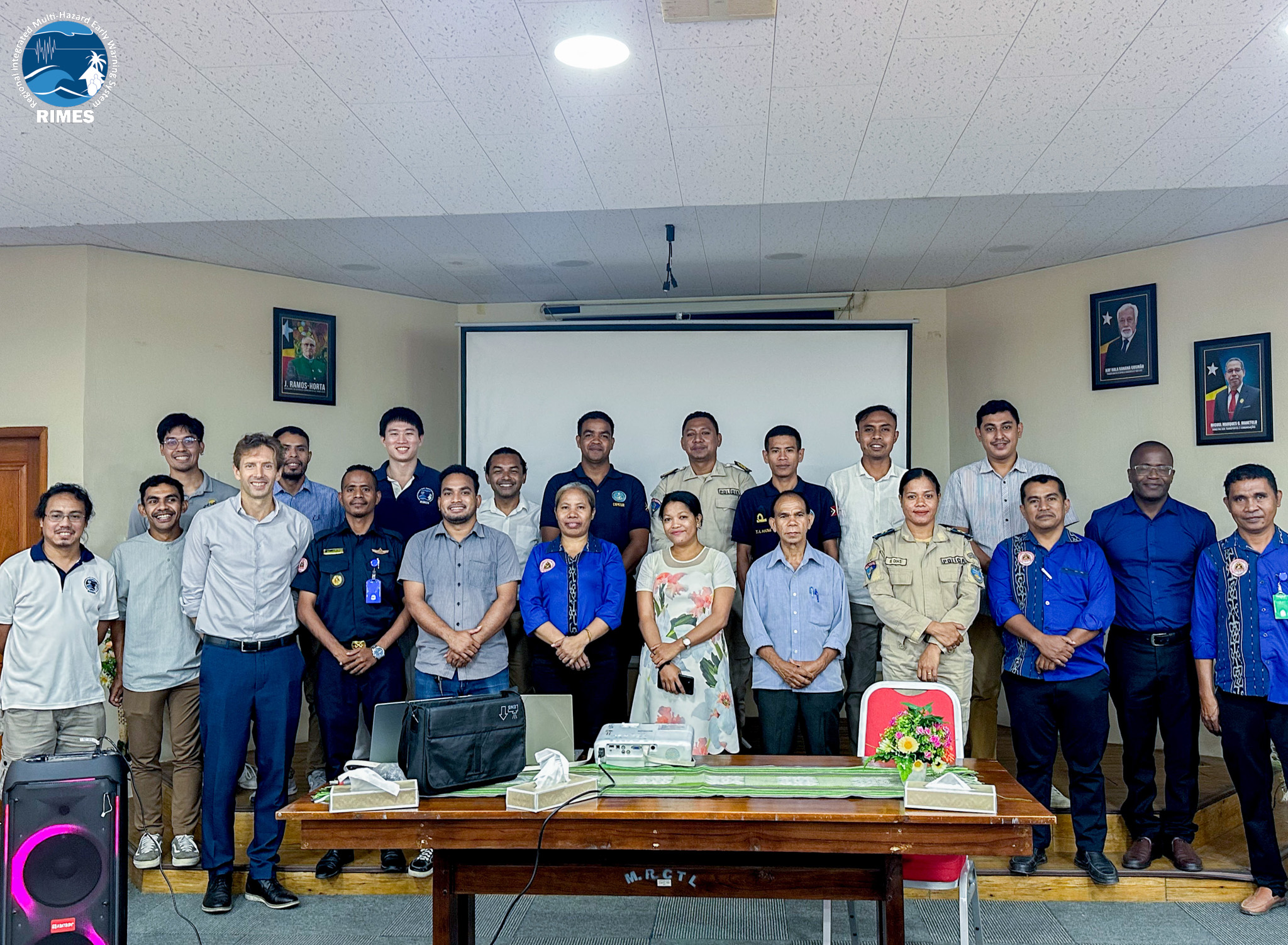
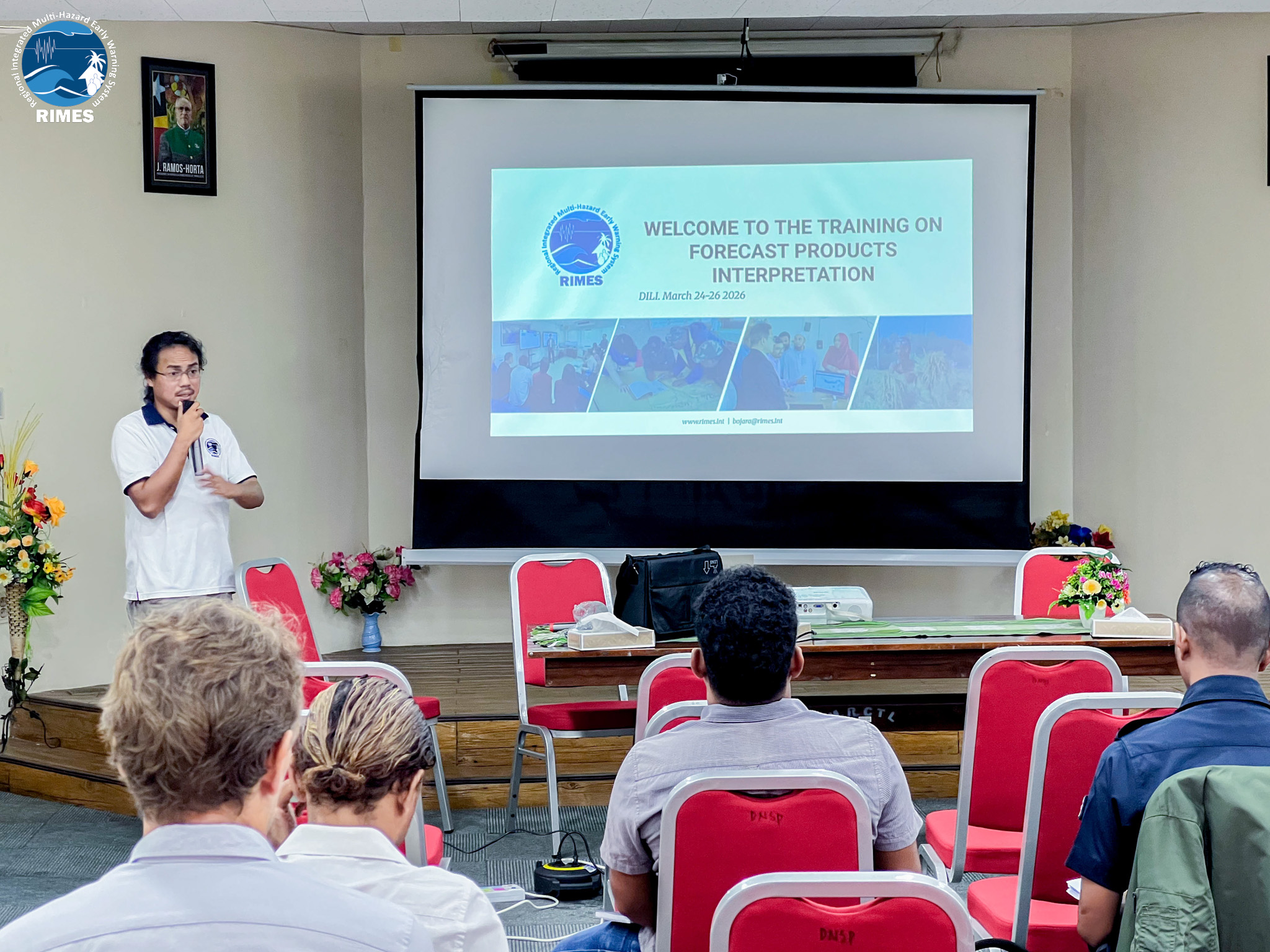
RIMES and DNMG Timor-Leste successfully conducted a Technical Training on Forecast Products Interpretation in Dili, Timor-Leste from 24–26 March 2026 under the GCF Timor-Leste Project.
Building from last week’s training on the customization of ocean products, this phase focuses on the operationalization of forecasts and strengthening institutional capacity to translate technical outputs into actionable information. The training emphasizes the practical application of key systems, including the Climate Database Informatics System (CDIS) and the Ocean State Forecast and Advisory System (OSFAS), to support real-time decision-making and advisory services.
Participants are guided through hands-on sessions that enhance their ability to interpret forecast data and communicate timely advisories to relevant stakeholders. The program also highlights the importance of coordinated institutional response, ensuring that forecast information is effectively used across sectors.
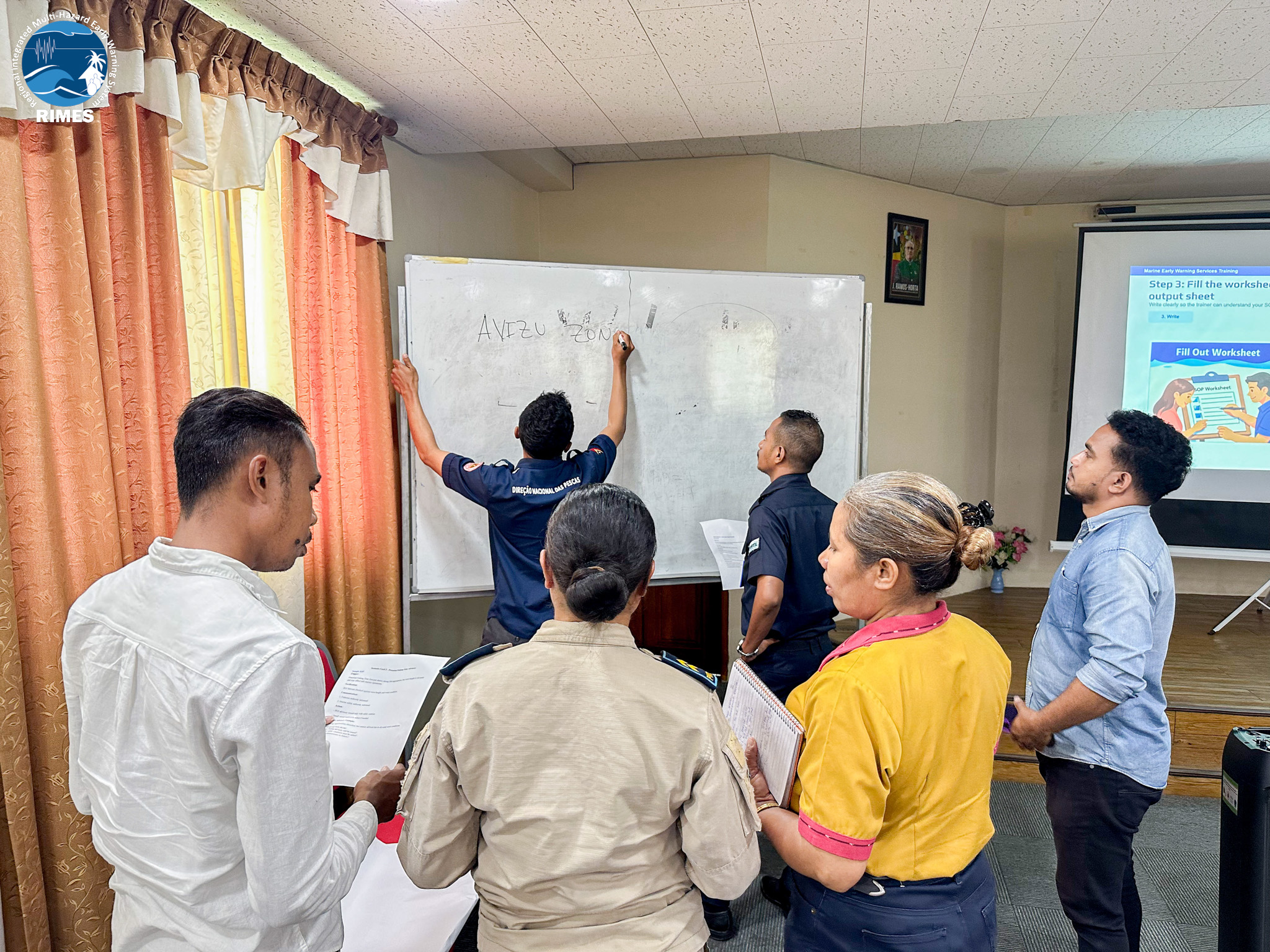
To further strengthen preparedness, the training includes interagency Standard Operating Procedure (SOP) development and scenario-based tabletop discussions. These sessions simulate coordinated responses to critical events such as potential fishing zone advisories, coral bleaching, oil spills, and incoming high tides. Through these exercises, participants work together to define clear roles, responsibilities, and communication pathways.
By aligning technical capacity with institutional coordination, the training supports a more integrated and impact-based approach to ocean forecasting in Timor-Leste. It contributes to enhancing early warning systems, improving response readiness, and strengthening coastal resilience.
This continued collaboration under the GCF Timor-Leste Project reflects a shared commitment to advancing climate services and ensuring that forecast information leads to timely, informed, and effective action at the national level.