Technical Training on Forecast Products Interpretation in Timor-Leste
To strengthen Timor-Leste’s operational forecasting capacity, RIMES, in collaboration with the National Directorate of Meteorology and Geophysics (DNMG), is conducting two consecutive technical training programmes in Dili from 16–26 March 2026 under the GCF Timor-Leste Project.
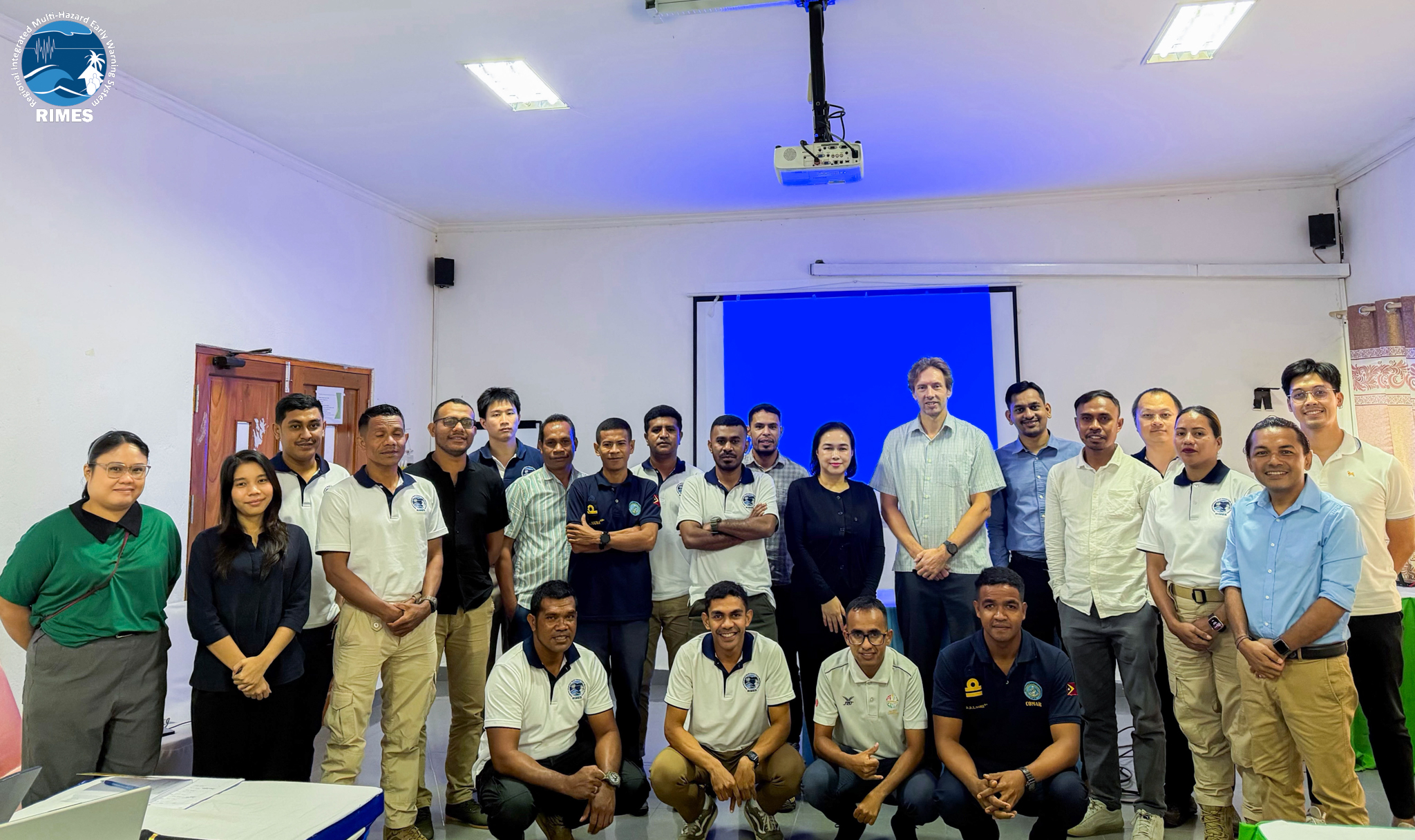
The ongoing Technical Training on Customization of Ocean Forecast Products (16–23 March 2026) is strengthening participants’ technical capacity in ocean data processing and forecasting applications. The training introduces advanced concepts guiding participants from foundational oceanographic data to predictive simulations for environmental applications.
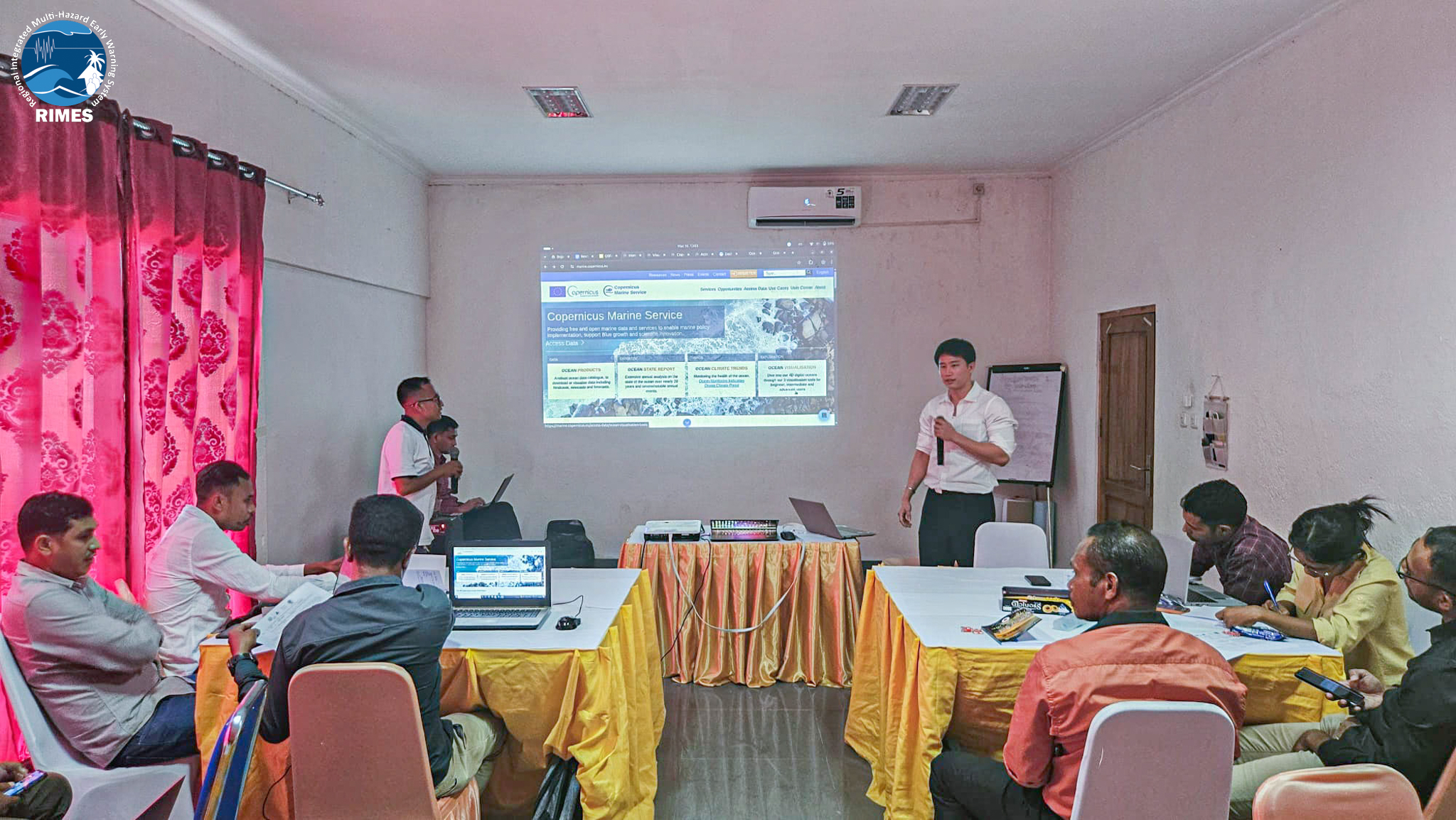
Participants are gaining hands-on experience in handling GRIB and netCDF data formats, applying statistical bias correction, and using Linux-based tools for data processing. The program also covers practical applications including tidal modeling, oil spill trajectory simulation, coral bleaching forecasting, and mapping of potential fishing zones using satellite data. Sessions on Digital Elevation Models (DEMs) and ocean observation systems further support integrated analysis for decision-making.
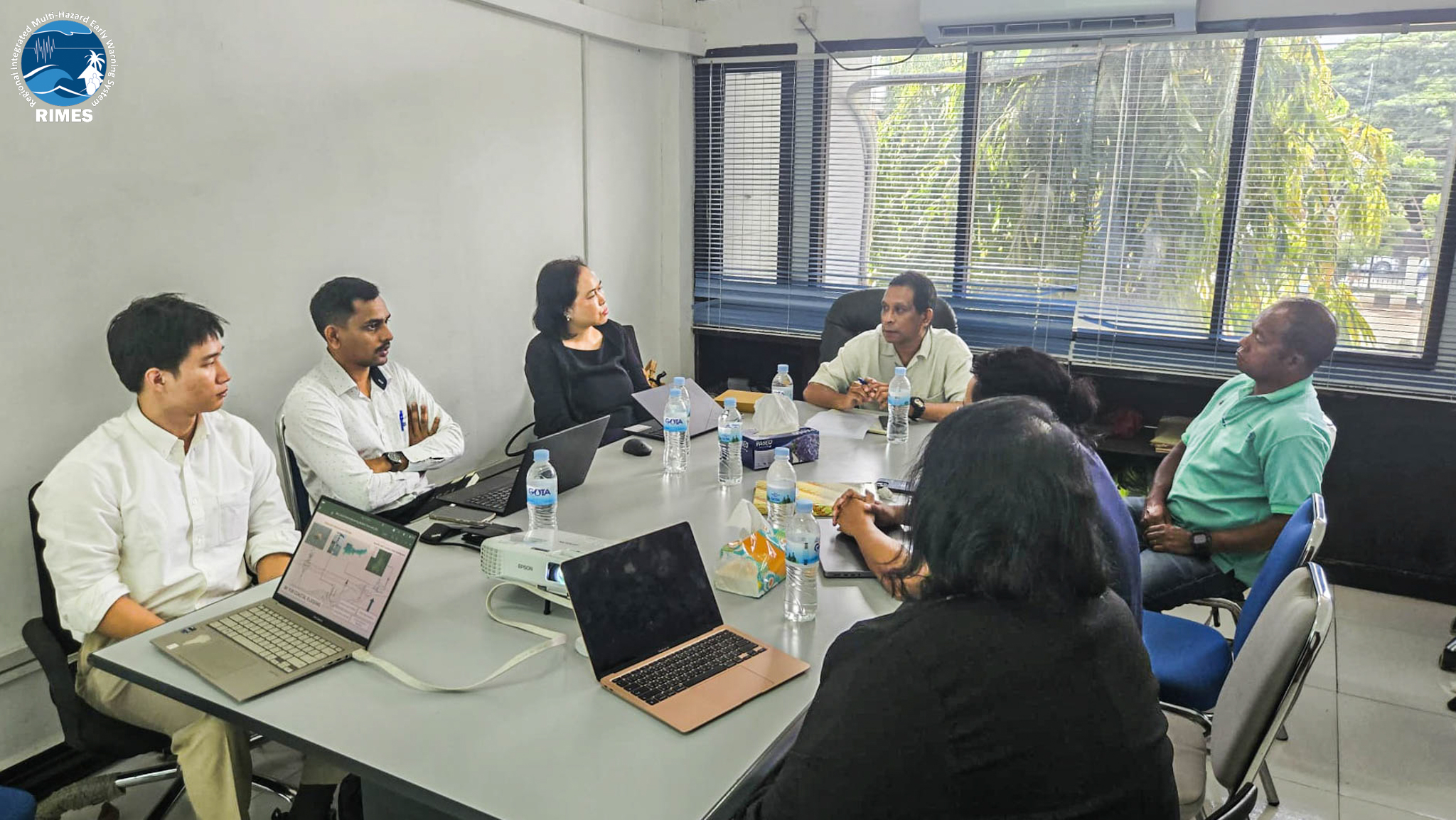
This will be followed by the Technical Training on Forecast Products Interpretation (24–26 March 2026), which will focus on strengthening the ability to interpret and operationalize forecast information. Using the Climate Database Informatics System (CDIS) and the Ocean State Forecast and Advisory System (OSFAS), participants will enhance their skills in data interpretation, system operation, and advisory dissemination.
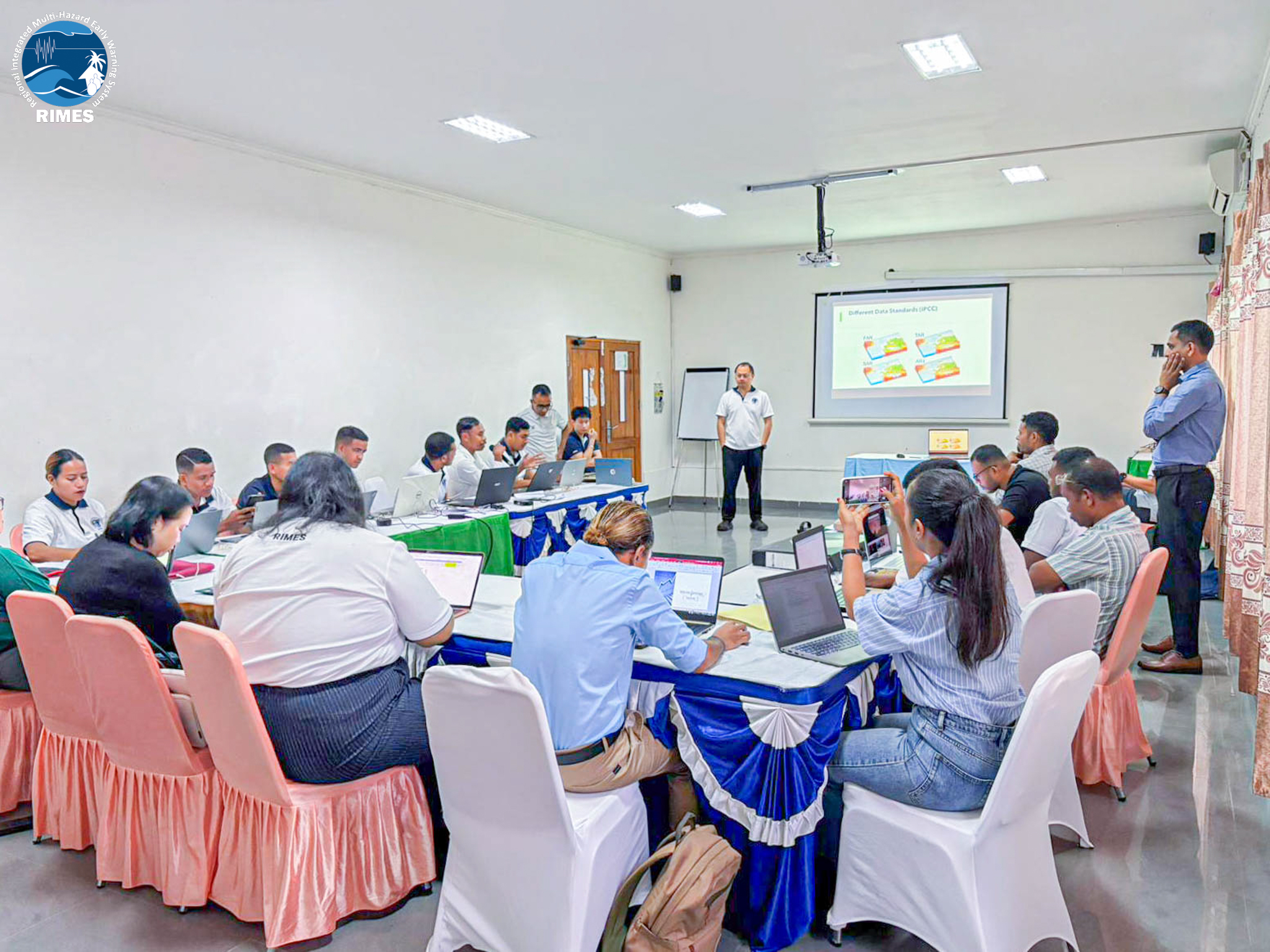
The training will emphasize translating technical forecast outputs into actionable information, including the development of standard operating procedures and institutional coordination mechanisms. Practical sessions will also introduce tools such as Windy.com and scenario-based forecasting exercises for hazard preparedness.
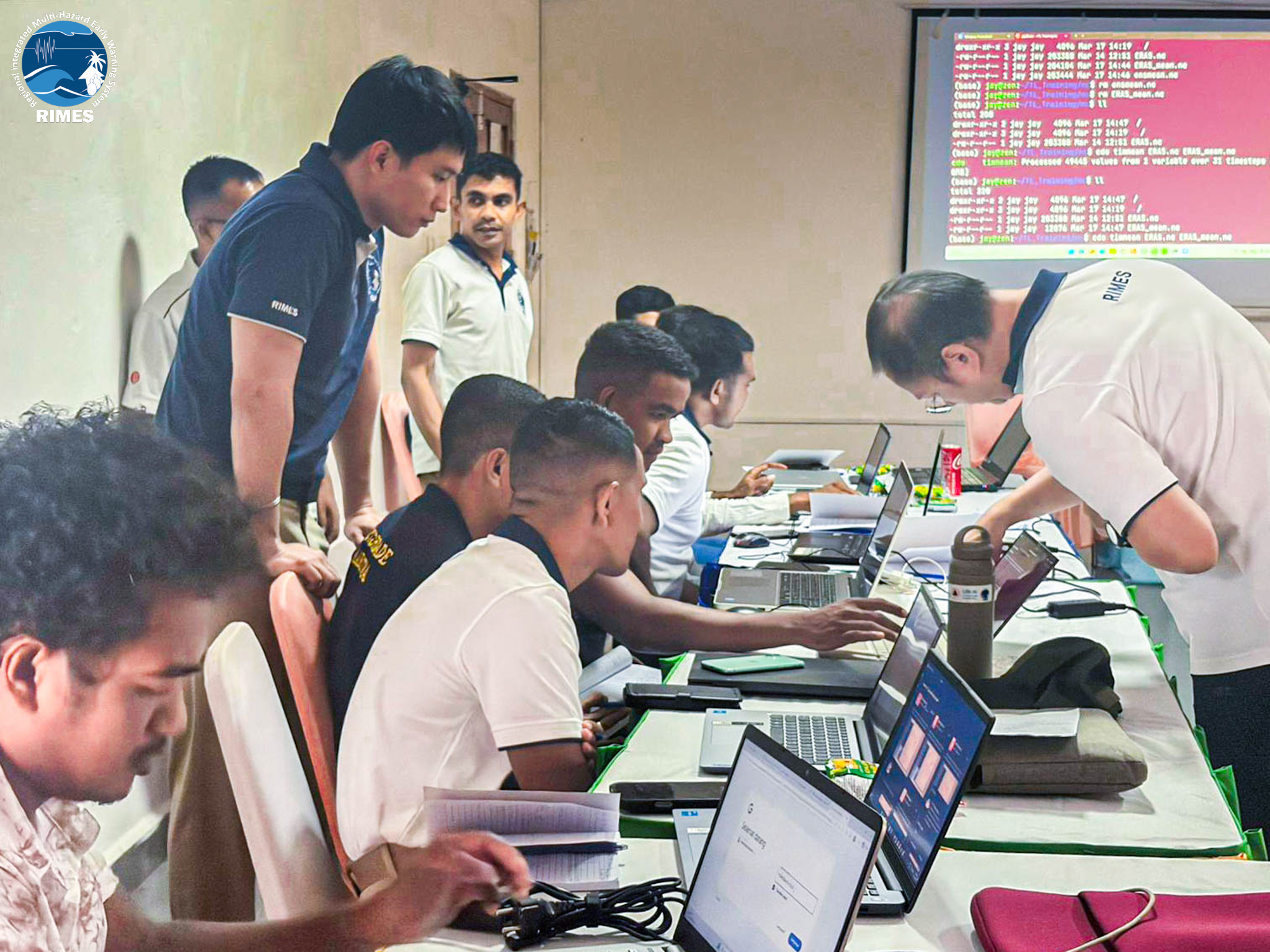
Participants from multiple national institutions are actively engaged in the training, including APORTIL – Ports Authority of Timor-Leste, AMN – National Maritime Authority, UPM – Maritime Police Unit, DNTM – National Directorate of Maritime Transport, and UNTL – National University of Timor-Leste. This is fostering collaboration across marine, meteorological, academic, and operational sectors.
Together, these efforts continue to strengthen technical competencies, enhance operational readiness, and support Timor-Leste in advancing impact-based early warning systems.